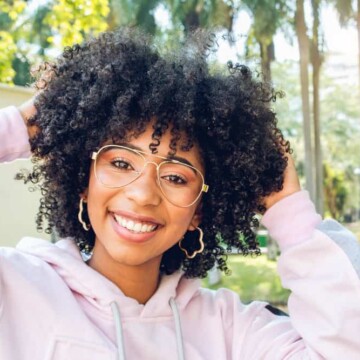
The Curly Girl Method (CG Method) is a way of caring for curly and wavy hair that hairstylist Lorraine Massey laid out in her 2001 book, Curly Girl. It aims to help women care for their curls without traditional shampoo or harsh heat styling that can damage the hair and change its curl pattern.
The core rule is simple. You stop washing with sulfate shampoo, so you also stop using ingredients that can build up without it, like most silicones, waxes, and petroleum.
Not sure whether a product you already own fits the rules? Paste its label into our curly girl check, and it'll show you which rule it breaks, if any.
Several women, and even some men, follow the Curly Girl Method. You can follow the tips outlined within this article to see what the before and after results are like for you and to determine if this method makes a difference for your hair. If your hair is tightly coiled, how the method holds up on 4C hair is the place to start.
How Does the Curly Girl Method Work
There are several hair care techniques and common styling tools that people use on a daily basis that can cause their hair to quickly become damaged.

Free 50-page guide
Your hair is already growing. The problem is keeping it.
About a third of an inch a month on textured hair, not the half inch you’ve read. If your length looks stuck, that’s your hair breaking off as fast as it grows in. Here are the seven causes of breakage and the weekly routine that stops them.
Free. One email a week after that. Unsubscribe anytime.
The curly girl method starts with how you wash your hair. Many traditional shampoos use sulfates, which are strong cleansing agents that remove oil from your hair and scalp. The oil from your scalp has a harder time traveling down a curl or coil than down a straight strand, so curly hair tends to be drier. Frequent washing with a strong sulfate shampoo can remove some of the oil that reaches your strands.
So the method swaps sulfate shampoo for conditioner or a gentle cleanser. Every other rule follows from that swap. Without a strong cleanser, ingredients that are harder to wash away can build up on your hair. That's why the method also cuts silicones, waxes, and petroleum. Drying alcohols go too because they can leave curls feeling dry.

Now, if you're going to follow the Curly Girl Method, you'll need to know which hair products to avoid.
Some of the products you would normally use and have in your bathroom cabinet may not fit the method (i.e., they aren't curly girl approved) because they may be too harsh or may leave buildup that a co-wash can't remove.
In this video, Penny Tovar provides advice on how to get started with the Curly Girl Method. As detailed in this article, this method outlines a healthy curly hair regimen that doesn't include using traditional shampoos.
Instead, you'll co-wash your hair, condition your hair, and then use a hair gel that's free of drying alcohols and silicones.

Products You Should Avoid (i.e., Not Curly Girl Approved)
The first thing that you should do is throw away your shampoos, hair brushes, combs, and picks, and stop using any heat-styling tools. There is one exception to using heat styling, as the method allows the use of a hairdryer with a diffuser on low or medium heat.
Although, generally speaking, you should avoid heat styling tools and the following products:
- Traditional shampoos
- Flat irons, blow dryers, hair steamers, hot combs, and other heat styling tools
- Hair brushes and combs
- Sulfates, especially products containing sodium lauryl sulfate, ammonium laureth sulfate, and sodium laureth sulfate
- Gels and other stylers that contain drying alcohol (cetyl and cetearyl alcohol are fine, because they soften your hair)
- Silicones, like dimethicone and amodimethicone
- Waxes and petroleum, including mineral oil and petrolatum
These products are rough on the hair and can leave it looking dry and dull. If you have these products at home, donate them to someone else or toss them in the trash because you are not going to need them when following the Curly Girl Method.
How to Tell if a Product Is Curly Girl Approved
The ingredient list on the back of the bottle tells you. Ingredients used at more than 1% are generally listed from highest to lowest, but ingredients at 1% or less can appear in any order near the end. For a strict curly girl check, read the full list and look for four kinds of ingredients: sulfates and other harsh cleansers, silicones, drying alcohols, and waxes or petroleum.
The hard part is that the names don't always give themselves away. Amodimethicone is a silicone. Sodium C14-16 olefin sulfonate isn't a sulfate, but many curly girl followers avoid it because it's a strong cleanser. Behentrimonium methosulfate sounds like a sulfate, but it's a conditioning ingredient that fits the rules.
So we built a check that reads the whole list for you. Paste any label below.
Paste the ingredient list from the back of the bottle. We'll check it against each curly girl rule and show you exactly which ingredient breaks one.
Copy it from the brand's website, or type it off the bottle. Commas between ingredients are all we need.
This check runs in your browser, and nothing you paste is sent anywhere. It reads each ingredient name against the same list of 1,317 names the Label Key uses.
These are the names behind each rule, straight from the check's own list. Labels print them in many spellings, so the check also knows the common short names, like SLS for sodium lauryl sulfate.
Massey's books name three sulfates: sodium lauryl sulfate, sodium laureth sulfate, and ammonium laureth sulfate. We also flag cleansers that wash just as hard, including soaps.
Ammonium Laureth Sulfate, Ammonium Lauryl Sulfate, Magnesium Laureth Sulfate, Magnesium Laureth-8 Sulfate, Magnesium Oleth Sulfate, Potassium Cocoate, Potassium Oleate, Sodium Astrocaryum Murumuruate, Sodium C12-13 Pareth Sulfate, Sodium C14-16 Olefin Sulfonate, Sodium Coceth Sulfate, Sodium Coco-Sulfate, Sodium Cocoate, Sodium Dodecylbenzenesulfonate, Sodium Laureth Sulfate, Sodium Laureth-8 Sulfate, Sodium Lauryl Sulfate, Sodium Myreth Sulfate, Sodium Oleth Sulfate, Sodium Olivate, Sodium Palm Kernelate, Sodium Palmitate, Sodium Rapeseedate, Sodium Shea Butterate, Sodium Sunflowerseedate, TEA-Dodecylbenzenesulfonate, TEA-Lauryl Sulfate, TEA-Sulfate, Zinc Coco-Sulfate
Both books say to avoid silicone. These are the kinds that can build up with co-washing alone.
Aminopropyl Dimethicone, Aminopropyl Phenyl Trimethicone, Amodimethicone, Behenoxy Dimethicone, Bis-Aminopropyl Dimethicone, Bis-Cetearyl Amodimethicone, Bis-Hydroxy/Methoxy Amodimethicone, Bis-PEG-4 Dimethicone, Bisamino PEG/PPG-41/3 Aminoethyl PG-Propyl Dimethicone, Cetearyl Methicone, Cetyl Dimethicone, Dimethicone, Dimethicone PEG-8 Meadowfoamate, Dimethiconol, Divinyldimethicone/Dimethicone Copolymer, Lauryl PEG/PPG-18/18 Methicone, Methoxy PEG/PPG-7/3 Aminopropyl Dimethicone, Phenyl Trimethicone, Polysilicone-15, Polysilicone-29, Quaternium-80, Silicone Quaternium-16, Silicone Quaternium-17, Silicone Quaternium-18, Silicone Quaternium-22, Silicone Quaternium-25, Stearoxy Dimethicone, Stearyl Dimethicone, Trimethylsiloxysilicate, Trimethylsilylamodimethicone
Both books say to skip gels with alcohol. This check flags short-chain alcohols that the curly girl method treats as drying. Fatty alcohols like cetyl and cetearyl alcohol soften your hair, and the Handbook says they're fine.
Alcohol, Alcohol Denat., Isopropyl Alcohol, Isopropyl Alcohol Denat, Propanol, SD Alcohol 40
Massey warns against waxes in 2001 and petroleum in 2011. Mineral oil and petrolatum both come from petroleum.
Cera Alba, Copernicia Cerifera Cera, Euphorbia Cerifera Cera, Helianthus Annuus Seed Wax, Microcrystalline Wax, Myrica Pubescens Fruit Wax, Paraffin, Paraffinum Liquidum, Petrolatum
Water-soluble or water-dispersible silicones that rinse out more easily. Most curly girls allow them, even though the books don't make that exception.
Bis-PEG-12 Dimethicone, Bis-PEG-18 Methyl Ether Dimethyl Silane, Dimethicone Copolyol, Dimethicone Propyl PG-Betaine, PEG-12 Dimethicone, PEG-7 Amodimethicone, PEG-8 Dimethicone, PEG/PPG-14/4 Dimethicone, PEG/PPG-15/15 Dimethicone, PEG/PPG-18/18 Dimethicone, PEG/PPG-20/20 Phenylisopropyl Caprylyl Dimethicone
Silicones designed to evaporate after application. The strictest curly girls skip them, and many others don't.
Caprylyl Methicone, Cyclohexasiloxane, Cyclopentasiloxane, Cyclotetrasiloxane, Ethyl Trisiloxane, Methyl Trimethicone, Trisiloxane
The check runs on the same ingredient list as our Label Key, a free tool that goes one step further. Curly girl approved only tells you that a product follows the rules. The Label Key asks you four quick questions about your hair, then tells you whether that product is worth keeping for you.

Should I Stop Using Shampoo?
With the Curly Girl Method, it's recommended that you give up shampoo (i.e., go no-poo). However, most people have used shampoo their entire life, so we recommend easing into this method.
Otherwise, if you stop using shampoo cold turkey, your hair may start feeling dirty after a few weeks.
Instead of giving up shampoo entirely, you can switch over to a gentle shampoo that does not contain any sulfates, which is often considered a low poo or gentle poo.
Again, if you're used to regularly using shampoos, your hair may feel dirty, oily, or greasy when you initially move away from using traditional shampoos during your hair regimen.
Although, you will eventually get used to this feeling after a few weeks of following the Curly Girl Method. This is perfectly normal.

Over the past weeks, I've done quite a bit of research on conditioner washing (co-washing).
I have been surprised by the fact that co-washing does a pretty good job of actually cleaning your hair, meaning that the oil build-up on unwashed hair is significantly reduced.
It is important to note that your hair will not feel squeaky clean, so there will be some build-up left on your hair.
As for cleaning your scalp, the Curly Girl Method recommends using friction from your fingertips to break up dirt, remove oil, dead skin, and product build-up without damaging your natural curls.
It's unlikely that co-washing alone will keep your scalp clean over an extended period of time. You're likely to end up with product build-up on your hair that requires the use of shampoo to properly remove the build-up.
A 2019 review in the journal Skin Appendage Disorders backs this up. It found no scientific data behind the claimed benefits of co-washing, and it warned that a co-wash can't remove silicones like dimethicone. The author suggested a clarifying shampoo (i.e., a stronger shampoo made to remove buildup) about twice a month. So, if the method works for you, keep doing it as long as you're satisfied with the results.
I do highly recommend taking before and after pictures, so you can determine how much your hair has changed as you continue to implement the Curly Girl Method.
Products You Should Start Using for Healthy Curls
- A gentle cleanser with no sulfates, or a cleansing conditioner (i.e., a co-wash)
- A silicone-free conditioner that you can leave in your hair
- An alcohol-free, silicone-free hair gel
The goal is to create a hair care regimen that includes gentle products promoting healthy hair. These products are "compliant" with the Curly Girl Method.

How to Follow the Curly Girl Method
The creator of the Curly Girl Method, Lorraine Massey, has outlined the following process for cleaning, conditioning, and styling your wavy, curly, or coily hair.
Curly Girl Method Steps
Note: The Curly Girl Method can also be used on straight hair and color-treated hair. However, if your hair is relaxed or color-treated, I highly recommend that you read this article on hair coloring for curly hair.
Step 1: Clean Your Hair
If you're easing into the Curly Girl Method, then you should modify these steps as needed. Although the first step is to gently wash your hair with a sulfate-free product (gentle shampoo) or a botanical conditioner of your choosing.
If you're planning to slowly transition away from shampoo, you can continue with your existing cleansing schedule; however, you should replace your existing shampoo.
Before your first curly girl wash day, many people do one last wash with a clarifying shampoo. It takes off old silicones and waxes, so your new products start on clean hair.
Plus, the Curly Girl Method recommends that you use your fingertips to gently massage and stimulate the scalp while cleansing your hair.
The friction created by gently massaging your scalp will begin to loosen dirt, dried sweat, and oils from your hair. However, it's important to note that your hair will not feel squeaky clean.
Depending on your natural curl pattern, the method does recommend slightly different approaches. If you're planning to fully implement the Curly Girl Method, I encourage you to purchase 'Curly Girl: The Handbook' by Lorraine Massey.
If you have wavy hair, you can still use a traditional, gentle shampoo, but you should stick to using it just once each week instead of using it daily. As usual, remember to condition your hair after washing it with a gentle shampoo.
If you have a very curly hair type (i.e., type 4 hair, coily hair, or textured hair), you should wash it with your conditioner at least once each week. This is also known as a co-washing (i.e., conditioner washing) process.
While there is quite a bit more information in the book 'The Curly Girl Handbook', the key is to experiment until you determine the right cadence for your hair.
Step 2: Condition Your Hair
After cleaning your hair, apply conditioner to the different sections of your hair. Then decide how much of it to leave in. Massey's Handbook tells women with dense, frizz-prone curls not to rinse out any conditioner at all, and it lets looser curls rinse some of it out.
This may seem odd initially, but the goal is to keep your hair moisturized and frizz-free.
Many curly girls also squish to condish while the conditioner is still in. You cup a little water in your hands and squeeze it up into your hair, which helps your curls form clumps. It isn't in Massey's books, but it's a common way to work conditioner through your hair.

Step 3: Scrunch (or Blot) Your Hair to Absorb Extra Moisture
To remove excess moisture when you get out of the shower, you can use a smooth, absorbent cloth or towel.
For example, a baby's burp cloth, microfiber towel, cotton t-shirt, paper towel, or even a pillowcase can work. We compare the options in our guide to the best hair towels for curly hair.
However, it's recommended that you stay away from harsh fabrics that can damage the hair cuticle and cause unwanted frizz. For example, a conventional bath towel wouldn't be a good option.
Whatever you use, squeeze or scrunch your hair upward instead of rubbing it. The American Academy of Dermatology lists rubbing wet hair with a towel as a habit that damages hair.
Step 4: Styling Your Hair
While styling your hair, the Curly Girl Method recommends that you use alcohol and silicone-free hair gel to hold your curls.
The Curly Girl Handbook refers to creating a curl cast or gel cast, which helps the hair maintain its natural curl formation until it dries completely.
Some curly girls plop after they put their gel in. You lay your wet hair onto a cotton T-shirt or microfiber towel spread out flat, wrap it up around your head, and leave it for 10 to 30 minutes. Plopping can soak up extra water without disturbing your curls. Like squish to condish, it came from curly girl communities, not from the books.
Once your hair dries completely, you can tilt your head forward and gently scrunch your hair upward to break the gel cast. Curly girls call this scrunching out the crunch.
Approved Products for the Curly Girl Method
Kudos to Bianca Renee for helping ladies find products that are compliant with the Curly Girl Method. Note that these products can change at any point in time, so it's important to read the labels to ensure that the products don't contain sulfates, silicones, drying alcohols, waxes, or petroleum. The curly girl check above does that for you.
Also, it's important to note that Bianca has outlined a list of brands that are Curly Girl Method safe: Bounce Curl, Briogeo, Camille Rose Naturals, Curl Keeper, Curls, Deva Curl, Maui Moisture, Rizos Curls, and Shea Moisture.
The Curly Girl Method is a relatively simple method to follow, as you'll really only need a good hair conditioner and gel to use for styling purposes.
We checked each product below on October 5, 2026. Every one passed all four rules, using the ingredient list on the brand's own website. Formulas change, so check the bottle you buy, too.
Conditioners
Hair Gels
You may wonder why two popular products aren't here. DevaCurl One Condition Original contains isopropyl alcohol, a drying alcohol, near the end of its list, so strict curly girls skip it.
Fruit of the Earth Aloe Vera Gel passes all four rules, but it's preserved with DMDM hydantoin and diazolidinyl urea. These formaldehyde-releasing preservatives may matter if you have a known formaldehyde allergy or a sensitive scalp. The curly girl rules don't cover them, but the Label Key flags them separately.
Creating a Curly Girl Regimen
It's critical that you track how your hair responds to the Curly Girl Method and make any necessary adjustments to achieve your desired appearance. Below are some additional tips to consider as you create your curly girl regimen.
- Satin pillowcases are very popular in the natural hair community, although you could also sleep on a silk pillowcase to achieve similar results. Silk will mitigate unwanted frizz, although silk is generally more expensive than satin.
- We're fans of pineappling your hair at night, which refers to putting your curls in a loose high ponytail before going to sleep at night. This will help you preserve your curls for an easier time styling your hair the next morning.
- Do not wash your hair too many times during the week. You can easily freshen up your curls by lightly misting them with a small amount of water, finger-combing to style, and applying a bit of leave-in conditioner. Learn more about how often you should wash your hair. Note that you also can use a wide-tooth comb if you're not keen on finger detangling.
- If your hair starts to feel dirty (ex., oily or greasy) while using a curly girl friendly regimen, I recommend using a sulfate-free shampoo.
- If you have a significant amount of product build-up, I recommend using a clarifying shampoo to thoroughly clean your hair before starting this curly hair journey.
- We are also advocates of periodically incorporating deep conditioning treatments into your curly girl journey to keep your hair hydrated and mitigate damage.
- Determine if you have hard water (read this article). If so, you should consider filtering the water used to wash your hair.
What Products Are Curly Girl Approved?
There are seemingly hundreds of curly girl approved products. Included below are a few of our favorite brands, plus a few products recommended by our readers and email subscribers.
We attempt to keep this list updated, but you should learn how to read the ingredient label on hair products if you're new to this process. The curly girl check above reads it for you.
Brands and product lines that offer curly girl approved products: As I Am, Aveda Be Curly, Bounce Curl, Briogeo, Camille Rose Naturals, Curl Keeper, Deva Curl, Kinky-Curly Knot Today, Maui Moisture, Mixed Chicks, Moroccan Oil, Rizos Curls, Shea Moisture, and TRESemmé. Some of these brands also sell products that don't fit the rules, so check each bottle, not just the brand.
Does the Curly Girl Method Work on Every Hair Type?
The method was written for wavy, curly, and coily hair, but not every rule works the same way for every texture. Here's what you may need to adjust.
Wavy hair (2A to 2C). Rich conditioners and heavy gels can weigh waves down. Use less product, choose lighter formulas, and clarify more often if your hair starts to feel flat or coated. We cover the full routine in our wavy girl method guide.
Coily hair (4A to 4C). Parts of the method can work well. Cutting back on harsh cleansers and high heat and using plenty of conditioner may help with dryness and breakage. However, many women with coily hair still need shampoo regularly to remove buildup, and some need a leave-in or sealant to slow moisture loss. We go into this in our answer on the curly girl method and 4C hair.
Straight hair. Gentle cleansing may help reduce dryness, but scrunching and a gel cast won't create a curl pattern that isn't there.
Colored, relaxed, or transitioning hair. You can follow the method, but you may need to adjust it for your hair's condition and porosity. Gentler cleansing can help limit dryness, and the routine can make it easier to care for two textures while you grow out a relaxer.
What Does the Research Say About the Curly Girl Method?
No study has tested the curly girl method itself. We searched PubMed, a major database of biomedical research, in October 2026 and found no study that evaluated the method. Research on individual parts of the routine supports some of its gentler practices but adds important context to its strictest rules.
Sulfates. A 2015 review in the International Journal of Trichology found that strong cleansers such as sulfates may increase frizz and friction (i.e., leave the hair's surface rougher). The review also noted that, at the time, no published studies had compared how well sulfate-free shampoos clean.
Silicones. A 2025 review in Skin Appendage Disorders found that water-insoluble silicones (i.e., ones that don't dissolve in water), such as dimethicone and amodimethicone, can build up when they aren't washed out properly. It also found that some silicones can improve definition and reduce dryness in curly hair. Silicones aren't automatically bad for your hair, but water-insoluble types may not fit a co-wash-only routine.
Combing. A 2007 laboratory study found that curlier hair and wet combing each led to more long breaks (i.e., pieces more than about an inch long snapping off), and brushing had the biggest effect. That supports handling wet curls gently and limiting brushing. However, the American Academy of Dermatology still recommends detangling curly hair while it's wet, using a wide-tooth comb and leave-in conditioner, so you don't have to give up your comb completely.
Does it make your hair curlier? No study shows that it does. How curly your hair grows comes from the follicle (i.e., the tiny pocket in your scalp that each hair grows out of), and nothing you apply to the strand changes that follicle's shape. What the method may do is reduce frizz and breakage so the curl pattern you already have shows more clearly.
Why Some Women Avoid the Curly Girl Method?
Some women consider the Curly Girl Method too restrictive. If you enjoy experimenting with a large variety of hair products and don't want to spend time reading product labels and discarding products that aren't curly girl approved, you may also consider the method too restrictive.
We're advocates of women using what works best for their hair, which often leads to some experimentation. It's fun, and ultimately you're the real natural hair guru for your hair, so we say experiment and have some fun.
If you're interested in heat styling, you won't be able to follow the method as originally articulated.
We try to help women understand the pros and cons of using certain products, tools, and techniques, although it's critical that you enjoy your hair, as no one else's hair is exactly the same as yours.
How Long Does It Take for the Curly Girl Method to Work?
When following this method, some women report seeing results nearly immediately (i.e., only a few days later). However, results will only continue to become more noticeable over the span of a few weeks.
Everyone's hair is different. Massey's Handbook says some women with looser curls may see more curls within about three weeks, though no study has measured a typical timeline. We encourage you to take weekly photos so you can track how your own hair responds.
Where the Curly Girl Method Came From
There have been several variations (or regimens) similar to the Curly Girl Method over the years. Hairstylist and author Lorraine Massey brought the official Curly Girl Method to a much wider audience in 2001 with her book, Curly Girl. She expanded it in 2011 as Curly Girl: The Handbook.
When this book was first published, the vast majority of hairstyles that you saw were straight; in fact, many women have felt pressured to straighten their hair through the use of relaxers and flat irons.
In 'Curly Girl: The Handbook', Massey even shares details about how she was ridiculed as a kid for having curly hair.
Over the years, this book, along with several others targeted at curly girls, helped fuel an emerging natural hair movement for women with naturally curly hair.
Two other incredibly popular curly girl books are The Science of Black Hair: A Comprehensive Guide to Textured Hair Care by Audrey Davis-Sivasothy, and If You Love It, It Will Grow: A Guide to Healthy, Beautiful Natural Hair by Phoenyx Austin.
Massey co-founded the Devachan salon and the DevaCurl hair care line in 1994 and left in 2013, according to her current company. In 2020, customers sued DevaCurl's maker, claiming its products caused hair loss and scalp irritation.
The company settled the cases for about $5.2 million, and a court approved the settlement in 2022. The company didn't admit fault, and no court ruled on the claims. DevaCurl products are still sold today.

How Long Does It Take for the Curly Girl Method to Work?
Results vary depending on your hair type and the condition of your hair before you start. Massey's Handbook says some women with looser curls may see a difference in about three weeks, but no study has measured a typical timeline. Take weekly photos and adjust the routine based on how your hair responds.
Is the Curly Girl Method Worth It?
It can be, if your curls are frizzy, dry, or losing their definition. No study has tested the method, so the best way to know is to follow it for a few weeks and compare photos. The method requires commitment and experimentation with different products, so it's up to you if it's worth it.
What Products Do I Need for Curly Girl Method?
The Curly Girl Method emphasizes using sulfate-free shampoos, silicone-free conditioners, and styling products that do not contain drying alcohol. Other recommended products include leave-in conditioners, curl enhancers, and gels. It's important to choose products based on your hair's specific needs and curl pattern. SheaMoisture, As I Am, and Cantu all sell popular curly girl approved products, but formulas vary from one product to the next, so check each label.

What Are the Steps in the Curly Girl Method?
The Curly Girl Method has four basic steps: cleansing, conditioning, styling, and refreshing. Use a sulfate-free shampoo or co-wash with a silicone-free conditioner. Condition your hair, then leave some or all of the conditioner in. Next, apply a gel or other styler without silicones or drying alcohol, and let it dry into a cast before you scrunch it out. Refresh using a spray or mousse to revive curls on non-wash days.
What Are the Best Products for Curly Girl Method?
The best products for the Curly Girl Method depend on your hair type and curl pattern. Some popular product lines with curly girl approved products include SheaMoisture, As I Am, and Cantu. However, it's important to choose products based on your hair's individual needs and avoid those that contain sulfates, silicones, drying alcohols, waxes, or petroleum.
Does the Curly Girl Method Work on Wavy Hair?
The Curly Girl Method can work on wavy hair as well as curly hair. In fact, the Curly Girl Method was originally designed for people with wavy or curly hair. The method is all about using gentle, moisturizing products and techniques to enhance your natural curl pattern, whether your hair is wavy or curly.

How Many Products Do You Need for Curly Girl Method?
The number of products you need for the Curly Girl Method depends on your hair type, curl pattern, and specific needs. At a minimum, you will need a sulfate-free shampoo or co-wash, a silicone-free conditioner, and a styling product like mousse or gel. Some individuals may benefit from additional products such as leave-in conditioners, oils, and curl cream.
What Is the Curly Girl Method for Wavy Hair?
The Curly Girl Method for wavy hair is similar to the method for curly hair but with some modifications. Wavy hair tends to be less prone to dryness and frizz, so you might need to use less product to avoid weighing it down. Still, it's important to use products that are free of sulfates, silicones, and drying alcohols.
How to Start the Curly Girl Method?
Starting the Curly Girl Method is fairly simple. Many people begin with one last clarifying wash to take off old silicones and buildup. Then switch to a sulfate-free, silicone-free shampoo or a co-wash cleanser, and follow up with a conditioner that is also free from silicones and drying alcohols. Lastly, apply styling products that will enhance your curls and provide hold, like a gel or curl cream.

Can You Do the Curly Girl Method With Straight Hair?
The Curly Girl Method was created specifically for people with curly and wavy hair, but it can also work for those with straight hair who want to minimize damage and promote healthy hair. However, the styling techniques used in the Curly Girl Method, such as scrunching and plopping, may not be as effective on straight hair.
Can You Dye Your Hair on Curly Girl Method?
You can dye your hair while following the Curly Girl Method; just remember that hair dye can be damaging to hair, especially if it contains harsh chemicals. If you choose to dye your hair, try using brands like Arctic Fox, Manic Panic, Overtone, and Lime Crime. Follow up with deep conditioning treatments to keep your hair soft.
Are Ouidad Products Curly Girl Approved?
Some are and some aren't. Ouidad is a haircare brand that is often associated with the Curly Girl Method, but when we checked in October 2026, its Curl Quencher Moisturizing Shampoo contained ammonium laureth sulfate, and its Advanced Climate Control Defrizzing Shampoo contained amodimethicone, a silicone. Check the label before you buy any Ouidad product.
Is Curly Girl Method Good for Hair?
The Curly Girl Method is a gentle way to care for curly and wavy hair. Avoiding harsh cleansers and water-insoluble silicones that may build up in a co-wash-only routine may help reduce dryness, frizz, and breakage. Many women who follow the method say their hair feels softer, looks shinier, and is less prone to frizz. No study has tested the method as a whole, though.
What Is a Clarifying Shampoo Curly Girl Method?
A clarifying shampoo is a stronger shampoo designed to remove buildup from hair. Strict curly girls skip it, but many people use one now and then to remove product buildup, dirt, or oils from the hair and scalp. Many clarifying shampoos contain sulfates, since strong cleaning is the point. If you want to stay within the rules, look for a sulfate-free clarifying shampoo, and expect it to clean more gently.
What Shampoo Is Good for Curly Girl Method?
A good shampoo for the Curly Girl Method is free from sulfates and silicones. Look for a gentle cleanser labeled "sulfate-free," then check its ingredient list, because some sulfate-free shampoos use other strong cleansers instead. Co-wash cleansers are also a good option for those who want to avoid using traditional shampoo altogether. SheaMoisture Coconut & Hibiscus Curl & Shine Shampoo passed every rule when we checked it in October 2026.
Related Articles
- How to Pre-Poo Your Curly Hair
- Low Poo Method for Curly Hair
- How To Start the Curly Girl Method for Wavy Hair
- What Is the LCO Method
- LOC Method for Curly Hair
The Curly Girl Method (CG Method), outlined in detail in the book, 'Curly Girl: The Handbook' is a curly hair regimen created by Lorraine Massey.
Lorraine Massey believes that most women "go wrong" when they plan the cleansing and styling components of their hair regimen. It is quite similar to the "no-poo" method as it discourages the individual from using shampoo.
In addition, it calls for no heat styling (i.e., blow drying, flat ironing, etc.), no brushes or combs, and no use of products with harsh sulfates, which are typically found in many shampoos, conditioners, and styling products, as well as the use of a conditioner as opposed to a shampoo, known as conditioner washing or co-washing.
The book also includes various tips for using gels and other hair care products. The general rule of thumb is to treat curly hair gently in an effort to minimize damage to the hair cuticle, which must remain as moisturized as possible.