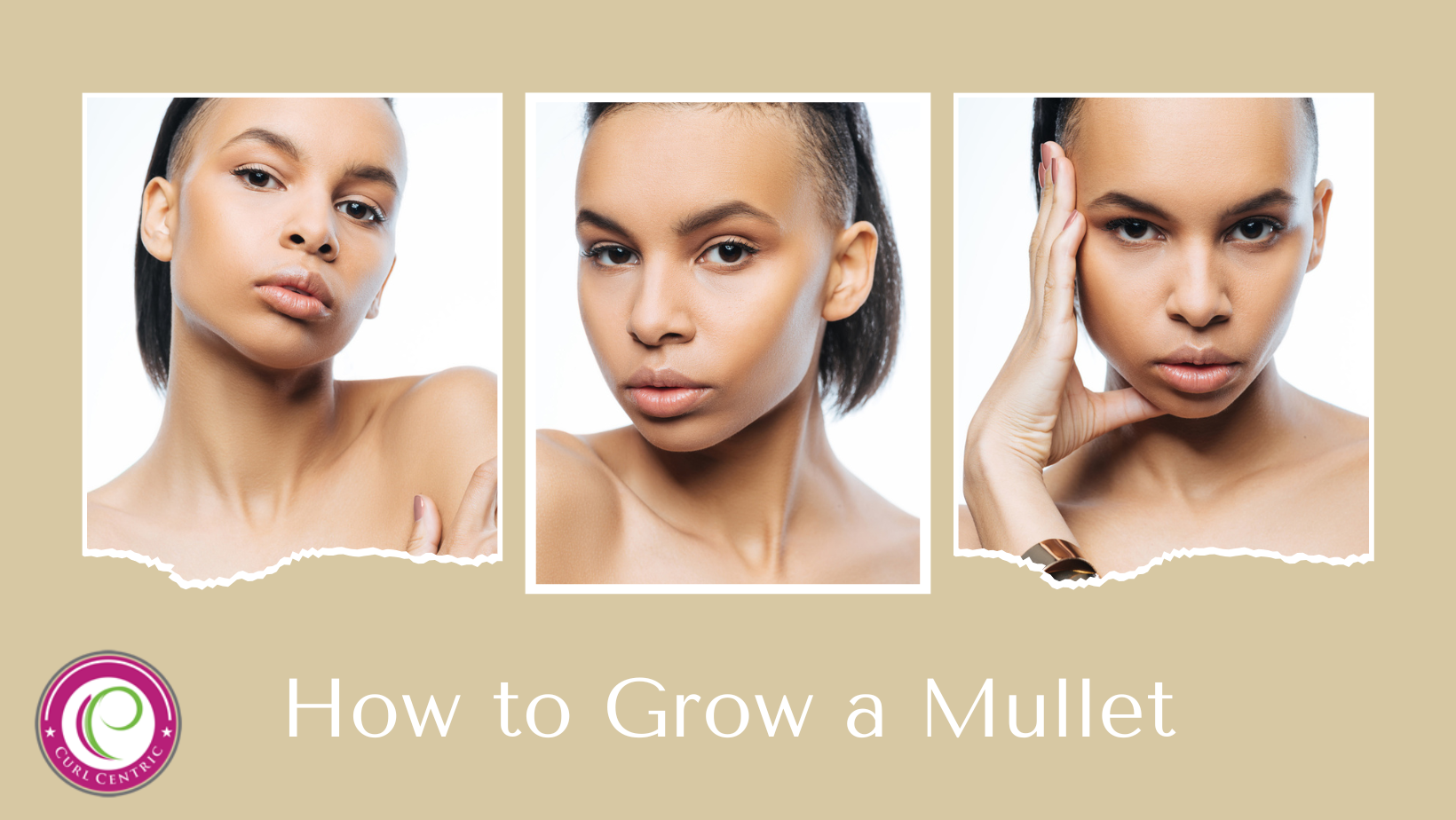
The mullet has had one of the most exciting transformations from a fashion don't to a fashion do. If you want to learn how to grow a mullet of your very own, we've got you covered!
This article will walk you through the ins and outs of growing a mullet. We'll reveal how long it takes to become a mullet head and give you tips on how to speed up the process. Let's jump right in!
How To Grow a Mullet
The thing that sets mullets apart from other hairstyles is their disjointedness. While the front of your hair is short and sweet, the back is significantly longer. In order to create that classic mullet, you'll need to cut your hair in that manner, keeping the sides and the front of your hair super short.
You can do it yourself with some professional hair-cutting shears or go to a professional stylist. They have the skills and tools to get the job right the first time.

Free 50-page guide
Your hair is already growing. The problem is keeping it.
On average, hair grows a third to half an inch a month, and curlier hair tends to grow more slowly. If your length looks stuck, that’s your hair breaking off as fast as it grows in. Here are the seven causes of breakage and the weekly routine that stops them.
Free. One email a week after that. Unsubscribe anytime.
Other Tips to Grow Your Mullet
For many, getting a mullet is not a single-salon-visit endeavor. If your hair is currently too short for a mullet, you'll have to wait for your hair to grow a bit, take care of your existing hair, and much more. Here are some other tips to help you grow a mullet with minimal frustration and no bad hair days.

Develop a Hair Growth Routine
The faster your hair grows, the quicker you'll get your mullet. While you can't necessarily make your hair grow faster, you can retain more length.
Confused? We'll explain.
Your genetics largely determines the rate at which your hair grows. And although you can't increase this rate, some things can slow it down.
Poor nutrition, circulation issues, and an unhealthy lifestyle can stunt your hair growth and slow it down to a crawl. But if you address these underlying causes, you might be able to get faster-growing hair.
So, try to incorporate more hair growth-boosting techniques in your haircare routine. Here are a few to help you get started.
- Improve your diet and exercise regimen.
- Give yourself daily scalp massages.
- Use growth-boosting oils and supplements.
- Deep condition your hair regularly.

Get Creative With Your Styling
Growing a mullet isn't always a smooth, easy-going process. Occasionally, you might find that your hair is stuck at an awkward length. So, in the meantime, you'll have to get creative with your styling.
Try slicking your hair back or using accessories to hide your developing mullet until you're ready to wear it out. You can also get a protective style while waiting for your hair to grow.
Protective styles, like wigs and braids, are an excellent way to make growing your hair go more smoothly.
You can use them to hide your hair during the awkward stages, so your locks always look great. You can also use protective styles to improve your length retention. That can make growing a mullet even faster.
Fake It Till You Make It
Is your hair in the back not long enough? Try using clip-in hair extensions to get the look. You can get your extensions dyed and professionally cut, so they seamlessly blend into the rest of your locks. That way, you can rock a mullet while waiting for your strands to catch up.

Keep in mind that your hair will have to be at least three to six inches long to hide the hair extension tracks. The good news is that mullets usually have a choppy texture.
So you don't have to worry too much about blending the extensions into the rest of your locks. That takes a lot of the pressure off.
Opt for a Transitional Haircut
While you wait for your hair to grow out, you might want to consider getting a transitional haircut. That will help the process go more smoothly and give you plenty of styling options while you wait.
A shag is similar to a mullet in that it's a highly textured, rebellious cut.
They feature slightly longer, face-framing pieces around your crown and shaggy layers around the back. Unlike a mullet, shags don't have disjointed layers.
That means you won't have to wait for one section of your hair to grow out. And who knows? You might even decide that you'd rather stick with the shag instead!

How Long Does It Take to Grow a Mullet?
Depending on your starting length and the type of mullet you plan on getting, growing a mullet can be a time-consuming process. Textured hair grows at a rate of about a third of an inch each month. This speed varies depending on your hair texture, haircare routine, and genetics.
As a result, it's hard to say for certain how long growing your mullet will take. But if your goal is a medium-length mullet, it'll typically take around four to six months for your hair to take shape.
Fortunately, shorter mullets are significantly quicker to grow. Your hair won't have to be as long, so it should only take a few months to reach your desired length.
Note: If you want a tail, you'll need to factor that into your waiting time. Of course, the longer your tail, the more time you'll have to wait for your hair to grow.

How Do You Get Rid of a Mullet?
Already have a mullet? While growing your hair into a mullet is relatively straightforward, growing one out presents a challenge.
It'll be full of awkward length stages, and there will be times when you struggle with styling. Luckily, there are three major ways to get rid of your mullet.
We'll break them down below.
- Cut the back - The main trademark of a mullet is that it has a short front and longer back. So, if you remove this disjointed shape, your mullet will disappear. Instead, you'll be left with a chic, one-length short haircut. The simplest way to do this is to cut the back shorter, so it matches the length of the front and side.
- Do a big chop - Looking for a change? A big chop is perhaps one of the most dramatic hair transformations you can make. When you get a big chop, you cut all or most of your hair off at once. Your mullet will be gone in a matter of minutes, and you'll be left with a perfectly clean slate. Then, all that's left to do is grow your hair out into your desired style.
- Grow out your hair - Getting rid of a mullet typically requires getting a haircut. But not everyone wants to lose their length. So, if you're ready to say goodbye to your mullet, you can always grow your hair out. And when your hair gets long enough, you can get whatever haircut you prefer! Just bear in mind that this is the slowest way to get rid of a mullet. On average, it'll take between three and six months to grow out your mullet completely.
Related Articles
- What Is a Mullet Haircut?
- How to Avoid a Mullet When Growing out a Pixie
- How to Avoid a Mullet When Growing Your Hair Out Female
To everyone's surprise, mullets have become one of today's most sought-after haircuts. So, if you've decided you want one, start growing your hair out immediately.
Depending on your current hair length, it'll probably take a few months. Just try to have a little patience, and you'll get your mullet in no time.
And if you ever get tired of waiting, all you have to do is follow the tips and tricks we've gone over in this article! We hope that you found this article to be helpful, and we wish you the best wherever your hair journey takes you!