
In this article, we'll go in-depth into the best ways to use rosemary oil for hair care.
Rosemary oil is an oil produced from the rosemary plant. Throughout the years, it has been linked to a broad range of benefits. These benefits encompass overall health, skin, and hair care.
In terms of health benefits, rosemary has been known to interact with the central nervous system. Because of this, many people use rosemary oil to clear their minds or improve their memory. It has also been linked to helping with various conditions such as arthritis, headaches, and asthma.
How to Use Rosemary Oil for Hair Growth
Would you rather listen while you do your hair? Curl Science, our podcast, has this as an episode on Apple Podcasts and Spotify.

Free 50-page guide
Your hair is already growing. The problem is keeping it.
On average, hair grows a third to half an inch a month, and curlier hair tends to grow more slowly. If your length looks stuck, that’s your hair breaking off as fast as it grows in. Here are the seven causes of breakage and the weekly routine that stops them.
Free. One email a week after that. Unsubscribe anytime.
Two of the many purported benefits that rosemary oil can provide are stimulating hair growth and mitigating hair loss. These claims are substantiated by Francesc Casado Galcera, who patented a hair lotion where rosemary leaf extract (Rosmarinus officinalis L.) was an essential active ingredient.
In fact, rosemary extract has been used for this purpose for centuries. There is still some debate about whether rosemary oil can actually stimulate hair growth.

Those who support this theory say that the oil does so by dilating the blood vessels and stimulating cell division. Through this combination of actions, the hair follicles become stimulated and begin to produce new hair growth.
Frankly, based on limited research, it's still unclear whether the oil actually stimulates hair growth. Nevertheless, we've seen countless ladies with long, beautiful hair attribute their hair growth to using rosemary oil.
Rosemary Essential Oil Hair Growth Recipe
Here's a video tutorial where Naturally Everything walks you through her process of creating a custom rosemary oil hair growth recipe.
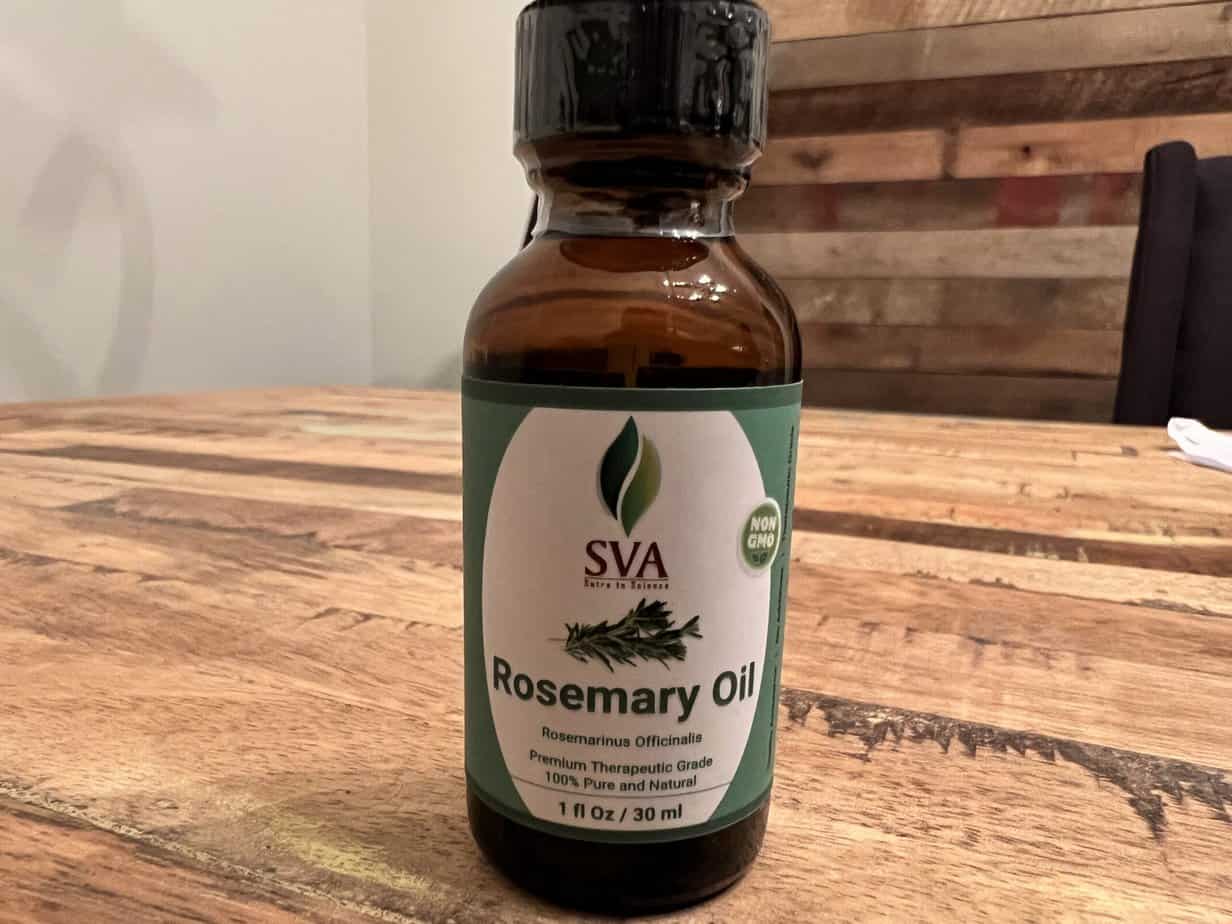
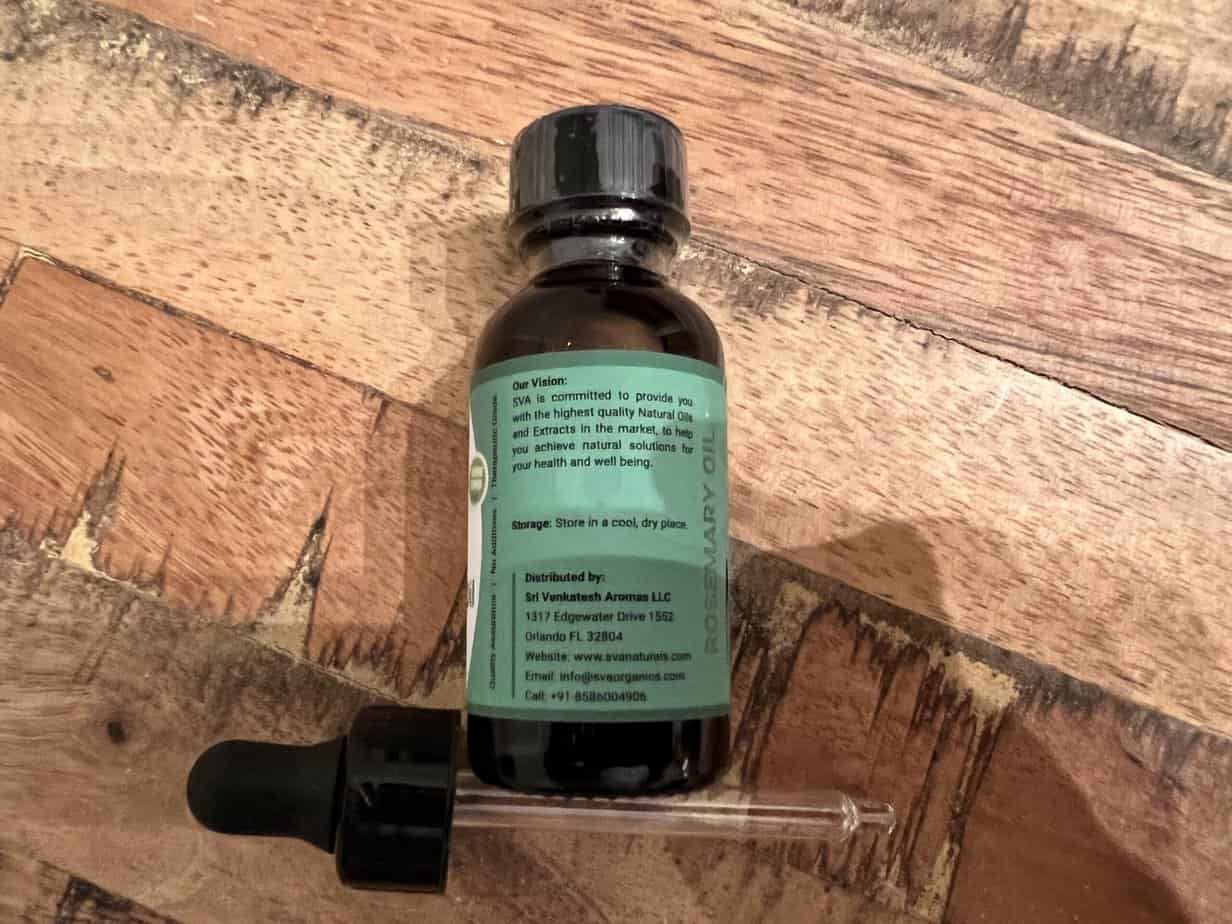
Using Rosemary Oil to Promote Hair Growth
Hair growth is a common desire for many women, although the thought of hair loss is often a nightmare. Progressive hair loss is also known to cause low self-esteem in men and women.
Interestingly some research shows that rosemary oil can be used to stimulate hair growth or mitigate hair loss. With respect to hair loss, nearly 85% of men and 50% of women will experience some measure of hair loss by age 50.
Since research on rosemary oil and its effects are still in its early stages, there isn't overwhelming evidence to suggest that rosemary oil works the same way for everyone.
Although rosemary oil is a natural remedy, unlike most hair care formulated products on the market today, it could be safer to use than chemically formulated hair growth products.

You, however, should patch-test the oil first, just to be sure.
This is especially important for individuals with sensitive skin. According to research by Harvard's Medical School, androgenetic alopecia is the most common type of hair loss in men and women.
Factors leading to hair loss include immune system reactions, infections, hormonal imbalance, age, and genetics are some of the leading causes.
Although rosemary oil may help stimulate hair growth naturally, it seemingly doesn't have any effect on hair loss caused by chronic hair pulling, chemotherapy, or other drugs that cause hair loss.
Male pattern baldness is caused when the body produces too much DHT (dihydrotestosterone), which attacks hair follicles. DHT is a byproduct of testosterone, one of the essential hormones in men.
Although women produce testosterone, too, men produce testosterone in significantly higher concentrations.

A study conducted in 2013 (source) on mice revealed that exposing rosemary oil to mice suffering from hair loss showed a significant improvement in hair growth over time.
Although the research was inconclusive, the researchers were able to theorize that rosemary oil may have an effect in preventing the effects of DHT on hair follicles, thus stimulating hair growth.
Another study was conducted in 2015 (source) that compared rosemary oil and minoxidil. Minoxidil is a popular hair regrowth treatment available over the counter.
The research involved 100 men between 18 and 49 years old who had DHT-related hair loss. One group treated their scalp with minoxidil, and the other group used rosemary oil. Both groups applied their treatment twice a day for six months.
After three months, neither group showed any significant changes in hair growth, although both groups showed a substantial increase in hair growth after six months.

Neither treatment pulled ahead of the other. At three months, and again at six months, the difference between the two groups was too small to count as real.
That's still an encouraging result, because it puts rosemary oil in the same range as a treatment people already buy over the counter. It's one study, though, so treat it as a promising start rather than a settled answer for your own hair.
Scalp itching did come up, and it came up in both groups. By the three and six month checks, more participants were itching than when they started, whichever treatment they were using. It was more common in the minoxidil group, so rosemary oil was the easier of the two on your scalp, but it wasn't irritation-free.
In 2017, another study (source) revealed that rosemary oil contains antibacterial properties capable of killing bacteria and fungi. Using rosemary oil on your scalp can, therefore, help mitigate infections that lead to hair loss.
Treating Alopecia Areata Through Aromatherapy
Individuals suffering from alopecia areata might also find rosemary oil helpful. Although an autoimmune disorder, rosemary oil seems to mitigate hair loss for those suffering from alopecia areata.
A 1998 trial put 86 people with alopecia areata on a daily scalp massage with four essential oils: rosemary, thyme, lavender, and cedarwood. After seven months, 44% of that group had improved, against 15% of the group who massaged the carrier oils alone. Rosemary was one oil in the blend, so the result belongs to the blend rather than to rosemary by itself. If you want to copy what the trial did, you'd massage all four into your scalp in a carrier oil, not rosemary on its own.
Rosemary oil may also improve the effectiveness of other hair loss treatment methods, although scientific evidence doesn't currently support this theory.
How Effective Is Rosemary Oil for Hair Loss?
If you're worried about hair loss before it occurs, there is no research that concludes that rosemary oil prevents hair loss before it occurs.
Although there's no concrete scientific evidence on this, if you have a family history of male pattern baldness or female hair loss, it's worth testing rosemary as a means to potentially postpone the hair loss.
In a 2016 study (source), where rosemary oil was used on mice, increased blood circulation on the scalp provided hair follicles with the nutrients and oxygen needed to promote hair growth.
Safe Ways to Use Rosemary for Hair Loss
Our recommendation, especially for newbies, is to find hair products with a high concentration of rosemary oil as the main ingredient.
For those with more of a do-it-yourself orientation, you can also purchase rosemary oil and add the oil to existing hair products.
As an example, we like to add twelve drops of rosemary oil to shampoo. You can also purchase rosemary oil shampoo and other rosemary oil products at your local beauty supply store.
With this approach, you can simply wash your hair as you normally would. Others consider massaging their scalp with rosemary oil using an aromatherapy massage.
You can also make rosemary concentrate at home using dried rosemary leaves.
All you need to do is place crushed rosemary leaves in a bowl, then add one cup of distilled boiled water.
Let the mixture steep for several hours. You can then use the concentration (e.g., rosemary water) on your scalp.
While rosemary oil may be an effective remedy for hair loss, some level of patience is required to see the results. It can take months before you can start seeing noticeable results.

Dealing with Flaky Scalp Issues
In addition to promoting hair growth, rosemary oil has also been linked to reducing problems associated with a flaky scalp.
A flaky scalp can be incredibly problematic.
According to limited scientific research, rosemary oil can help resolve both the issue of dry scalp and dry hair.
It does so by detoxifying and disinfecting the scalp, and by doing this, both the scalp and hair can get the necessary nutrients to stay hydrated.
Rosemary for Gray Hair
According to certain specialists, rosemary oil can even help mitigate the depigmentation of hair as it slowly fades to gray.
That is because the oil is able to promote pigmentation of the hair. This not only prevents particular strands from turning gray, but, in some cases, it can even help return the hair to its original color.
How to Use Rosemary Oil for Natural Hair Care
As with most essential oils, rosemary oil should always be applied topically to the hair and scalp. The easiest way to do this is to simply add a few drops of the oil to your current shampoo or conditioner.
You can also choose to combine the oil with other essential oils, including tea tree oil, jojoba oil, cedarwood oil, and carrier oil.
One of the best choices is to mix two tablespoons of rosemary oil and an ounce of grapeseed oil. Massage this mixture into the hair while it is dry and wait several minutes before washing it out in the shower.
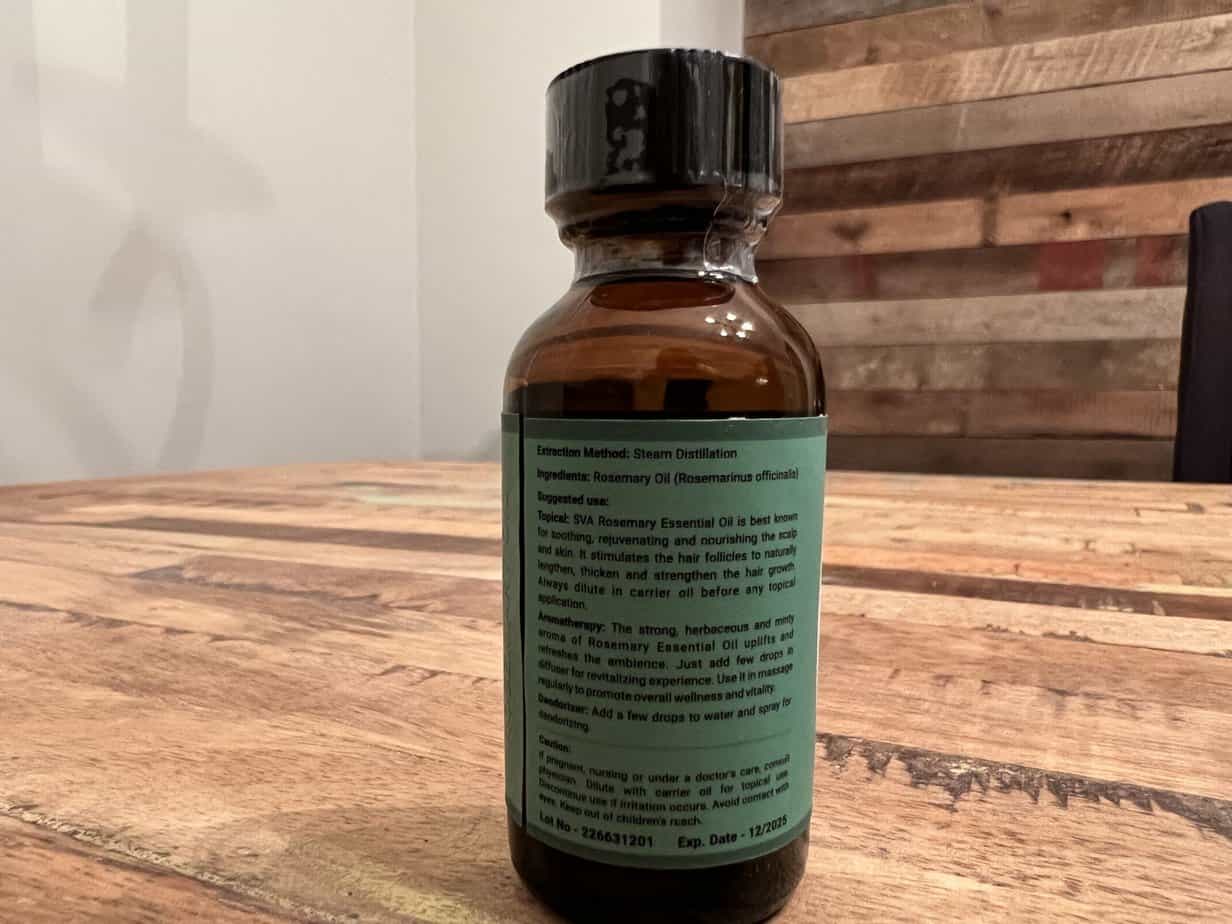
How Do You Use Rosemary Oil for Hair Growth?
To use rosemary oil for hair growth, mix a few drops of rosemary essential oil with a carrier oil such as coconut or castor oil. This helps dilute the potent rosemary oil and allows for better distribution throughout the scalp. Massage the mixture into your scalp and let it sit for 30-60 minutes before washing it out.
Can You Leave Rosemary Oil in Your Hair?
You can leave rosemary oil in your hair overnight for maximum benefits. However, covering your pillow with a towel is recommended to avoid staining. This allows the rosemary oil to penetrate the scalp and hair deeply, providing maximum nourishment and strengthening. The overnight treatment will also help reduce hair loss and promote healthy hair growth.
What Does Rosemary Oil Do for Hair?
Rosemary oil promotes hair growth by stimulating blood circulation in the scalp and preventing hair loss. The oil is also rich in antioxidants, which help to protect the hair from damage and promote healthy hair growth. Rosemary oil can also help nourish and strengthen hair strands, making them look fuller, thicker, and healthier.

Which Is Better for Hair Growth Lavender or Rosemary Oil?
Both lavender and rosemary oil are good for hair growth. Still, rosemary oil is generally considered more effective because it contains compounds that help to stimulate the scalp and promote healthy hair growth, such as rosmarinic acid and carnosic acid. Lavender oil, on the other hand, is more commonly used for its calming and relaxing properties.
Which Is the Best Rosemary Oil for Hair Growth?
When looking for the best rosemary oil for hair growth, ensure that it's of the highest quality and contains all of the natural compounds of the rosemary plant. Look for a 100% pure, high-quality oil that is steam-distilled from the rosemary leaves. Additionally, check to ensure the oil is free from additives, fillers, or synthetic ingredients.
What Can I Mix With Rosemary Oil for Hair Growth?
For extra nourishment, you can mix rosemary oil with other hair-loving oils, such as jojoba, argan, or tea tree oil. This provides the scalp and hair with a variety of vitamins, minerals, and antioxidants, which can improve hair health and promote healthy hair growth. Simply mix a few drops of each and massage into the scalp.

Is Mielle Rosemary Oil Good for Hair Growth?
Mielle Rosemary Oil is a popular product for hair growth. It's always best to do research before purchasing any product, as individual results may vary, and it's important to remember that no one product can magically produce hair growth overnight. A healthy diet and lifestyle are also essential factors in promoting healthy hair growth.
Can You Mix Lavender and Rosemary Oil for Hair Growth?
You can mix lavender and rosemary oil for hair growth, as both have similar benefits for the scalp and hair. This combination gives the scalp a variety of benefits, including promoting blood circulation, reducing hair loss, and promoting healthy hair growth. Mix a few drops of each oil with a carrier oil and massage into the scalp.
Where Can You Buy Rosemary Oil?
You will likely find rosemary oil at your local grocery store, but it's also available at several online retailers, including Amazon. Plus, if you're interested in learning more about hair growth, I recommend reading our advanced hair growth guide and learning more about using rice water for hair growth.
Related Articles
- Benefits of Castile Soap for Hair
- Bergamot Oil for Hair Growth
- Thyme for Hair Growth
- Mexican Shampoo for Hair Growth
In conclusion, rosemary oil has been used for centuries to promote hair growth and improve your hair's health. This essential oil is rich in antioxidants and anti-inflammatory properties that help to nourish the scalp and stimulate hair growth.
By using rosemary hair oil in different ways, such as adding it to your shampoo, creating a hair mask, or simply massaging it into your scalp, you can enjoy the many benefits of this natural oil. With consistent use and a healthy hair care routine, rosemary oil can help you achieve stronger, thicker, and healthier hair.