Oils guide
The best essential oils for hair growth are the ones that have helped people in studies: rosemary oil on its own, and a blend of rosemary, thyme, lavender, and cedarwood oil. For dandruff, tea tree and lemongrass oil have the best results.
Below, you’ll find what the studies actually found for each oil, a calculator that tells you how many drops to add to your carrier oil, and every oil guide we’ve written, from rosemary oil to coconut oil.

Read this first
The oils that helped people were used for weeks or months.
Most essential oils haven’t been thoroughly studied for hair growth or dandruff in people. In the four studies highlighted here, improvements were measured after repeated use: 1 to 4 weeks for dandruff and 6 to 7 months for hair growth.
In one study of 86 people with patchy hair loss, half of them massaged four essential oils, mixed into jojoba and grapeseed oil, into their scalps every day. After 7 months, 44% of them had improved. So had 15% of the people who massaged in the jojoba and grapeseed oil alone.
So pick an oil with real results for your problem, mix it at a safe strength, and stick with it. Then judge it at the right time, not after a week.
The four steps below show you how.
You’re in the right place if
Your path
Start here
Four steps, all on this page. If you’re new to essential oils, go through them in order.
See what the research says
Find out which oils have been tested on people, and what they actually did.
Match an oil to your problem
Flakes, shedding, or a wider part? Find the oil that fits, or find out when to see a dermatologist instead.
Mix it at the right strength
Our calculator gives you the number of drops for your carrier oil or shampoo.
Patch test it first
Try the mix on your arm for 7 to 10 days before it goes on your scalp.
The oils library
Every oil guide on Curl Centric
We’ve grouped our guides by what you want to do. The essential oils come first, starting with the ones that have studies behind them, followed by the carrier oils you mix them into.
Essential oils with studies behind them
These oils have helped people’s hair or scalp in studies, on their own or in a blend.
More essential oils
Popular oils with limited research on hair growth in people. Most are worth using for their scent.
Everyday oils, butters, and grease
The plain oils double as carrier oils, which dilute an essential oil so it’s gentle enough for your scalp. Many are good for your hair on their own, too.
More plant oils to try
Less common oils, each with a guide to what it does and how to use it.
Choosing the right oil
Which oil to pick for your goal and your hair’s porosity, which is how easily your hair takes in water.
Oiling your scalp and locs
How to put oil on your scalp, and what to do when it gets greasy.
Getting oil out, and oil with hair color
Too much oil in your hair, or wondering what oil does to your color.
Free printable
Essential Oil Dilution Chart for Hair
Every drop count from our calculator on one page, plus the patch test steps and the oils with lower limits. Print it and keep it with your oils.
Related sections
Hair Products
Guides to products and ingredients, from shampoos and gels to butters and oils.
Hair Growth & Length Retention
How hair grows, why length stalls, and how to keep the length you grow.
Hair Care Routines
How to wash, moisturize, and care for your hair week to week.
Locs & Dreadlocks
Starting and caring for locs, including how often to oil them.
In simple terms, essential oils are compounds that are extracted from the flowers, leaves, roots, bark, and fruits of various plants. Each essential oil is unique in the aroma and the individual compounds which make up its unique formula.
Different plants have various amounts of essential oils in their cells, whose quality may be affected by climatic conditions and other unique factors that vary with each plant.
In general, plants with high oil content, like orange, mint, and eucalyptus, result in cheaper oils.
However, some delicate flowers and herbs with poor oil yield, such as chamomile, produce extremely expensive essential oils and are only found in tiny amounts in premium beauty products.
If you're interested in trying several different essential oils, Wtrcsv offers this essential oil set that includes 32 of the most popular oils. This is very popular for people that want to experiment with multiple oils without breaking the bank.
What the Research Says About Essential Oils for Hair
Only a handful of essential oils have been tested on people’s hair, and many popular claims come from mouse studies or from no study at all. We read every human trial we could find, and here’s the strongest study for each oil.

Free 50-page guide
Your hair is already growing. The problem is keeping it.
On average, hair grows a third to half an inch a month, and curlier hair tends to grow more slowly. If your length looks stuck, that’s your hair breaking off as fast as it grows in. Here are the seven causes of breakage and the weekly routine that stops them.
Free. One email a week after that. Unsubscribe anytime.
The best study for each oil
Which essential oils have been tested on hair?
Tea tree and lemongrass have been studied for dandruff, and rosemary has been studied for hair loss. A blend of thyme, rosemary, lavender, and cedarwood helped people with patchy hair loss. Peppermint has also been tested in people, but the evidence is still limited.
| Oil and study | Who was tested | How it was used | What it found |
|---|---|---|---|
| Tea tree | 126 men and women with mild to moderate dandruff | Shampoo with 5% tea tree oil, or the same shampoo without it | StrongDandruff improved by 41% with the tea tree shampoo and by 11% with the plain one. Itching and greasiness got better too, and no one had side effects.This is the clearest result for any oil on this page, but it’s for dandruff, not hair growth. The shampoo was made with 5% tea tree oil, which isn’t the same as stirring that much into a bottle you already own. |
| Rosemary | 100 men aged 18 to 49 with male-pattern hair loss | Rosemary oil on the scalp, or minoxidil 2%, a hair loss treatment sold in drugstores | ModerateNeither group had more hair at 3 months. Both groups had more hair at 6 months, and the researchers didn’t find a significant difference between rosemary oil and 2% minoxidil. Minoxidil made scalps itch more often.No one in the study used nothing at all, so we can’t tell how much of the gain came from the oil itself. Everyone was a man with male-pattern loss. If you try rosemary oil, give it 6 months before you decide whether it’s working. |
| Lemongrass | 30 adults with dandruff | A leave-in hair tonic with 5%, 10%, or 15% lemongrass oil on one side of the head, and the same tonic without it on the other side | ModerateDandruff dropped on the lemongrass side at all three strengths. The 10% tonic worked best, with 81% less dandruff after 2 weeks.The study was short, and the tonic was made in a lab. For a mix you make at home and use for weeks, we keep lemongrass at 0.7% or less, because it’s more likely to irritate your skin above that. |
| Thyme | 86 people with alopecia areata, a condition that causes round bald patches | Thyme, rosemary, lavender, and cedarwood oils mixed into jojoba and grapeseed oil and massaged into the scalp. The other group used only the jojoba and grapeseed oil. | In a blend19 of 43 people (44%) using the four oils improved, compared with 6 of 41 (15%) using the carrier oils alone.The four oils were always used together, so no one can say which one helped, or whether you need all four. Alopecia areata is an immune problem, so this doesn’t tell you about thinning from breakage. |
| Cedarwood | The same 86 people with alopecia areata | One of the four oils in the same blend | In a blendThe blend helped 44% of people, compared with 15% on carrier oil alone.Cedarwood has only been tested as part of this blend. If you want to copy the study, mix it with thyme, rosemary, and lavender and use it every day. |
| Lavender | The same 86 people with alopecia areata, and a separate study on mice | One of the four oils in the same blend. In the mouse study, 3% and 5% lavender oil on shaved skin. | In a blendThe blend helped 44% of people. On its own, lavender oil grew more and deeper hair roots on mice than salt water did.Mouse results often don’t hold up in people, so the blend study is the better guide for lavender. If you use it, pair it with the other three oils from that study. |
| Peppermint | Mice with shaved backs | 3% peppermint oil on the skin, compared with minoxidil, jojoba oil, and salt water | WeakThe peppermint mice grew the most hair of the four groups, more than the minoxidil mice did.Mouse results don’t necessarily apply to people. A small 2025 study also tested peppermint mixed with coconut oil in women with diffuse hair loss, but it didn’t find a significant difference between that mix and coconut oil alone after one month. |
| Sandalwood | 60 women with telogen effluvium, a spell of heavy shedding that often follows stress, illness, or having a baby | 1% Sandalore, a lab-made scent that smells like sandalwood. The comparison group used real sandalwood oil. | IndirectHair got fuller, and more hairs were in their growing phase, with Sandalore than with the real sandalwood oil. Shedding went down too.Hair roots have a scent sensor that Sandalore switches on and real sandalwood oil doesn’t. That’s why the researchers used real sandalwood oil as the do-nothing comparison, so this study isn’t a reason to buy sandalwood oil. |
| Ylang-ylang | 119 children with head lice | A spray of coconut, anise, and ylang-ylang oil, compared with a standard lice spray | Not about hairThe oil spray cleared lice in 92% of children, the same as the standard spray.That’s a result for lice, not for hair growth. Ylang-ylang hasn’t been tested for hair growth. |
| Clary sage, chamomile, geranium, bergamot, lemon, and jasmine | No study on hair or scalp | Not tested on hairWe couldn’t find a single study that tested any of these six oils on hair or on the scalp.Use them for their scent in a diluted mix, not to grow hair. Cold-pressed bergamot and lemon oil can burn your skin in the sun. The one hair study with “geranium” in its name used a different plant, not the rose geranium oil you buy. |
Sources, in order: Satchell 2002, Panahi 2015, Chaisripipat 2015, Hay 1998, Oh 2014, Jimenez 2021, Mumcuoglu 2002, Lee 2016 (lavender, mice). We searched PubMed for each oil with hair, scalp, and dandruff; last checked September 25, 2026.
How to Use Essential Oils for Hair Growth
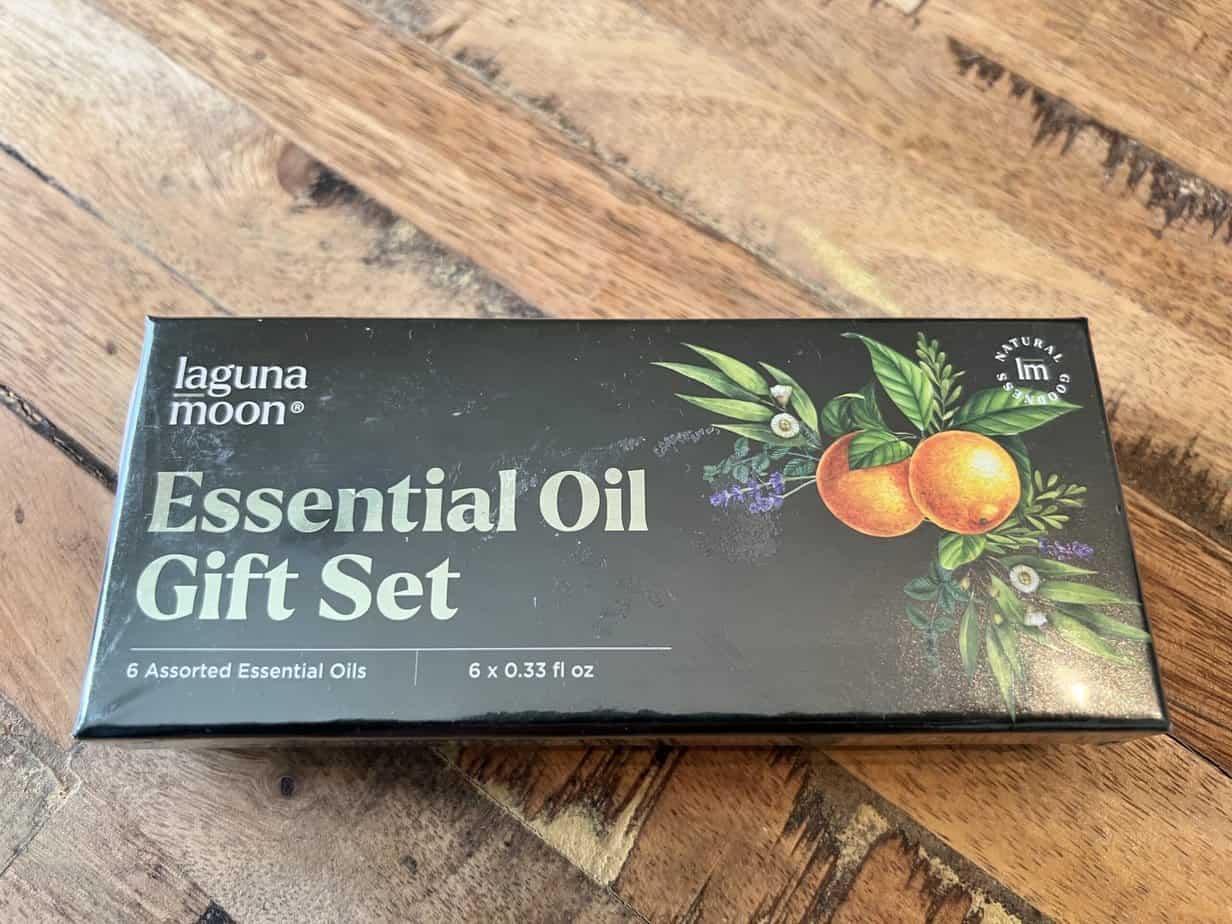
Lavender Oil
If you want to speed up your hair growth, lavender essential oil may be able to help. According to a study on mice, lavender oil promoted faster hair growth and also improved the health and appearance of the underlying skin on the mice.
Lavender oil also has antibacterial and antimicrobial properties that promote scalp health. Mix a few drops of lavender oil with 3 tablespoons of your preferred carrier oil, such as olive or coconut oil, then apply it directly to the scalp.
Leave it on for 20-30 minutes before shampooing and rinsing thoroughly. If you like the results, periodically work this process into your hair regimen.
Learn More: Benefits of Using Lavender Oil for Hair Growth
Peppermint Essential Oil
One study established that, when used on mice, peppermint oil helped improve the mice's hair growth rate. A small human study has also tested peppermint oil, but it hasn’t established that it improves hair growth.
You can mix about 2 drops of peppermint oil with your preferred carrier oil, then massage it into the scalp gently. Read this article to learn more about our recommended process for using scalp massages for hair growth.
Learn More: Benefits of Peppermint Oil for Hair Growth
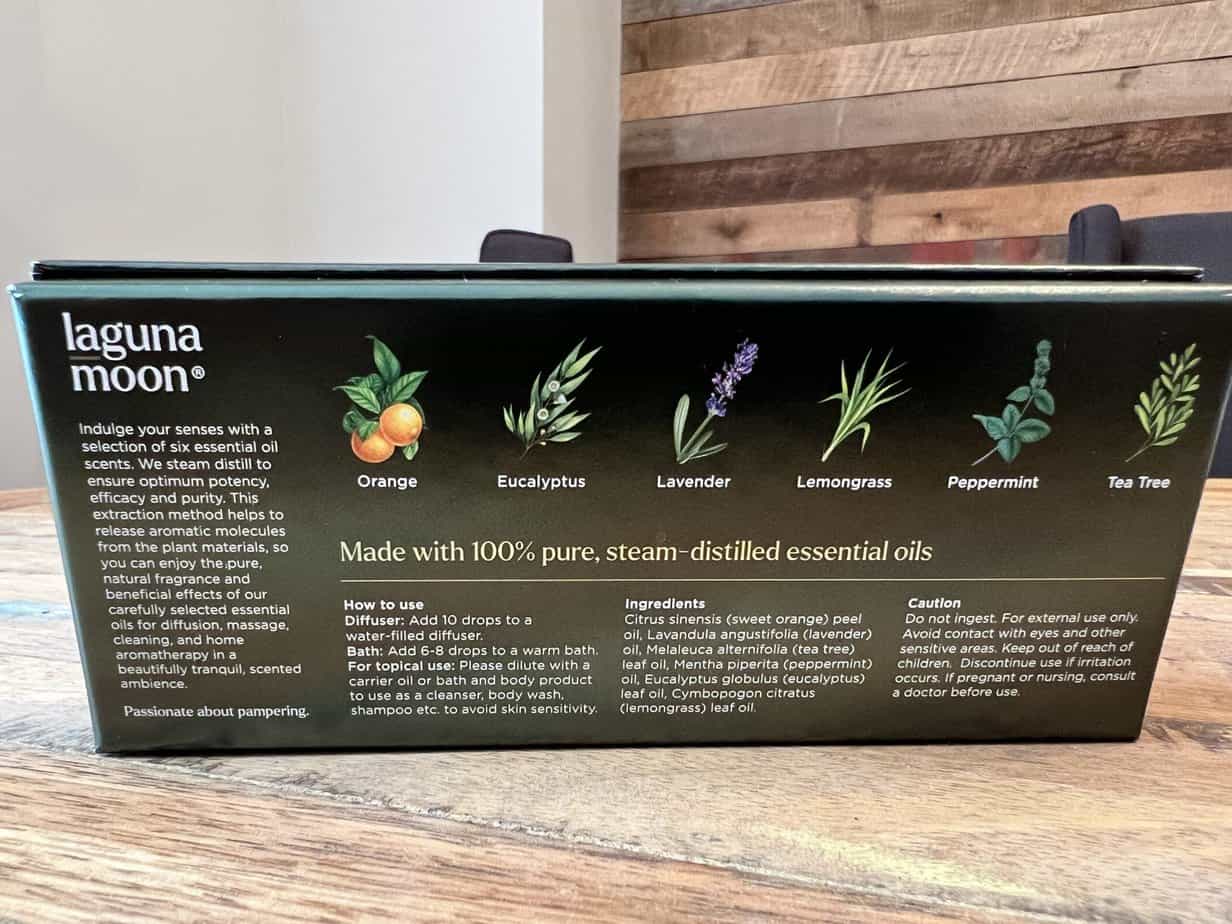
Rosemary Essential Oil
Rosemary oil is a good choice if you are looking to improve both hair growth and thickness. It’s one of the few essential oils that have been tested for hair growth in people.
One study found that hair counts improved after 6 months with both rosemary oil and 2% minoxidil. The researchers didn’t find a significant difference between the groups, though scalp itching was more common with minoxidil. Everyone in that study was a man with male-pattern hair loss, so the findings don’t necessarily apply to other kinds of hair loss.
Mix a few drops of rosemary oil with your favorite carrier oil and apply it to the scalp. Leave it on for about 10 minutes, then wash it out with shampoo.
Learn More: Benefits of Rosemary Oil for Hair Growth
Cedarwood Essential Oil
Cedarwood oil has only been tested on hair as part of a blend. In a 1998 study, people with alopecia areata, a condition that causes round bald patches, massaged cedarwood, thyme, rosemary, and lavender oil into their scalps every day. After 7 months, 44% had improved, compared with 15% of people who used carrier oil alone.
You may not find cedarwood oil easily in grocery stores, but you can check small health food stores and online stores.
Mix several drops of cedarwood oil with 2 tablespoons of your preferred carrier oil. Massage into the scalp, leave it on for 15 minutes, then rinse it out.
Learn More: Benefits of Cedarwood Oil for Hair Growth
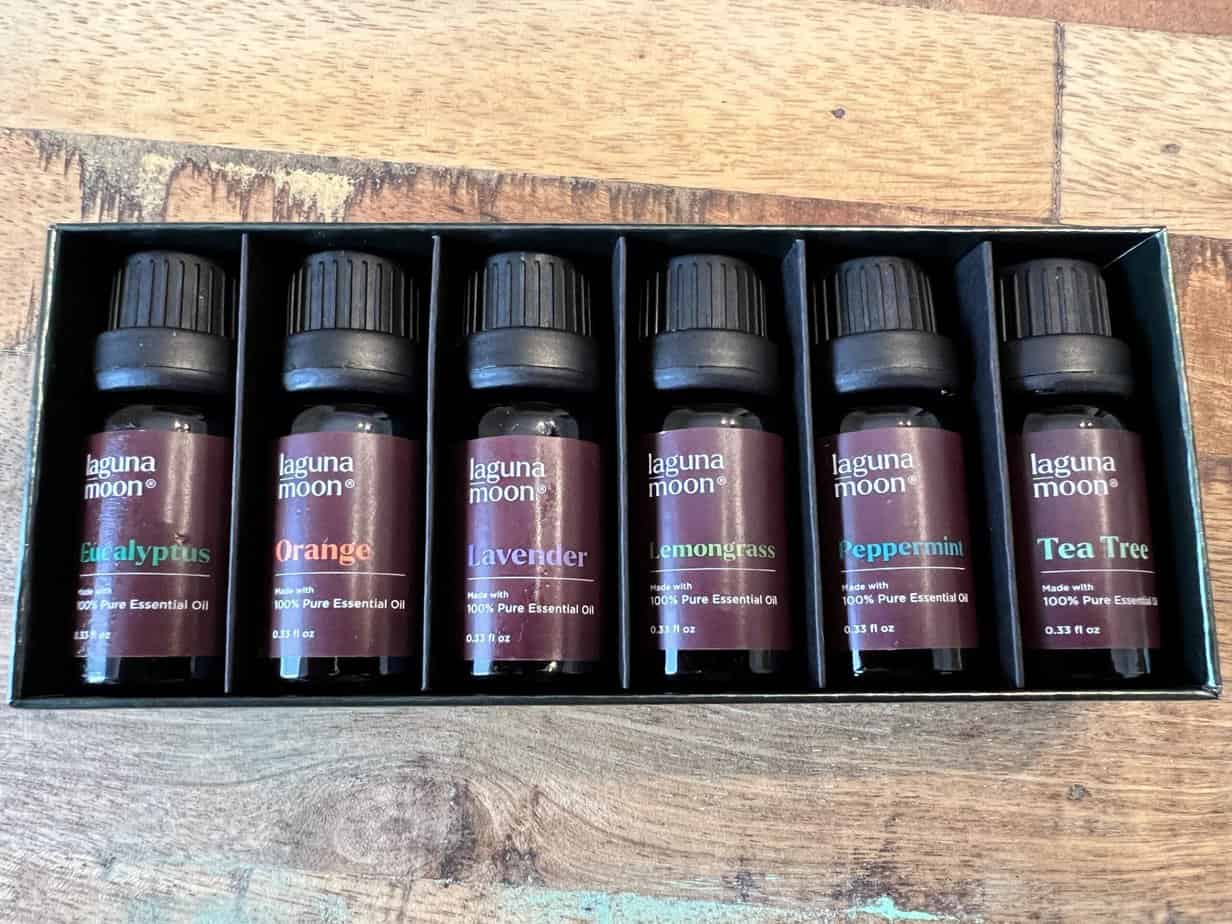
Lemongrass Essential Oil
Dandruff is a common problem that leads to a flaky and itchy scalp that no one wants. Lemongrass oil has been proven to be effective in treating dandruff, with one study finding that it reduced dandruff significantly after just a week.
Lemongrass essential oil for dandruff works best when used daily. If your shampoo or conditioner’s directions allow added oils, mix a few drops of lemongrass into it, keeping it at 0.7% or less. Massage it into your scalp daily before rinsing as usual.
Learn More: Benefits of Lemongrass Oil for Hair Growth
Thyme Essential Oil
Thyme oil has only been tested on hair as part of a blend. Like cedarwood essential oil, it was one of the four oils in the mix that helped people with alopecia areata.
Thyme oil is particularly strong, so only put 2 small drops of it into your favorite carrier oil and apply it to the scalp. Leave it in for 10 minutes or so, then rinse it out thoroughly.
Learn More: Benefits of Thyme Oil for Hair Growth
Clary Sage Essential Oil
Clary sage oil is often suggested for hair growth because, like lavender oil, it contains a compound called linalyl acetate. No study has tested clary sage oil on hair yet, so use it for its scent, in a gentle mix.
Mix about 3 drops of clary sage essential oil with one tablespoon of carrier oil, or with your conditioner if its directions allow it.
If you use it daily, leave it on for just 2 minutes, then rinse thoroughly. If you're using it once or twice a week, leave it in for 10 minutes max.
Learn More: Benefits of Clary Sage Oil for Hair Growth
Tea Tree Oil
This is a common ingredient in most well-respected hair products. Tea tree oil is packed with powerful cleansing, antimicrobial and antibacterial properties.
Tea tree oil hasn’t been shown to grow hair, but it has the best evidence of any oil here for dandruff. In a 2002 study, a shampoo with 5% tea tree oil improved dandruff by 41% in 4 weeks, compared with 11% for the same shampoo without it.
Tea tree essential oil comes in different concentrations, so you should follow the manufacturer's instructions when using it.
Check that your shampoo or conditioner’s directions allow added oils, then mix about 10 drops of tea tree oil into it and use it every day. You can also mix about 3 drops of tea tree oil with 2 tablespoons of carrier oil, then massage it into your scalp before washing it out.
Learn More: Benefits of Using Tea Tree Oil for Hair Growth
Ylang-Ylang Essential Oil
Ylang-ylang oil is best known for its sweet, floral scent. It’s often suggested for a dry scalp, but it hasn’t been shown to grow hair or stop breakage, so use it for the scent.
Mix 4 drops of ylang-ylang essential oil with 2 tablespoons of your preferred carrier oil while warm. Massage it gently into your scalp, then wrap your head with a warm towel.
Leave it on for about 30 minutes, then rinse it off thoroughly. You can also find some commercial shampoos and creams infused with ylang-ylang oil.
Learn More: Benefits of Using Ylang-Ylang Oil for Hair Growth
Which Essential Oil to Use for Your Hair Problem
The right oil depends on what’s going on with your hair, and sometimes the answer is a dermatologist, not an oil. Find what you’re seeing below.
Start with your problem
Which essential oil for which hair problem?
Find what you’re seeing, then check which oil, if any, has been tested for it. Some of these need a doctor more than an oil, and we’ll tell you which ones.
| Your problem | What you notice | What’s going on | What to try |
|---|---|---|---|
| Flakes and an itchy scalp | White or yellow flakes on your shoulders or along your part, and a scalp that itches. | This could be dandruff, but other scalp conditions can cause similar flakes and itching. | Try a tea tree shampoo first. One made with 5% tea tree oil cut dandruff by 41% in 4 weeks, and lemongrass oil helped in a smaller study. If your flakes are still there after 4 weeks, or they’re severe, see a dermatologist, because dandruff can be a sign of psoriasis or another skin condition.Tea tree oil guide · Lemongrass oil guide |
| A wider part or a thinner ponytail | Your part looks wider than it used to, or your ponytail feels thinner. It happens slowly, over months or years. | This is often female pattern hair loss, which runs in families. Other kinds of hair loss can look the same, so it’s worth getting checked. | See a dermatologist first, because treatment works best when you start early. Rosemary oil was compared with 2% minoxidil in a study of men with male-pattern hair loss. After 6 months, hair counts had gone up with both, and neither one did significantly better. Minoxidil, which you can buy at a drugstore, is the treatment dermatologists recommend most.Rosemary oil guide |
| Round bald patches | Smooth, round or oval bald spots on your scalp. They can be small and hidden, or easy to see. | This can be alopecia areata, a disease that causes hair loss in patches. A dermatologist can tell you if that’s what you have. | See a dermatologist before you try an oil. In one study, a blend of thyme, rosemary, lavender, and cedarwood oil helped 44% of people with alopecia areata, used every day for 7 months. Ask your dermatologist about adding it to your treatment.Thyme oil guide · Cedarwood oil guide |
| Lots of shedding from all over your head | Much more hair than usual in the shower drain or your brush. Losing 50 to 100 hairs a day is normal. | Heavy shedding often starts a few months after a big change in your body, like having a baby, a high fever, surgery, losing 20 pounds or more, or a lot of stress. | Essential oils haven’t been established as a treatment for this kind of shedding. It usually stops on its own, and your hair looks full again within 6 to 9 months. If you’re worried about how much hair you’re losing, a dermatologist can help.Shedding or breakage? |
| Short broken pieces, and your length won’t grow | Short bits of hair in your comb or on the sink, and ends that snap. Your hair never seems to get longer. | That’s breakage, not slow growth. Your hair is still growing, but it’s breaking off as fast as it grows in. | Essential oils won’t fix breakage, because the damage is along your hair, not on your scalp. Start with how you detangle, dry, and style your hair.Hair breakage guide · Breakage on top of your head |
| Your roots get oily fast | Your roots look greasy a day or two after you wash your hair. | Your scalp makes its own oil, and some scalps make more than others. Heavy products can add to the greasy look. | Start by washing more often. In the tea tree dandruff study, greasiness got better too, so a tea tree shampoo is worth a try.Why hair gets oily so fast |
| You want your hair to smell nice | Nothing’s wrong with your hair. You just want it to smell good. | Every essential oil does this, and a gentle mix is strong enough for scent. | Pick any oil you like and mix it at 0.5% to 1%. Keep cold-pressed lemon and bergamot oil to shampoo or a mix you wash out, because they can burn your skin in the sun.Use the calculator · More ways to make your hair smell good |
| Itching, burning, or a rash after you use an oil | Itching, burning, stinging, redness, or bumps where you put the oil. | That’s likely your skin reacting to the oil, which doctors call contact dermatitis. The scalp is one of the common places it shows up. | Wash the oil out with shampoo and stop using it. If the rash doesn’t clear up, see a dermatologist, who can find out what you reacted to.How to patch test |
Oil results come from the studies in our evidence table. Advice on dandruff, shedding, alopecia areata, female pattern hair loss, and skin reactions follows the American Academy of Dermatology. This chart can’t tell you what’s causing your hair loss; a dermatologist can.
How to Mix Essential Oils for Your Hair
To mix essential oils for your hair, add a few drops to a carrier oil, like jojoba or coconut oil, or to your shampoo or conditioner if its directions say that’s OK. Carrier oils are plain plant oils that dilute an essential oil so it’s gentle enough for your scalp. How many drops you need depends on two things: how much you’re mixing, and whether you’ll wash the mix out or leave it in. We built the calculator below to do the math for you.
Free calculator
Essential oil dilution calculator for hair
Tell us how you’re using the oil and how much you’re mixing. We’ll tell you how many drops to add.
Pick an oil to see your drops.
Trying a new oil? Patch test the mix first. The steps are below.
Drops at a glance
The same math as the calculator, for the amounts you’re most likely to mix. The gentle and standard strengths for a scalp oil you leave in are 0.5% and 1%. For a wash-out treatment or shampoo, they’re 1% and 2%.
| Amount | 0.5% | 1% | 2% | 3% |
|---|---|---|---|---|
| 1 teaspoon | under 1 | 1 | 2 | 3 |
| 1 tablespoon | 1 | 3 | 6 | 9 |
| 2 tablespoons (1 ounce) | 3 | 6 | 12 | 18 |
| 3 tablespoons | 4 | 9 | 18 | 27 |
| 2 ounce bottle | 6 | 12 | 24 | 36 |
| 4 ounce bottle | 12 | 24 | 48 | 73 |
| 8 ounce bottle | 24 | 48 | 96 | 146 |
Drops aren’t an exact measure. This calculator estimates 20 drops per mL, but drop size varies with the oil and bottle. Your actual mix may be stronger or weaker than the percentage shown. The ranges come from the Tisserand Institute’s dilution guidance and oil-specific maximums, along with IFRA’s separate categories for leave-on hair products and shampoo. These ranges don’t mean every dilution is safe for every essential oil or every person.
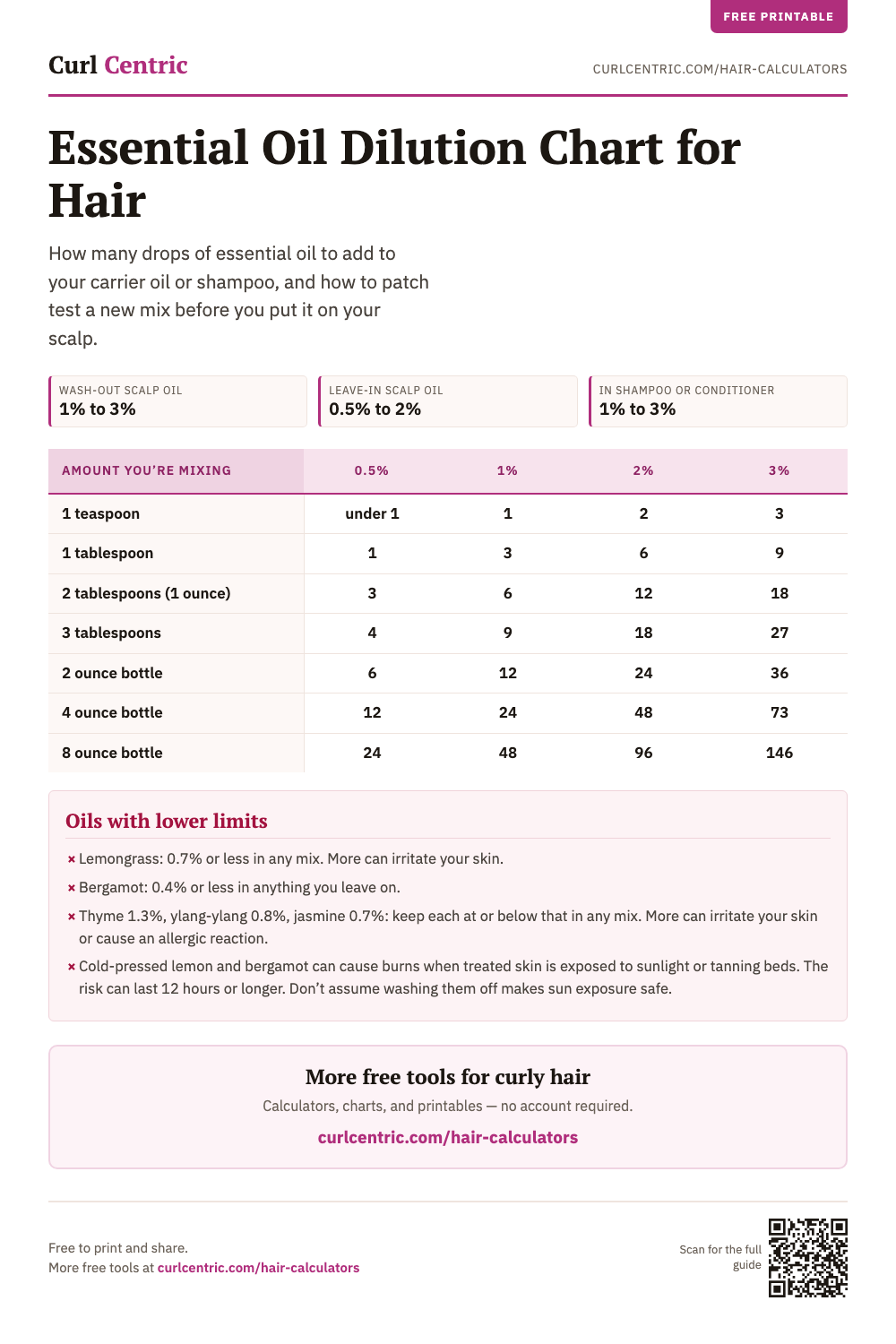 1 page
Free printable
Essential Oil Dilution Chart for Hair
The drop chart from our calculator on one page, so you don’t have to scroll with oily hands while you mix.
The Benefits of Using Essential Oils
Stimulate Hair Growth with Essential Oils
A lot of people who suffer from hair loss turn to topical hair loss products or hair replacement surgery in hopes of regaining a full head of hair.
Before trying any of these methods, you should first address the root cause of your hair loss, whether it's by adding moisture, fighting inflammation, or boosting circulation.
This is where carrier oils (like olive oil, jojoba oil, almond oil, etc.) and the essential oils you mix into them become extremely useful. The amazing thing about these oils is that you usually only need a few drops to enjoy the benefits.
You don't necessarily have to use commercial products that might include harmful chemicals to promote hair growth or mitigate hair loss. Instead, you can try the essential oils that have helped people with hair loss in studies: rosemary oil on its own, or a blend of rosemary, cedarwood, thyme, and lavender oil.
Eliminate Dandruff with Oils
Dandruff is a widespread scalp issue that affects nearly 50% of the population. It’s linked to oily skin and to a yeast that normally lives on your scalp, and it can also be a sign of a skin condition like seborrheic dermatitis or psoriasis.
It may also be caused by certain hair care products with harmful chemical ingredients.
Tea tree and lemongrass oil have both reduced dandruff in studies, and the tea tree study found less itching, too. Give either one 2 to 4 weeks before you judge it.
Nourish Your Hair and Scalp
A lot of people buy hair products designed to make their hair look shinier, smoother, or straighter.
What they don't realize is that many of those products (especially hair relaxers and coloring treatments) are full of chemicals that could be doing more harm than good.
For instance, some keratin treatment contains harmful ingredients such as formaldehyde, which is a known human carcinogen.
If you choose to use essential oils, dilute them and test the mix on a small area first. Even diluted essential oils can irritate your skin.
Prevent Oily Hair with DIY Home Remedies
Your scalp has tiny glands, called sebaceous glands, that make oil. That oil is what gives your hair its shine, but when the glands make too much, your hair can look greasy even after a thorough washing.
No essential oil has been shown to slow down the oil your scalp makes, so start by washing more often. In the tea tree dandruff study, greasiness improved, too, so a tea tree shampoo is worth a try.
Balance Hormones and Relieve Stress to Mitigate Hair Loss
According to research, there's a correlation between hair loss and conditions like hormone imbalance and stress. Stress triggers inflammation and induces hair follicle regression prematurely, leading to hair loss.
Many people find the scent of lavender or clary sage oil calming, but diffusing an oil won’t reverse hair loss. Shedding from stress usually stops on its own, and your hair looks full again within 6 to 9 months.
The Extraction Process
There are several ways in which essential oils are obtained. The most popular method is steam distillation, where steam is passed through plant material, such as leaves or flower petals.
Once the steam condenses, the essential oil in the plant rises to the surface, where it can be separated and collected.
The most expensive flower essential oils, such as jasmine absolute and rose absolute, are obtained through the solvent extraction method so as not to destroy the delicate petals.
The solvent extraction method uses a solvent like methanol to extract the odorous material in the plant. The yield from this method is quite low, which explains why they are usually more expensive.
For instance, 220 pounds of petals can only produce 17 fluid ounces of essential oil.
Other oils are sold in dilution, so it is vital to check the dosage details of the oils you buy. Jasmine, chamomile, and rose essential oils are usually sold as blended versions in carrier oils.
Using Essential Oils
Yes, essential oils have many health benefits, but only when used correctly. Essential oils are made up of potent ingredients that should be handled with care.
You should never apply them to your skin while undiluted, as they can cause allergic reactions. They should also never be used in eye products.
Additionally, some essential oils can be dangerous to pregnant and breastfeeding women. Before you start using them, you should consult your doctor.
Since essential oils are expensive, you should carefully consider the products you buy. You don't necessarily need a large collection of essential oils; a few well-chosen oils can usually cover your needs.
However, if you love trying new hair products (including new oils) just ignore the previous statement and freely experiment to your heart's content.
The following are the main categories of essential oils. We generally like to make sure to have at least one oil from each group:
- Flower oils, such as rose, jasmine, neroli, and ylang-ylang.
- Citrus oils, such as orange, lime, lemon, grapefruit, and lemongrass.
- Woody, resinous oils such as cinnamon.
- Leaves and herbs, such as rosemary, peppermint, spearmint, juniper, and cypress.
Storage
You should store essential oils either in blue or amber glass bottles or in small metallic canisters with tight lids to protect them from oxidation and excessive light exposure.
To maximize the shelf life of essential oils, you should keep them in a cool, dry place hidden from direct sunlight.
How to Patch Test Essential Oils
A patch test is a small trial run on your arm that shows whether your skin reacts to a mix before you put it on your scalp. The American Academy of Dermatology recommends these steps for testing any new skin care product:
- Choose a quarter-sized spot on the bend of your elbow or the underside of your arm, where the mix won’t rub or wash off.
- Apply a small amount of your diluted mix at the thickness you’d normally use, and leave it on for the usual amount of time.
- Repeat twice a day for 7 to 10 days.
- If your skin doesn’t get red, itchy, or swollen, go ahead and use the mix.
If your skin does react, gently wash the mix off as soon as you can, and don’t use it again. A cool compress or petroleum jelly can soothe the spot. If the reaction is bad or doesn’t calm down, see a dermatologist.
Potential Risks and Complications
The biggest risk associated with using essential oils is allergic reactions and skin irritation. This can happen particularly when the oil is applied directly to sensitive skin.
To avoid this, you should always dilute essential oils with carrier oils before application. You should also do a patch test to see how your skin responds to the oil before using the oil extensively.
Skin Irritation Symptoms May Include:
- burning, discomfort, and painful tingling
- contact dermatitis
- redness in affected areas
Signs of Allergic Reactions May Include:
- blistering rashes
- severe dermatitis
- swelling of the tongue
- narrowing of the throat
- difficulty breathing
Essential oils should only be used topically by adults and young adults. Before using any essential oil on younger children, please consult a pediatrician.
Horsetail Plant Extract Oil Is an Alternative
If you're interested in an alternative to traditional essential oils, many people use horsetail plant extract oil. It's actually often confused by many as an essential oil.
While there's minimal research on how effective horsetail plant oil is, a 2015 study found that women with thinning hair grew more hair after 90 days of taking a tablet that contained horsetail. However, that tablet also had marine protein, biotin, zinc, and vitamin C in it, so the study can’t tell you how much of the result came from horsetail.
Anecdotal evidence also suggests that topical application of horsetail plant extract oil can boost circulation to your scalp.
The oil contains silica, which is thought to improve the hair's strength, promote hair growth, and reduce dandruff.
Related Articles
- How to Use Geranium Oil for Hair Growth
- Sandalwood Essential Oil for Hair Growth
- How to Use Bergamot Oil for Hair Growth
- How to Make Lemon Oil for Hair Growth
How Do You Mix Essential Oils for Hair Growth?
Choose one or more oils, such as rosemary or lavender, and a carrier oil like coconut, jojoba, or argan oil. For rosemary or lavender, use about 10 to 12 drops of essential oil per ounce of carrier oil, but some oils, like lemongrass and ylang-ylang, need fewer drops. Mix them in a small bowl or bottle, apply them to your scalp and hair, and wash them out with shampoo when you're done.
Can You Leave Essential Oils in Your Hair?
It depends on the essential oil and the individual's hair and scalp condition. A wash-out mix usually stays on for 30 minutes to a few hours before you shampoo it out, but wash it out sooner if your scalp itches or feels uncomfortable. However, some people may choose to leave the oils on for longer, or even overnight. If you do, use a weaker mix, since the oil stays on your scalp longer.
Are Pantene Essential Oils Good for Your Hair?
Some people find that Pantene's essential oil products provide benefits like increased moisture, reduced breakage, and improved hair texture. But, others may find that they don't work well for their hair or may even cause irritation or other negative effects. Whether or not they are good for your hair depends on your hair type and your hair care routine.
So, What Are Some of the Top Essential and Carrier Oils for Faster Hair Growth That Are Also Easily Accessible?
Rosemary oil has been studied for male-pattern hair loss, and lavender has been studied as part of a four-oil blend for patchy hair loss. Peppermint has limited human research, but it hasn't been established as a hair-growth treatment. Coconut, jojoba, and castor oils moisturize, strengthen, and prevent breakage. These oils are easy to find - you can even order them online. They can be used alone or in combination, but it's important to dilute the essential oils in a carrier oil.
What Essential Oils Stop Facial Hair Growth?
While some essential oils may have hair growth-inhibiting properties, they haven't been proven to reduce or stop facial hair growth. There is limited scientific evidence. In one small study, 12 women sprayed a mix of lavender and tea tree oil on unwanted body hair twice a day for 3 months, and the hair got finer. That's promising, but the study is too small to count on.
How Do You Apply Essential Oils to Your Hair?
To apply essential oils to your hair, you can dilute them in a carrier oil and massage the mixture into your scalp, make a hair mask by combining essential oils with other ingredients, add a few drops to your shampoo or conditioner when its label says you can, or use a ready-made hair mist that's made with essential oils.
What Essential Oils Stimulate Hair Growth?
Rosemary oil is among the few essential oils that researchers have tested for hair growth in people. When men with male-pattern hair loss used either rosemary oil or 2% minoxidil, hair counts rose in both groups by 6 months, with no significant difference between them. A blend of rosemary, cedarwood, thyme, and lavender oil also helped people with alopecia areata. Lavender's individual hair-growth results come from mice, while peppermint has limited human research that hasn't established a benefit. However, essential oils should always be diluted in a carrier oil, and a patch test should be done to check for a skin reaction.
How Do You Mix Essential Oils for Hair Loss?
To mix essential oils for hair loss, combine a few drops of the essential oil with a carrier oil such as jojoba, coconut, or argan oil. The number of drops depends on the oils you choose and whether you'll rinse the mix out or leave it in. Count all the essential oils together when working out the dilution. Massage the blend onto your scalp and shampoo it out afterward. If it starts to sting or burn, rinse it out right away instead of waiting.
What Essential Oils Make Your Hair Smell Good?
There are several essential oils that can make your hair smell good. For example, Geranium oil has a sweet, floral scent that can leave your hair smelling feminine and elegant. Ylang-ylang oil has a sweet, floral scent that makes your hair smell exotic and romantic. Lavender oil also smells very floral and fresh, and it's known to be relaxing.
Can I Spray Essential Oils on My Hair?
You can use a hair spray that's formulated with essential oils, but don't make one by simply adding essential oils to water. Water doesn't dilute essential oils, and shaking the bottle doesn't keep them evenly mixed. Choose a ready-made hair mist and follow its directions.
Some Final Considerations
Essential oils can make your hair routine smell wonderful, and a few of them, like tea tree and rosemary oil, have real studies behind them.
They're also quite easy to use. Dilute them and test the mix first. Results aren’t guaranteed, and the studies discussed here measured changes over weeks or months, not after one use.