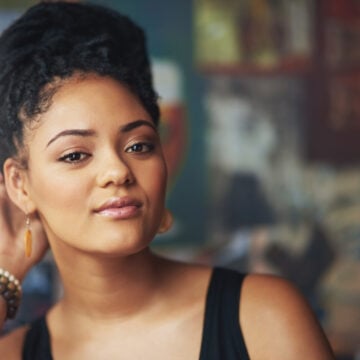

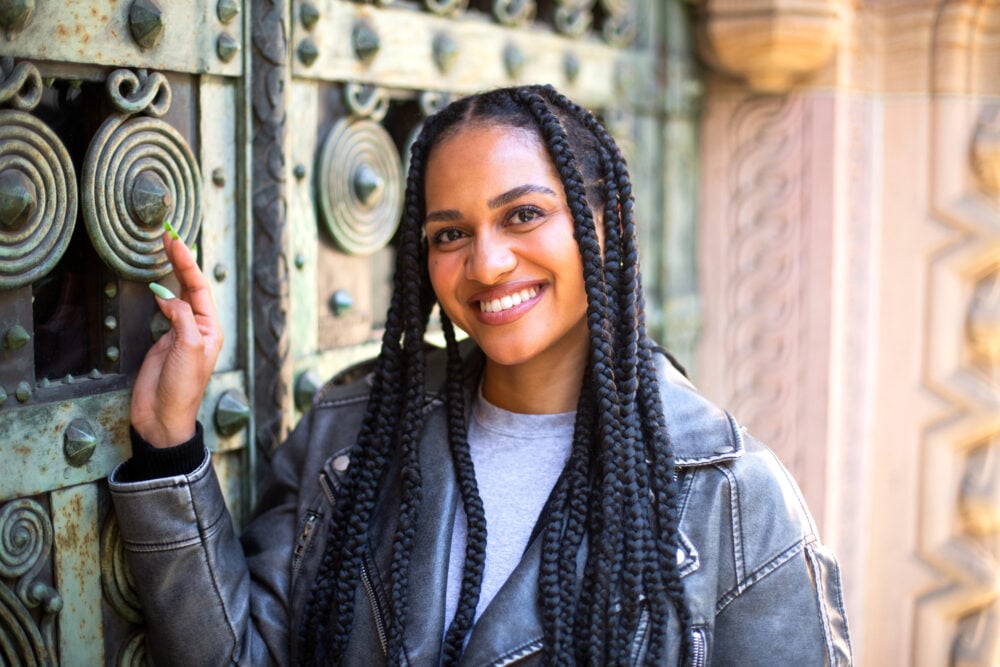
Have you been thinking about knotless braids but aren’t sure they’re worth the extra time and money? Knotless braids are box braids that start with your own hair instead of a knot. Medium, mid-back knotless braids often cost $200 to $450 at a salon and can take six to eight hours to install.
Take them down by week eight at the latest, or sooner if they feel tight or irritate your scalp.
Many women switch to knotless braids after one too many tender nights in box braids. Because there’s no knot sitting at your roots, knotless braids often feel lighter and can put less tension on your edges than traditional box braids. They also lie flat at the part, which gives them a more natural look.
In this article, we’ll walk you through the sizes and styles, what they cost, and how long you’ll sit in the chair. The primary takeaway is simple: choose knotless braids if you want a lighter, flatter braid style and don’t mind spending more time and money. We’ll also show you how to care for your braids and what knotless braids can and can’t do for your edges.
| Measure | Value |
|---|---|
| Style type | Temporary install You wear knotless braids for a few weeks and then take them down, so nothing here is permanent. |
| Also known as | Knotless box braids Knotless box braids is the full name for the same style. Feed-in braids usually means feed-in cornrows, which are a different style, so ask for knotless box braids when you book. |
| Install time | 6 to 8 hours Medium, mid-back knotless braids often take six to eight hours. The feed-in method usually takes longer than starting a traditional box braid with a knot. Your appointment may be shorter or longer depending on the braid size, finished length, and your braider’s speed. Sources disagree |
| Salon cost (US) | $200 to $450 for medium, mid-back braids Smaller, longer, or more detailed braids can cost $600 or more. Prices also vary by location, stylist experience, and whether the braiding hair is included. |
| DIY cost | $40 to $80 in hair and product About eight single bundles of pre-stretched braiding hair, plus your gel and edge control. Knotless braids take a little more hair than box braids, so you’ll spend slightly more on hair. |
| Can you do it yourself | With practice Feeding the hair in evenly is harder than it looks. When one braid picks up more hair than the braid beside it, you’ll see the difference right away. If you can already do box braids on your own hair, knotless braids are the next thing to learn rather than your first attempt. |
| Safe wear window | 6 to 8 weeks The American Academy of Dermatology recommends wearing braids for no longer than six to eight weeks. Treat that as the outside limit, not a goal. Take your braids down sooner if they cause pain, stinging, bumps, or scalp irritation. |
| Tension risk on edges | Moderate Knotless braids feed in the extension hair a little at a time, so one knot at your root doesn’t carry the full load. That makes them lower tension than box braids, but they still add weight. If your edges are thinning or sore, give them time to recover before wearing any extension style. |
| How to tell it’s too tight | Bumps along your part, tenderness, or little popped hairs Say something during your install rather than after, because loosening a section in the chair is far easier than repairing your hairline months later. Dermatologists say to take a style out immediately if it causes pain or irritates your scalp, and that advice holds even when you’ve just paid for it. |
| Hair needed | 7 to 10 single bundles of pre-stretched braiding hair Knotless braids take about 15% more hair than box braids at the same size because more of each strand ends up tucked inside the braid. Medium braids at mid-back length usually take about eight. Shops call a single bundle and a 3X bag, which contains three bundles, a “pack,” so check which one you’re buying. Sources disagree |
| Weekly upkeep | 10 to 20 minutes Tie your hair down at night, keep your scalp clean, and use a light scalp oil only if you need it. The flatter roots make your scalp easier to reach than it is with box braids. |
| Takedown time | 2 to 3 hours Without a knot at your roots, knotless braids may be easier to take down than traditional box braids. Your takedown time will depend on the size and length of your braids and how much shed hair or buildup is around your roots. Work slowly to avoid unnecessary breakage. |
| Rest before next install | 1 to 2 weeks minimum Give your scalp and hairline at least one to two weeks to recover if they feel healthy after takedown. Wait longer if you notice soreness, bumps, breakage, or thinning. |
| Best suited to | Curly and coily hair Knotless braids can work across curl patterns. Looser curls may slip or frizz sooner because there is no knot helping to secure the braid at the root. |
| Not for you if | Knotless braids may not be the best choice if your budget is your main concern, since they usually cost more than traditional box braids. If you have active traction alopecia or thinning, sore edges, skip extension styles and give your hairline time to recover. |
How we got these numbers. We collected published figures from stylist, salon, and hair-retailer sources, then reconciled them instead of averaging them. Pack counts were the figure they disagreed on most, so we worked out what a full head actually takes and give you that number rather than the lowest one in circulation.
Sources: American Academy of Dermatology on hairstyles and hair loss. Cost, time, and wear figures come from secondary research across published stylist, salon, and hair-retailer sources, and reflect typical US mid-market pricing that will vary by region and stylist. Last verified August 2026.
What are knotless braids?
Knotless braids are box braids without the knot at the root. The difference is all in how each braid starts.
Free 50-page guide
Your hair is already growing. The problem is keeping it.
About a third of an inch a month on textured hair, not the half inch you’ve read. If your length looks stuck, that’s your hair breaking off as fast as it grows in. Here are the seven causes of breakage and the weekly routine that stops them.
Free. One email a week after that. Unsubscribe anytime.
With traditional box braids, your braider wraps extension hair around your strands at the scalp and uses a small knot to secure it. That knot holds the braid in place, but it can concentrate more bulk and tension at the braid’s base.
With knotless braids, there’s no knot. Your braider first braids a short piece of your own hair, usually about half an inch to an inch. Then your braider adds thin pieces of extension hair, a little at a time, as they braid down.
The braider adds the extension hair gradually instead of securing it with one starter knot. This can reduce bulk and tension at the base, but knotless braids can still create tension if they are installed too tightly or made too long or heavy.
You’ll also hear them called knotless box braids. Don’t confuse them with feed-in braids, which usually means feed-in cornrows, a different style that lies flat against your scalp. When you book, ask for knotless box braids so you and your braider are on the same page.
Because there’s no knot, the base of each braid lies flat against your part. Box braids have a small bump where the knot sits. That flat start is the easiest way to tell the two styles apart.
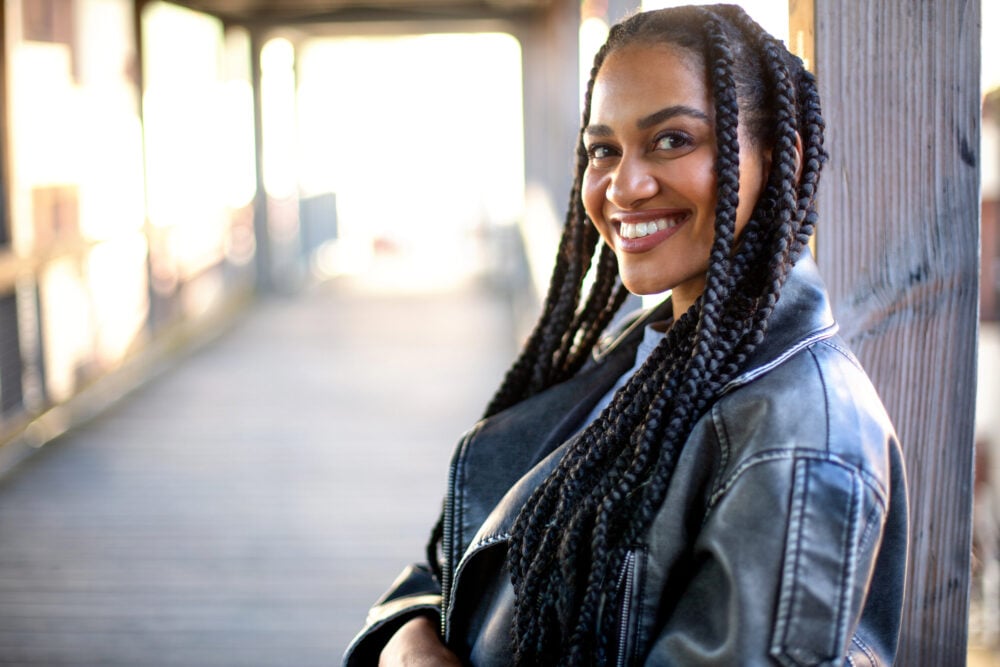
Knotless braids are lower tension than box braids, not low tension. They still hang extensions from your roots. That’s why we rate them Moderate in the spec box at the top of this article. We use the same tension scale for all 18 styles we compare.
Knotless braid sizes and styles
Size is the first thing you’ll choose. It changes almost everything else: how long you sit in the chair, what you pay, and how long your braids stay neat. Size means how big each braid is, which depends on your parts, or the little squares your braider divides your hair into. Most salons offer four sizes:
- Small braids. The longest install and the highest price, often more than ten hours. Small braids stay neat the longest. But each one hangs from a small patch of your hair, so they can put more strain on your roots.
- Medium braids. The most popular size, and the one most salons base their prices on. Plan on six to eight hours for a full head.
- Large braids. Fewer braids to make, so a shorter appointment and a lower price.
- Jumbo braids. The quickest and usually the cheapest option. Each braid holds more of your own hair, so the weight is spread out. But jumbo braids can still put tension on your roots if your braider adds too much extension hair to each one.
Length is your second choice. Shoulder length keeps the weight down, and mid-back is the most popular. Waist length and longer look dramatic, but every extra inch adds weight hanging from your roots all day. So the price and the strain on your hair both go up together.
Once you’ve picked a size and a length, you can choose how your braids are finished:
- Boho knotless braids. Loose curly pieces are left out along each braid for a soft, undone look. Some salons call them bohemian knotless braids. Boho takes two kinds of hair: braiding hair plus separate curly hair, so it costs more.
- Curly ends. The braid stops partway down, and the ends stay loose and curly.
- Ombre and colored braids. The color is in the braiding hair, so you get color without dyeing your own hair.
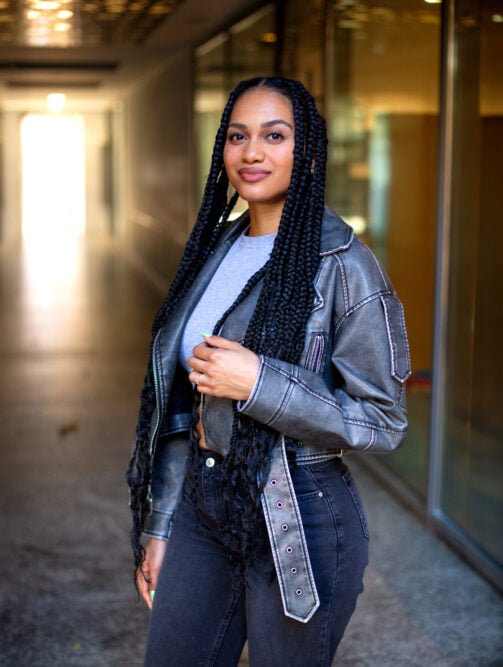
If you’re worried about your edges, ask for larger braids at a shorter length, and ask your braider to keep the braids around your hairline loose. If your edges are already thinning or sore, skip extensions for now and give them time to recover.
How much do knotless braids cost?
Medium, mid-back knotless braids often cost $200 to $450 at a US salon. Smaller, longer, or more detailed styles can cost $600 or more.
Knotless braids usually cost more than traditional box braids of the same size and length. Your braider makes roughly the same number of braids, but feeding in small pieces of hair takes longer than starting each braid with a knot.
Smaller braids often cost more because you have to do more braids, while longer braids can also be quite expensive because they take more braiding hair and time. You may see quotes as high as $600 or more for waist-length braids, but that’s for very long hair, not a typical set.
If you braid your own hair, you’ll spend $40 to $80 on braiding hair and products. Knotless braids also take a little more hair than box braids. Our braiding hair calculator puts it at about 15% more at the same size because more of each strand ends up tucked inside the braid.
Prices also vary by location and by your braider’s experience. On a style that takes this long, a fast, neat braider is worth the extra money.
How long do knotless braids take to install?
A full head of medium, mid-back knotless braids often takes six to eight hours. An experienced braider may finish sooner, while small, extra-long, or detailed styles can take longer.
Knotless braids take longer than box braids of the same size. Adding the hair a little at a time is slower than tying it all on with one knot, and those extra minutes add up across a full head.
If you’ve ever watched a braid appointment turn into a whole day, ask whether two braiders can work on your hair at the same time. Some salons offer this, and it can noticeably shorten a long appointment.
Eat before you go, bring a phone charger, and plan to spend most of the day in the chair.
How long can you keep knotless braids in?
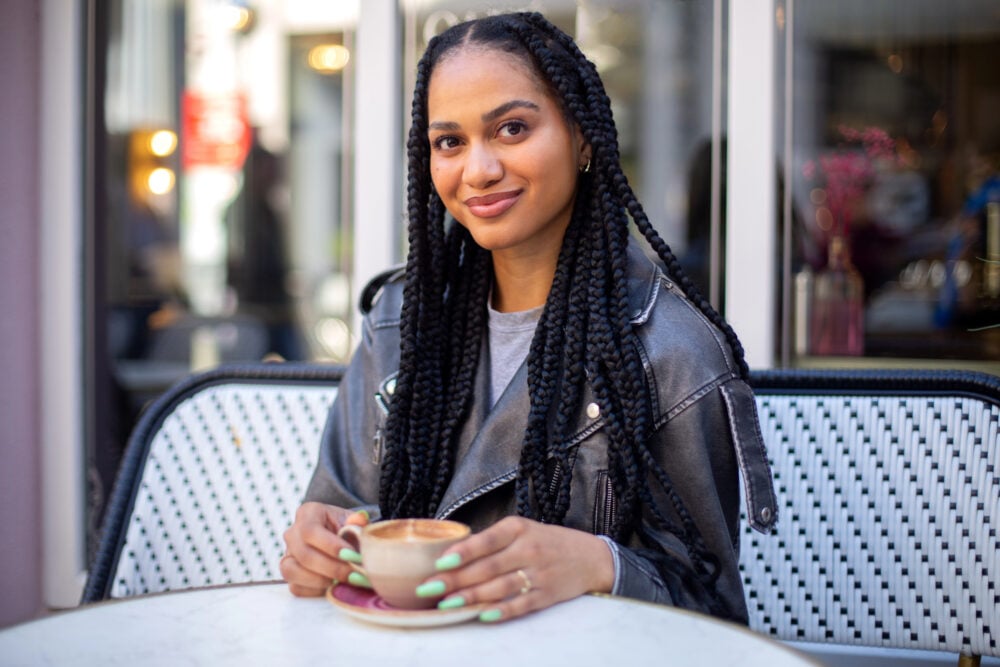
Keep knotless braids in for no longer than six to eight weeks. The American Academy of Dermatology recommends this limit for braided styles, and knotless braids are no exception. Treat eight weeks as the outside limit, and take your braids down sooner if they feel tight, painful, or irritating. The key takeaway: remove them before they start causing problems.
Many women take their knotless braids down sooner once the roots start to look fuzzy. Four to eight weeks is common, and taking them down early isn’t a sign that anything went wrong.
Feeding the hair in slowly takes tension off your hairline, but it doesn’t mean you can wear your braids longer. As your hair grows, your braids move away from your scalp.
At the same time, the hair you normally shed each day gets trapped inside the braid instead of falling out. The longer you wait, the more that shed hair tangles at your roots, and the harder your takedown gets.
If you’ve ever taken your braids down and been shocked by the pile of hair, this is why. We explain what’s normal and why your hair feels thin after braids.
Take your braids down sooner if your scalp is sore, your edges feel tender, or you can see braids slipping loose at the roots.
After takedown, give your hair one to two weeks before your next set. Wash, deep condition, and take a close look at your hairline with nothing in it. If you still have soreness, bumps, or thinning, wait longer.
Knotless braid styling ideas
You may be able to put knotless braids up the day they are installed if they move comfortably and your scalp isn’t tender. If your roots feel sore or tight, leave your braids loose instead of forcing them into another style.
An updo should never hurt. If it does, loosen it or take it down right away.
- A high bun or a top knot. This is one of the biggest perks of knotless braids. Gather your braids loosely and tie them with a scarf instead of a tight elastic, which squeezes your braids in one spot.
- Half-up, half-down. This takes some of the weight off your neck without pulling all your braids up.
- A low ponytail. Usually the easiest on your roots, as long as you keep it loose.
- A new part. A middle part, a deep side part, or a zigzag part changes your whole hairstyle without touching a single braid. Ask for the part you want before your braider starts because the parts are set at the very beginning.
You can also play with color, and it all comes from the braiding hair, so none of it touches your own hair. Blonde knotless braids are usually made with hair labeled 613, the color number for light blonde. You’ll also see honey blonde, burgundy, and ombre, which is braiding hair that fades from one color into another partway down.
Long knotless braids that fall past your waist look dramatic, but they’re heavy. If you want less weight on your roots, stop at mid-back and skip heavy cuffs or beads at the ends.
How to care for knotless braids
Plan to clean your scalp every two to three weeks, or sooner if you sweat heavily or notice buildup. Cover your braids at night, dry them completely after washing, and leave your edges alone.
To wash, put diluted shampoo in an applicator bottle (a squeeze bottle with a narrow tip) and apply it between your parts, right on your scalp. Gently squeeze the suds through your braids and rinse well. Then press the water out with a towel instead of rubbing.
Let your braids dry completely before you cover them. Braids that stay damp for hours can start to smell musty, and they can even grow mildew. We walk you through how to wash braids without ruining them, including the best ways to dry them.
At night, cover your braids with a satin bonnet or scarf. Satin is smooth, so your braids slide against it instead of rubbing, and the hair around your parts stays neat longer. If your braids are long, we show you a few ways to wrap them in our guide to sleeping with braids.
Oil your scalp only when it feels dry, and apply the oil to your scalp, not down your braids. Heavy products sit on the extension hair, pick up lint, and cause buildup.
Leave your hairline alone. Re-braiding your edges every week adds tension over and over, and that can lead to thinning. A little frizz around your hairline is normal as your braids get older.
Mild itching can happen during the first few days, but pain, burning, stinging, bumps, or worsening itching are not signs to ignore.
If the itching keeps you up at night or comes with bumps, pain, or soreness, don’t scratch. Some braids may be too tight, or your scalp may be reacting to the braiding hair or a product. Loosen or remove the braids causing the problem. If your scalp does not settle after the braids are out, see a dermatologist.
Are knotless braids better for your edges?
Knotless braids can be easier on your edges than traditional box braids when they are installed with less tension and a manageable amount of hair. Because the extension hair is added gradually, there is no starter knot concentrating bulk at your roots.
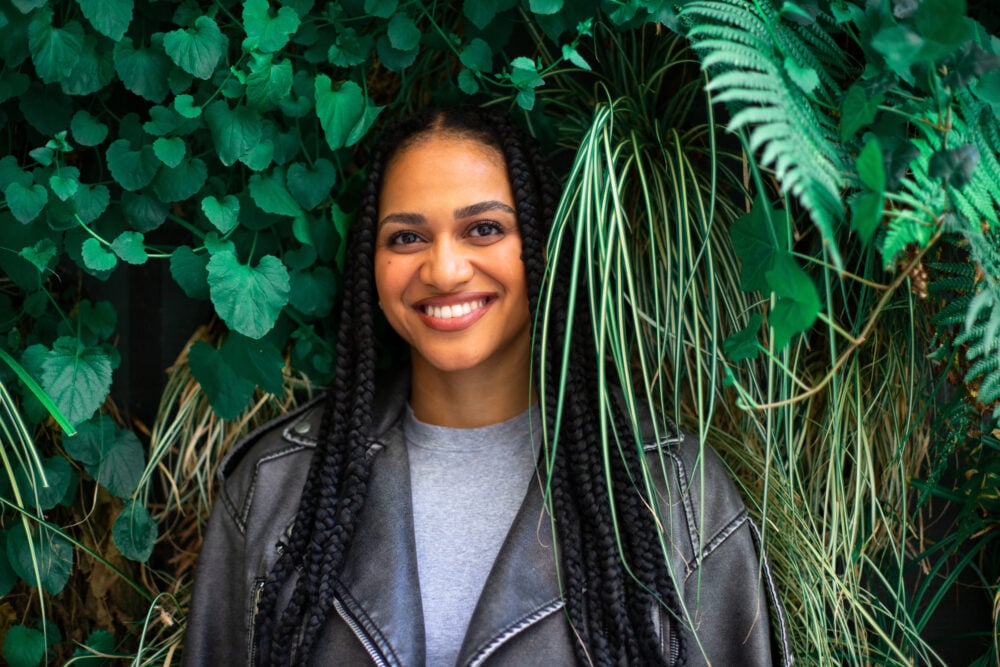
Still, knotless does not mean tension-free. A braid that starts too tight or carries too much length or weight can pull on your hairline. How your braids are installed matters just as much as the absence of a knot.
The American Academy of Dermatology says anyone who wears tight hairstyles can develop traction alopecia, a form of hair loss caused by steady tension on your hairline. It adds that if you’re of African descent, your hair is more likely to be damaged by rough or tight styles because of the shape of your hair follicles, which are the tiny openings in your scalp that your hair grows out of.
So speak up during your appointment, not after. The AAD’s rule of thumb is simple: if a hairstyle hurts, it’s too tight.
Loosening one braid while your braider is still working takes a minute. A thinning hairline can take months to grow back, and sometimes it doesn’t grow back at all. The AAD says to take a style out right away if it causes pain or irritates your scalp. That’s true even if you just paid for it.
Wondering whether knotless braids hurt? Our guide covers what to expect during and after your appointment.
If your edges are already thinning or sore, a lighter set of braids isn’t the answer. Choose a style that puts no extension weight on your hairline, and give your hair time to recover first.
Takedown may be easier, too. There is no starter knot to work loose at your roots, so you may spend less time tugging on your hair. Working slowly and detangling carefully can help reduce breakage.
Can you do knotless braids yourself?
Yes, with practice. Knotless braids are harder to do on yourself than box braids. The braiding is the same; the hard part is feeding in the extension hair.
Feeding the hair in evenly is the skill you’re really learning. When one braid picks up more extension hair than the braid next to it, you’ll see the difference right away, especially along your front hairline.
If you can already braid your own hair, knotless braids are a good next step, but we wouldn’t make them your first braiding project. Start with large braids, which are more forgiving, and practice on one small section before you give up a whole Saturday to a full head.
Braiding your own hair has a real upside: you control the tension. You can stop and loosen a braid the moment it feels too tight.
Plan for your first few attempts to take much longer than a professional appointment. It’s fine to divide the work across two evenings instead of rushing through a full head. Your braiding hair will still be there tomorrow.
Knotless braids vs. other protective styles
We place knotless braids in the middle of our tension scale. The feed-in start can reduce tension at the base compared with traditional box braids, but any style with added hair can create tension if it is too tight, long, or heavy. Styles without extensions, such as Bantu knots or a halo braid, do not add extension weight to your roots.
Compared with box braids, knotless braids often cost more and take longer to install. In return, you may get a flatter start, less tension at your roots, and an easier takedown. We explain the differences in our guide to box braids vs. knotless braids.
If cost matters most, box braids give you a similar look for less. If your edges matter most, there are gentler options than either one.
Our guide to low-tension protective styles compares all 18 by cost, styling time, and how much tension each one can put on your edges.
Frequently asked questions
Are knotless braids the same as box braids?
They’re almost the same style with a different start. Both are individual braids made with extension hair. Box braids begin with a knot that ties all the extension hair on at your root. Knotless braids start with your own hair, and you add the extension hair a little at a time. Once they’re done, most people can’t tell the two apart from across a room.
Are knotless braids more expensive than box braids?
Knotless braids are usually more expensive than box braids. Medium, mid-back knotless braids often cost $200 to $450, although smaller or longer styles can cost $600 or more. Traditional box braids generally cost less because they take less time to install. Your final price depends on braid size, finished length, location, and stylist.
Do knotless braids last as long as box braids?
Often not. Without a knot securing the braid at the root, knotless braids may loosen or frizz sooner, especially on looser curl patterns. Either way, the American Academy of Dermatology recommends wearing braids for no longer than six to eight weeks.
How many packs of braiding hair do you need for knotless braids?
For medium knotless braids at mid-back length, plan on about eight single bundles of pre-stretched braiding hair, or three 3X bags. Pre-stretched hair is braiding hair that’s already smoothed and tapered at the ends. A 3X bag holds three bundles, and shops call both of them a “pack,” so check which one you’re buying. Our braiding hair calculator estimates how much you will need for your braid size and length. Buy one extra because a pack you return for later may come from a slightly different dye lot.
Can you get knotless braids with short hair?
Yes, as long as your braider has enough of your own hair to hold on to. Most braiders want at least two inches, measured with your hair gently stretched out, and four or five inches gives you neater braids that last longer. Shrinkage can make tightly coiled hair look much shorter than it really is, so stretch a curl before you decide your hair is too short. We cover this in more detail in our guide to braiding short hair.
Knotless braids cost more and take longer than box braids, but for many women, the gentler start on their edges is worth it. If you book them, pick your size and length ahead of time, speak up the moment anything feels tight, and plan your takedown before week eight.