
Hair porosity is how easily water gets into your hair, and how easily it gets back out again.
If your hair has high porosity, the outer layer of your strands, called the cuticle, has picked up some damage along the way, so water moves in and out too freely. If your hair has low porosity, that layer is tight and intact, and water struggles to get in at all. Medium porosity sits between the two, and that's where most people are.
Here's the part almost nobody tells you: you can't measure your hair porosity at home. The float test doesn't work, and neither does the strand test, because both of them read what's sitting on the outside of your strand rather than how much water gets inside it.
In this article, we'll show you what those tests are really reading, why your answer keeps changing from one week to the next, and what to look at instead.
One more thing before we get into it. Plenty of us color, relax, flat iron, or lighten our hair, and none of that is something you need to feel bad about. Knowing what those choices do to your porosity just means you can plan around them.
What Is Porosity?
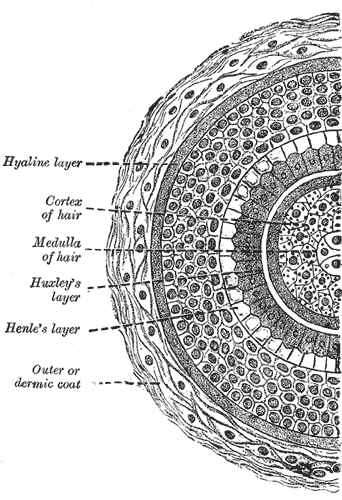
Porosity is the hair's ability to absorb and retain moisture or chemicals in the hair's cuticle layer and cortex or the lack thereof. It's important to understand that high porosity is usually a form of hair damage. Low porosity isn't. If your hair has low porosity, your cuticle is tight and intact, and for a lot of people that's simply how their hair grew.
As your hair ages, the hair's cuticle layers begin to crack, peel, and lift away. So, older hair usually has a higher porosity than newer hair.
The health of your cuticles is a good indicator of your porosity level.
Healthy cuticles lay flat and retain moisture. Unhealthy cuticles do not lay flat and allow moisture to escape, easily causing frizz and excessive dryness.
For most people, the goal is to find that delicate balance between low and high porosity conditions so your hair can thrive.
Free 50-page guide
Your hair is already growing. The problem is keeping it.
About a third of an inch a month on textured hair, not the half inch you’ve read. If your length looks stuck, that’s your hair breaking off as fast as it grows in. Here are the seven causes of breakage and the weekly routine that stops them.
Free. One email a week after that. Unsubscribe anytime.
Key Takeaways
- Determine Your Hair Porosity Type: Porosity is about understanding your hair's ability to absorb and retain moisture. However, the float test's validity is questionable. Scientific methods are more accurate but not typically available for home use.
- Identify Signs of Low and High Hair Porosity: Low hair porosity often resists moisture. Your hair might also feel dense or take a long time to dry. In comparison, high hair porosity may absorb too much moisture and feel dry or damaged. Using the right products for your porosity level can help maintain a healthy balance.
- Hair Type and Porosity Relation: Medium porosity hair usually requires the least maintenance. It's often the most desirable for hair porosity level. You can improve moisture retention using leave-ins, deep conditioners, or hair masks.
- Manage Porosity for Healthy Hair: For low hair porosity, opt for lighter oils and heat to enhance absorption. For high hair porosity, heavier creams, and protein treatments help strengthen hair strands.

What Is Low Porosity Hair?
Low-porosity hair (flat, tight cuticles) will not absorb moisture as easily as high-porosity hair.
The cuticles are not damaged, but the hair experiences dryness as if the cuticles were damaged.
The hair takes longer to saturate with water, and conditioner may have little to no effect on the hair.
The cuticles are tightly sealed, and it's more difficult to penetrate them.
Related Articles
- Sealing Oils for Low Porosity Hair
- How to Moisturize Low Porosity Hair Naturally
- Rice Water for Low Porosity Hair
- Best Moisturizer for Low Porosity Hair
What Is High Porosity Hair?
On the other end of the spectrum is high-porosity hair. The cuticle layers have begun to crack, peel, and lift away.
They are probably no longer attached to the strand of the hair, leaving the cortex unprotected. The damaged or missing cuticles are the cause of chronic dryness.
The cuticle is not intact and cannot perform its job, which is to seal shut - retaining the moisture.
With high-porosity hair, the hair absorbs moisture quickly but also loses moisture (or dries out) at an even faster rate.
Related Articles
What Is Medium Porosity Hair?
Medium porosity hair, sometimes called normal porosity hair, sits in the middle of the range. If that's where your hair lands, water goes in at a reasonable rate and stays a reasonable amount of time.
Your conditioner does roughly what the bottle says it will do, and your color takes evenly. Laboratory work even puts a number on "reasonable," because normal-porosity hair takes up about 75% of the water it can hold within four minutes.
Medium porosity gets almost no coverage online, and we think we know why. There isn't much to sell you when your hair is already behaving.
It's still worth naming, though, because plenty of people land here and go looking for a problem anyway. If your hair wets normally, dries normally, and behaves predictably in humidity, the best thing you can do is leave it alone. Deep condition every week or two, use a protein treatment about once a month, and protect what you've got.
Dealing With Hair Porosity Problems
The more porous your hair is, the more moisture is usually absorbed. When your hair is highly porous, it will often feel dry. However, it could very well absorb a great deal of water.
You might think, "Great. Now my hair will absorb more moisture!".
While it's true that your hair will absorb more water when wet, unfortunately, it will also lose water at a faster rate as it dries. Your hair cuticles cannot adequately retain moisture.
As your hair absorbs water, it expands to accommodate the water. If this process occurs too often, the hair can be damaged due to the amount of stress being placed on it. (source)
What Does Low, Medium, and High Porosity Hair Look Like?
Signs of Low, Medium, and High Porosity Hair
You can't measure your hair porosity at home, but you can watch how your hair behaves, and that's what your routine has to answer to anyway. Read down each column and pick the one that sounds most like your week. Most people land in the middle, and plenty of people land in different columns at their roots and at their ends.
| What you notice | Low porosity | Medium porosity | High porosity |
|---|---|---|---|
| Getting it wet in the shower | Water beads and runs off. You're still working it in after a minute or two. | Wets through in well under a minute without any effort. | Soaks instantly. It's drenched the moment the water hits it. |
| Air drying | Hours. Often still damp at the roots long after you expected it to be done. | Dries in a predictable, ordinary amount of time. | Fast, and often too fast: dry and rough again before you've finished styling. |
| What conditioner does | Sits on top. Feels coated or waxy rather than softer. | Works roughly the way the label says it will. | Feels wonderful wet, then gone. The softness doesn't survive drying. |
| In humidity | Usually holds its shape. Can go limp or flat rather than frizzy. | Some swelling on a bad day, nothing dramatic. | Swells and frizzes quickly. This is the classic high-porosity tell. |
| Color and chemical services | Processes slowly. Colorists often need longer or hotter than the box says. | Takes color predictably and evenly. | Grabs color fast, goes darker or brassier than intended, and fades early. |
| Protein treatments | Go stiff and straw-like quickly. You need far less than the label suggests. | Tolerated every four to six weeks without much drama. | Genuinely help, and are needed more often than any other group. |
| Most likely reason you're here | Nothing was done to it. A flat, tight cuticle is often just how your hair grew. | Nothing is wrong. This is the outcome most people are aiming at. | Bleach, color, a relaxer, heat, or simply years of wash days. Very common, and not a failure on your part. |
If you landed in the middle column, there's nothing to fix. Medium porosity is the ordinary, undamaged middle, and the best thing you can do is protect it. And if you landed on the right, it's worth remembering that high porosity isn't something your hair is. It's something that happened to your hair, which means the hair growing in at your scalp right now is still perfectly fine.
- Low Hair Porosity: Low porosity hair resists moisture and products. It requires light oils like jojoba oil and benefits from heat during treatments.
- Medium Hair Porosity: Medium porosity hair balances moisture retention and absorption. It can handle a broader range of hair products and needs occasional deep conditioning.
- High Hair Porosity: High porosity hair absorbs moisture quickly but struggles to retain it. It benefits from heavier products such as shea butter. It also requires the regular use of deep conditioners and hair masks.
Common Causes of Porous Hair
How Fast Your Hair Porosity Changes
Your hair porosity isn't something you were born with. It's mostly damage, and damage happens on a clock. One quick note before you read the chart: the scale is logarithmic, so each gridline is about ten times longer than the one before it. That's the only way one minute of bleaching and ten years of combing fit on the same chart.
The number worth remembering: one minute of bleaching nearly triples the pore surface area of a hair fiber. After about ten minutes the pore count drops again, which sounds like good news and isn't, because the small pores have merged into larger ones. Nothing else on this chart comes close to that kind of speed.
Bar thickness shows how much, not how fast. Sun and city air together raised porosity substantially more than sun on its own, while air pollution by itself did nothing measurable, which is why it gets an empty track.
Onset times from: Hessefort, Holland & Cloud, J Cosmet Sci 2008;59(4):303–15 (bleach, UV) · Yang et al., J Cosmet Dermatol 2024;23(11):3735–39 (UV, particulate) · Kaushik et al., Int J Cosmet Sci 2022;44(3):289–98 (surfactant washing) · Guerra-Tapia & Gonzalez-Guerra, Actas Dermosifiliogr 2014;105(9):833–9 (dyes). Bars begin at the earliest measured onset and continue because damage accumulates; they aren't a rate.

1. Periodic Usage of Shampoo, Towels, and Combs
Shampooing, towel drying, and combing your hair can damage the cuticle. These techniques are common since most people use them to some extent.
However, high porosity hair is often caused when the hair is scrubbed vigorously with shampoo, rubbed with towels while drying, and when fine-tooth combs are used to remove tangles.
If you're too aggressive while performing these common techniques, you'll potentially cause lots of unnecessary hair damage, leading to higher porosity levels, especially as your hair ages.
2. Older, Longer Hair Is Generally More Porous
Your hair will incur more cuticle damage as it grows longer because it's been shampooed, dried, and combed multiple times over the years.
This hair damage is cumulative, so it increases with time. Read this article to learn more about the best moisturizers for low-porosity hair.

3. Ultraviolet (UV) Radiation Causes Cuticle Damage
Ultraviolet (UV) radiation damages your cuticles far faster than the 200-hour figure you may have seen quoted. A 2024 study measured it directly by soaking tiny sections of hair in a blue dye and seeing how much each one drank up.
UV-induced porosity showed up after three hours of sun, and it kept climbing from there. So an afternoon outdoors is doing more to your hair than you'd think.
Air pollution is the surprise here. The soot and grit in city air, on its own, didn't change hair porosity at all. Put it together with UV, though, and porosity increased substantially.
So a sunny afternoon in a city is harder on your hair than the same afternoon somewhere with clean air.
Consider wearing a loosely fitting hat with you when you need to be outdoors for an extended period. Also, stay away from tanning lamps and beds.
4. Certain Chemical Treatments Encourage Porous Hair
Certain chemical treatments, like hair bleaching and creamy crack (i.e., hair relaxers), are causes of porosity. Cuticle layers can end up cracking, peeling, and lifting away when these techniques are used.
How Color and Bleach Change Your Porosity
Bleach is the fastest way to raise your hair's porosity, and it isn't close. If you've lightened your hair at any point, this is the single biggest thing on your list.
Researchers measured this directly using gas sorption, which is a laboratory method that counts the tiny holes in a material by measuring how much gas it soaks up. They found that oxidative bleach nearly triples a hair fiber's surface area in the first minute of processing. (Hessefort et al., 2008)
After about ten minutes the measured pore count drops again, which sounds like good news and isn't. The small pores have merged into larger ones.
The mechanism is worth understanding, because it explains most of what you've read elsewhere. Your hair is waterproofed by a fatty acid called 18-MEA, which is bonded to the outside of every cuticle scale.
When you bleach, that layer burns off and leaves behind cysteic acid, which attracts water instead of repelling it. Scientists measure this as contact angle, which is simply how steeply a drop of water sits up on a surface instead of spreading flat across it.
Before you lighten it, your hair holds water at roughly 90 to 100 degrees, so a drop beads up and rolls off. Afterward, that drops below about 50 to 60 degrees, and the water spreads out and soaks into your strand.
Why a Hair Strand Floats in Water
Here's something you might not know. Every hair on an undamaged head is waterproofed. A fatty acid called 18-MEA is bonded to the outside of each cuticle scale, and it repels water strongly enough to hold an entire strand on the surface of a glass. When you bleach your hair, that layer burns off, and this is the only thing the float test is really reading.
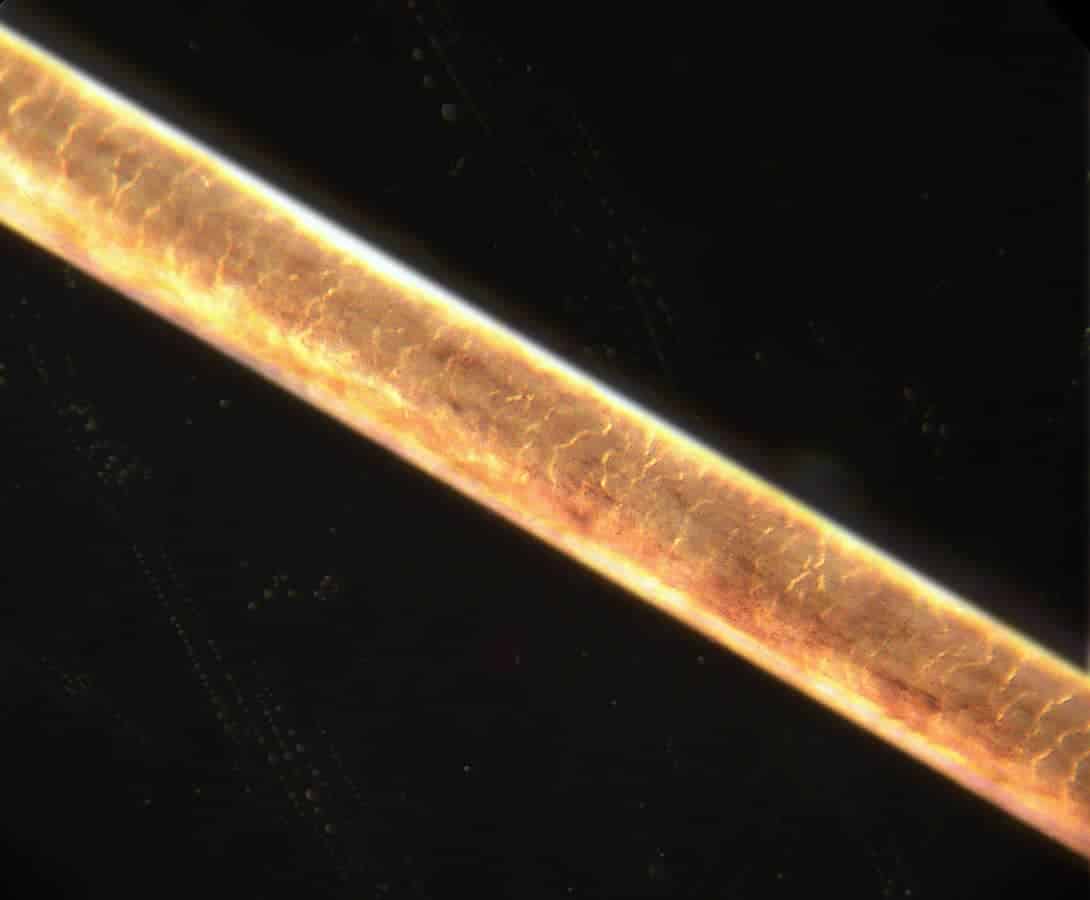
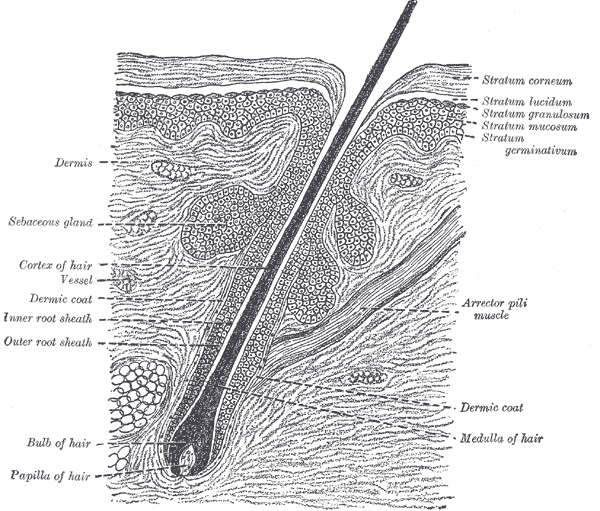
A real strand at 200× magnification. Those overlapping plates are the cuticle scales in the diagram above. On undamaged hair each one carries the lipid layer; a scale lifts by roughly one millionth of a meter, so you'll never feel the difference by running your fingers down a strand.
The measurement is called contact angle, which is just how steeply a drop of water sits up on a surface. Virgin hair sits at roughly 90–100°, so water beads and rolls off. After oxidative bleaching it drops below about 50–60° and the fiber becomes water-loving.
So the float test does measure something real. It measures whether that waterproof layer on your hair is still intact, which is surface damage. What it can't tell you is how much water ends up inside your strands, and that's what porosity actually means.
Sources: Cosmetics 2019;6(2):31, Degradation of Hair Surface: Importance of 18-MEA and Epicuticle · La Torre & Bhushan, J Cosmet Sci 2006;57(1):37–56 · Robbins, Chemical and Physical Behavior of Human Hair, 5th ed., Springer 2012.
Permanent color and relaxers do less damage to your hair than lightener, but they belong in the same category, and the damage adds up over time. Growing a relaxer out doesn't undo it on the hair that's already there.
Your Scalp Affects Your Hair Porosity
Some of your hair's porosity is decided before your hair ever leaves your head.
In a 24-week clinical study, researchers grew hair under known scalp conditions and then measured the cuticle on the hair that came out. Hair grown on an inflamed, flaking scalp had worse surface hydrophobicity, which means a weaker water-repelling layer, and a measurably worse moisture barrier than hair grown on a healthy scalp.
Treating the scalp improved both. So if your scalp is irritated, the oxidative stress from that is damaging the cuticle of hair that hasn't even surfaced yet.
For example, if you've got persistent flaking or irritation and you've been fighting dryness in your lengths, those two things may not be separate problems at all.
This study came from an industry laboratory, so weigh it accordingly. It was a real clinical study with a placebo arm, though, which is more than most hair porosity advice can claim.
6. Other Factors
Outside of the above causes, porosity can also be caused by exposure to dirt, flat ironing, blow drying with too much heat, cyclical thermal stresses, and humidity.
It's important to note that everyone's hair is different as well, meaning certain factors will cause more porosity in certain people than others.
What You Can and Can't Change
Can Porosity Be Fixed?
When the hair's cuticle becomes damaged, this cannot be fixed. Meanwhile, the cuticles do thin naturally when the hair becomes longer due to normal weathering, but broken, chipped, or missing cuticles cannot be replaced.
It is possible to temporarily patch the hair using hydrolyzed protein; however, you must remember that this is only a temporary solution and not a permanent fix.
Is It Possible to Open and Close the Hair Cuticles?
Note that this is not the manner in which a hair cuticle works. By suggesting that the cuticle opens and closes, you're essentially implying that it operates as a door with a hinge and can be opened without any damage and then closed again.
This is not what happens.
A hair cuticle can be raised to a slight degree; however, this requires highly sensitive instruments for detection as the distance to which it is raised may be as minute as one-millionth of a meter.
It is impossible to feel a raised cuticle by running fingers through the hair unless you have severely damaged cuticles.

Is It Possible to Stop the Hair Cuticle From Being Raised?
The hair cuticle rises when the hair is wet, and people will need to wet their hair and handle it regularly. It is possible, however, to take steps to reduce the amount of damage done to the cuticle.
1. You can use coconut oil as a pre-wash to prevent the hair shaft from swelling. This pre-wash treatment may reduce the extent to which the cuticle is raised.
2. You can use a conditioning shampoo that contains silicones. Silicones help minimize protein loss from the hair caused by chipping and breaking cuticles.
Can Apple Cider Vinegar Help Close the Hair Cuticle?
In the past, we've recommended utilizing a periodic apple cider vinegar (ACV) rinse to treat porous hair by temporarily reducing the porosity level and making the cuticles smooth to increase water retention.
When we last updated this article, we couldn't find evidence either way. That's changed, and the real answer is more useful to you than either the myth or the flat denial.
A 2020 study took bleach-damaged hair, held it at different pH levels, and measured what happened. At pH 3, which is roughly where a strong apple cider vinegar rinse lands, the hair absorbed less water and had the smallest fiber diameter of any group tested.
So an acidic rinse does something real to your hair, and it's measurable. It just doesn't do it the way the folklore says.
Acid changes the electrical charge on certain spots inside your strands, and those spots then hold on to less water. Nothing is being pulled shut.
And more acidic isn't better for you. In that same study, the hair's protein structure held up best at pH 5, not at pH 3.
There's a second reason to care about the pH of what you're using, and it's the better-supported one. A dermatology team measured 123 shampoos and found the range ran from pH 3.5 all the way up to pH 9.0, with 61.8% of them above pH 5.5. (Gavazzoni Dias et al., 2014)
Alkaline pH pushes your hair's surface charge further negative, which makes your strands drag against each other, and that friction is what damages your cuticle. Relaxers sit at pH 9 and above, which is why they do so much of it.
So pH does matter for your porosity. It just doesn't work through a door that opens and closes. (pH is short for potential hydrogen.)
What pH Does to Your Hair
You've probably never checked the pH of your shampoo, and most bottles don't tell you. A dermatology team measured 123 of them from international brands, and the results ran from pH 3.5 all the way up to pH 9.0, with 61.8% coming in above pH 5.5. As it turns out, where your shampoo lands depends a great deal on where you bought it.
| Category | Tested | At or below pH 5.5 |
|---|---|---|
| Salon and professional | 15 | |
| Dermatological | 19 | |
| Popular drugstore brands | 96 | |
| Anti-dandruff | 26 | |
| Children's shampoos | 12 |
Every children's shampoo they tested came in above pH 5.5, which is a direct result of the no-tears formula.
Here's the part that matters for your porosity. Alkaline pH doesn't pry your cuticle open like a lid. What it does is push the electrical charge on your hair's surface further negative, so your strands repel each other, drag against each other, and wear down. That friction is what damages the cuticle. An acidic rinse does genuinely reduce how much water damaged hair takes up, but it works by changing the charge on certain spots inside the hair so they hold on to less water. Nothing is being pulled shut. And more acidic isn't better, because in bleached hair the protein structure held up best at pH 5, not at pH 3.
Sources: Gavazzoni Dias et al., Int J Trichology 2014;6(3):95–9 · Malinauskyte et al., Biopolymers 2020;111(11):e23401.
Can Cold Water Assist in Closing the Hair Cuticle?
There doesn't appear to be scientific evidence that supports that cold water can help close the hair cuticles.
It is seen, however, that heat is influential in raising the cuticle, irrespective of the level of heat and the duration of exposure.
Of course, due to the lack of evidence for the impact of cold water on a cuticle, it is not possible to say that cold water does not influence the hair cuticle.
Can Protein Treatments Assist With Porosity?
Yes, they can. As mentioned above, the hydrolyzed protein can be a temporary treatment for damaged hair cuticles, as well as patching up areas where cuticles are missing.
How Do You Determine Your Hair Porosity
You've probably heard that you can test hair porosity in at least two different ways, using the (1) strand test and (2) float test.
You can also listen to this one. It's an episode of Curl Science, our weekly podcast, on Apple Podcasts and Spotify.
Before I explain the potential problems with these DIY hair porosity test methods, it's important to understand how these tests are often conducted.
Porosity Strand Test
Hold a strand of hair between your index finger and thumb. Using your opposite hand, slide your index finger and thumb along the hair strand.
If you feel irregularities that appear to be typical twists, turns, and angles of naturally curly hair, this is normal.
If you feel snags, your hair may be porous. If you don't feel anything and it's smooth sailing from tip to root, your porosity is low.
This is a very unscientific process with an extremely low accuracy rate. We don't recommend using the strand test as a reliable determination of your hair's porosity level.
Porosity Float Test
Harvest clean hair from your comb after you shampoo (allow hair to dry). Place the dry hair in a bowl of room temperature water (since cold water will purportedly close the cuticles) to see if it will float or sink to the bottom.
If it sinks, your porosity is high. If it floats, the porosity is low.
same hair · preparation changes the result
This float test, like the strand test, is unreliable and unscientific as a test for hair porosity. Hair strands will almost always float in water due to the fact that the hair is typically covered in oil.
This oil is the naturally occurring sebum and any other hair products you may choose to include in your hair care routine.
Most people conducting this test report that the hair strands float for a period of time and only sink after some prodding.
Since oil will always float on water, the hair strand will continue floating. This does not necessarily mean the hair has a low level of porosity; it means the hair is light and has a full coating of oil that repels the water.
What Each Hair Porosity Test Measures
If you've tried the float test more than once, chances are you got a different answer the second time. Here's why. Every one of these hair porosity tests responds to something real, but it's usually not the thing the test claims to be measuring. We've sorted them below from the least trustworthy to the most.
| The test | What it claims | What it's really reading | Evidence |
|---|---|---|---|
| The float test | Sinks = high porosity. Floats = low. | Surface tension, which tells you whether your lipid layer is intact, not how much water gets in. | D Never validated. In a chemist’s replication, untreated, oiled, and gelled strands all floated; only conditioner-treated hair sank. Residue decided it. |
| The strand or slip test | Snags = high porosity. Smooth = low. | Friction coarse enough to feel, which your porosity isn't, because a cuticle scale lifts about a millionth of a meter. | D Never validated. Finds damage you could already see, and nothing else. |
| The spray or drop test | Beads on top = low. Soaks in = high. | The same surface tension the float test reads, plus how tightly your strands happen to sit against each other. | D Never validated. Measures the float test’s one variable a second time. |
| How long it takes to wet, and to dry | Slow both ways = low porosity. | Water genuinely moving in and out, though your hair's density, thickness, and length all muddy the result. | C Your best signal at home. Normal hair takes up about 75% of the water it can hold within four minutes. |
| What has actually been done to your hair | Bleach, color, relaxers, heat, years. | The thing itself, because high porosity is mostly accumulated cuticle damage and you already know your hair's history. | A Directly measured. One minute of bleaching nearly triples a fiber’s pore surface area. |
| Lab measurement | Pore volume, pore size, and how much surface is inside the strand. | Exactly what it says, which is why this is what the research runs on. | A Needs equipment that measures how much gas or water vapor a strand soaks up. There's no home version of that, and nothing you can buy substitutes for one. |
Evidence key: A measured directly in peer-reviewed research · B peer-reviewed but indirect or industry-funded · C expert consensus, no direct measurement · D tradition, never tested.
Sources: Hessefort, Holland & Cloud, J Cosmet Sci 2008;59(4):303–15 · Robbins, Chemical and Physical Behavior of Human Hair, 5th ed., Springer 2012 · Syed, Cosmetics & Toiletries 2002;117(11):57–62 · La Torre & Bhushan, J Cosmet Sci 2006;57(1):37–56.
What if the Oil Is Removed Before Performing the Porosity Test?
If the hair's oil is removed before the test is conducted, would this make the test valid, or would it influence the porosity of the hair strand and the potential for the hair to sink?
If you choose to conduct the float test with a strand of hair that is freshly washed with shampoo but not conditioned, then the test is potentially invalid if you typically use conditioner after shampooing.
In this instance, you would have altered the hair strand that you're testing, making the results of the test questionable.

Does the Temperature of the Water Matter?
Some people claim that the temperature of the water will not influence the result of the porosity test; however, this probably isn't true from a scientific perspective.
We were not able to find scientific evidence that supports that cold water can help close the hair cuticle, but it's unlikely that the water temperature has any impact.
For example, warm water can remove oil from the hair strands. Furthermore, hair is a protein, and most proteins experience small structural changes as temperatures change.
Nonetheless, the most likely result of this test is that a single strand of hair will float.
Does Water Absorption Cause the Hair to Sink? What if Your Hair Floats?
When placing strands of hair in water, the hair strands will absorb water. As more water is absorbed, the hair strands will get heavier.
However, the hair strands may continue to float due to the oil coating.
If your hair sinks, it could be related to hair damage, but it could also be related to the natural density of hair.
This float test is unreliable, so don’t interpret the results as facts.
Is There a Scientific Test for Hair Porosity?
There are scientific tests to determine hair porosity, but they're usually complex and expensive. These aren't the kind of tests that can be reliably conducted at home.
What to Do Instead of the Float Test
So we've just spent a while explaining that the two tests everyone recommends don't work. That's only useful if we give you something to put in their place.
Start by changing the question you're asking. "What's my hair porosity?" doesn't have an answer you can get at home, and chasing it is why you keep getting different results on different days.
Here's a better question. How much has my hair been through, and how does my hair behave?
You can answer both of those, and together they decide almost everything a porosity label was going to decide for you anyway. That includes which products to reach for, how much protein your hair needs, and whether heat is worth using during a deep conditioning treatment.
Your hair's history does most of the work here. High porosity is mostly accumulated cuticle damage, and you already know what you've done to your hair over the years.
Bleach, permanent color, relaxers, heat, sun, and years of combing all raise your porosity, and they don't raise it equally. One minute of bleaching nearly triples the pore surface area of a hair fiber, and nothing else on that list comes close.
How your hair behaves fills in the rest. The evidence here isn't as strong, and we'll say so. However, the timing signals are the most useful thing you can watch for without a laboratory, because how long water takes to get in and back out is the closest thing you can observe to porosity itself.
Hair that takes a long time to get wet and a long time to dry is behaving like low porosity hair, because water is struggling to get past a tight cuticle in both directions. Hair that soaks and dries quickly is behaving like high porosity hair, because there's much less standing in its way.
Hair Porosity Quiz
Nine questions, and it takes about ninety seconds. We weigh what you've put your hair through more heavily than how your hair feels, because that's the half with real research behind it. At the end, we'll also tell you which of your answers we ignored, and why.
These four questions carry most of the weight in your result. High porosity is mostly cuticle damage, and you already know your hair's history better than any test does.
The evidence behind these four isn't as strong as step 1. However, they're the best signals you can watch for at home, and they catch the cases your hair's history misses.
Answer it anyway. Your result will explain what this answer was really telling you.
The quiz also lives on its own page if you want to bookmark it or send it to someone. Keep one thing in mind while you read your result. Your hair porosity isn't one number for your entire head of hair, because your roots are newer than your ends and have been through less. If the two halves of your hair seem to disagree with each other, they probably do.
Your Roots and Ends Are Different
Your ends are the oldest hair on your head. They've been through every wash day, every brush, every hot tool, and every hour of sun you've had since they grew in, and that damage doesn't reverse.
So the standard advice is that your ends are always higher porosity than your roots. That's directionally right, and it's also overstated. (Tham et al., 2025)
A 2025 study measured the surface charge of root and tip samples taken from the same ponytails across three populations. The tips carried more than two extra years of weathering, and the root-to-tip difference was minimally significant for most of the samples.
Here's what that means for you. Treat your ends more gently, because they've earned it and there's nothing to lose by doing so.
However, if a product line is asking you to buy two different systems for the top and the bottom of your head, the evidence behind that is thinner than the marketing suggests.
Kira's Thoughts
"I advocate for a nurturing approach that speaks to the unique needs of your strands. Before shampooing, I suggest prepping your hair with a nourishing oil. This prepping process will protect and fortify your hair. Find a sulfate-free shampoo to clean your hair without stripping away natural oils. Then, use a deep conditioner that balances your hair's protein and moisture. Afterward, seal the deal with a water-based moisturizer to optimize hydration levels.
Don't forget your styling choices and environmental exposure affect your hair. It's essential to adopt a regimen that minimizes hair damage. Consistency is the key. A dedicated hair care routine is the cornerstone of maintaining well-hydrated, healthy curls."
Kira Byrd
Frequently Asked Questions
How Do You Know Your Hair Porosity?
To determine your hair porosity, you can perform the float test at home. Alternatively, you can use a more accurate scientific assessment. The float test involves placing a clean strand of hair in water to see if it sinks or floats.
However, this method is mainly unreliable due to various influencing factors. Natural oils, hair damage, and water temperature impact test results. A more precise evaluation can be achieved through professional tests. These tests measure your hair's ability to absorb and hold water. However, these tests are often costly and complex.
What Are Signs of Low Porosity Hair?
Signs of low porosity hair include difficulty with water saturation and absorption. The water tends to bead up on the hair rather than being absorbed. Products often sit on top of the hair instead of penetrating it. There's a general resistance to chemical processes like coloring or perming. Low porosity hair takes longer to dry and might resist conditioning treatments. It also feels less moisturized even after application.
What Are Signs of High Porosity Hair?
High porosity hair soaks up water almost the moment it hits the shower, and it's dry again faster than you'd expect, sometimes before you've finished styling. That happens because the outer layer of your strands has gaps in it, so water moves in and out without much resistance.
It feels wonderful while it's wet and rough once it isn't. Humidity is the clearest sign of all, because a high-porosity strand swells and frizzes quickly when water moves into it without much resistance.
You'll see it in color, too. High porosity hair grabs dye quickly, often ends up darker or brassier than the shade you picked, and fades early, because the same gaps that let water in let color in and back out again.
Protein treatments genuinely help, which is the one place high porosity hair has an advantage. That isn't true for low porosity hair, which goes stiff on protein fast.
The most reliable sign isn't something you can feel at all. It's your hair's history, so if you've bleached, colored, relaxed, or heat-styled your hair, you have some high porosity hair on your head, and the older the hair, the more of it there is.
Is Low or High Porosity Hair Better?
Neither low nor high porosity hair is better. They have different needs and characteristics. Low porosity hair can be more challenging to moisturize. However, it often retains moisture well once it's absorbed. High porosity hair absorbs moisture quickly but can also lose it rapidly. The goal is to balance your hair's porosity with appropriate hair care routines. This will allow you to maintain the health and vitality of your hair.
What Is the Worst Hair Porosity?
None of them, and the question is worth pulling apart, because it's the wrong shape. Your hair's porosity isn't a grade. Low porosity is usually just how your hair grew, and it isn't damage, while medium porosity is the ordinary undamaged middle. High porosity is the only one that's genuinely a problem, and even then the problem isn't the label; it's the cuticle damage underneath it, which is something that happened to your hair rather than something your hair is. If you want a direct answer for your own hair, the worst situation is high porosity you don't know the cause of, because that usually means it's still happening.
Is Frizzy Hair High or Low Porosity?
If your hair frizzes, it's usually high porosity, but frizz on its own isn't proof of anything. Frizz in humidity happens when water moves into the fiber and makes it swell, so hair that takes water on easily will frizz faster, and that's high-porosity behavior. It's the most reliable behavioral signal there is, which is why we ask about it in the quiz above. However, your curl pattern, your strand thickness, mechanical damage from brushing, and plain dryness all produce frizz as well, at any porosity. Treat your frizz as one input rather than a verdict.
Is Porosity in Hair Good?
Porosity in hair is natural and refers to the hair's capacity to absorb moisture and product. Good porosity is a balance where the hair can absorb the moisture it needs without losing it too quickly. It is beneficial for hair to have a certain level of porosity. However, your hair's porosity type must align with your hair care regimen.
How Can I Improve My Hair Porosity?
For low porosity hair, use heat to help open up the cuticles for better moisture absorption. Then, choose lighter, liquid-based products. For high porosity hair, use leave-in conditioners, oils, and creams to help seal in moisture. Then, protein treatments can temporarily fill in the gaps in the hair cuticles. Regularly trimming your hair can also help manage porosity by removing damaged ends.
What Does Low Porosity Hair Feel Like?
Low porosity hair may feel dense and firm. It has a tight cuticle layer that resists moisture penetration. Products often sit on the surface of the hair. This makes the hair feel coated or filmy without absorbing moisture into the strands. After washing, low porosity hair tends to take a longer time to dry. It might not feel fully moisturized even when heavy products are used.
Related Articles
Final Thoughts
Understanding the porosity of your hair is vital for choosing the right products. Low porosity hair may require lighter oils and heat to aid absorption. High porosity hair requires heavier products such as shea butter and deep conditioners.
Medium porosity hair needs less intervention but can benefit from deep conditioning treatments. Using leave-in conditioners and hair masks can improve your hair's condition. Remember, there's no permanent fix for damaged hair.
With damaged hair, you can only use these tips to patch up the weak spots and manage your problems temporarily.