-
How to Do Hair Coloring for Beginners: DIY Hair Color at Home
-
How to French Braid Curly Hair: Step-by-Step Guide for Beginners
-
How To Put Beads in Your Hair With and Without Beader
-
How To Remove Brassy Tones From Brown Hair Naturally: DIY Guide
-
Can You Use Normal Double-sided Tape for Hair Extensions?
-
11 Best Hair Color Ideas, Shades, Trends, and Inspo for Women
-
Aesthetic E-Girl Hair: Color Ideas, Hairstyles, and Haircuts
-
What Is a 4x4 Lace Wig? What Does a 4x4 Lace Wig Look Like
-
How Long Do Lace Front Wigs Last? Synthetic vs Human Hair Wigs
-
Great Clips Prices, Hours, Haircuts, Services, and More
-
8 Underdye Hair Coloring Trends, Ideas, and Hairstyle Tips
-
Why Has My Hair Started Parting in the Back of My Head?
-
15 Cute Birthday Hairstyles for White and Black Girls
-
What Are Bottleneck Bangs? How to Cut and Style DIY Bangs
-
Why Do Salons Wash Your Hair After Coloring? Should They?
-
Regis Salon Prices, Hours, Services, Products, and Much More
-
Transitioning to Gray Hair with Highlights: DIY How to Guide
-
How to Do and Style 90s Dookie Braids for Males and Females
-
Why Do Braids Itch So Much? When You First Get Them?
-
Can a White Person Use a Hair Relaxer? What Happens? What Does It Do?
-
Sola Salon Prices, Hours, Services, Products, Styles, & More
-
Types of Perms for Thin Hair: Short, Medium & Long Hair Perm
-
What is a Bixie Haircut? How to Cut and Style Step-by-Step
-
How To Do Quick Weave Hairstyles: Step-by-Step DIY Guide
-
Learn What Causes Gray Hair: Stress, Age, Prevention Options, and More
-
How Long Does Splat Hair Dye Last? How to Make It Last Longer
-
33 Different Types of Braids for Black Women: Popular Braiding Hairstyles
-
How Much Is a Trim Haircut at a Hair Salon or Barbershop?
-
How Long Does a Haircut Take for a Man or Woman?
-
Cute Haircuts and Hairstyles for Women Over 70 Years Old
-
How to Get Cheap Haircuts: Guide to Find Inexpensive Haircuts
-
What Are Lace Wigs? How Long Do Lace Front Wigs Last on Head
-
Does Hairstyle Affect Attractiveness? Which Hairstyle Is Most Attractive?
-
Lowlights for Brown Hair Going Gray: Will They Cover Grays?
-
How to Blend Gray Hair With Dark Brown Hair at Home
-
What Color Covers Orange Hair? Brassy? Dye? After Stripping?
-
How To Stop Hair Dye From Bleeding and Dyes That Don’t Bleed
-
How to Fix Hot Roots at Home With Toner, Box Dye, and More
-
Yelena Belova Hairstyle Tutorial: Hawkeye Braids Step-by-Step
-
Will Box Braids Damage Caucasian Hair? Are They Good or Bad?
Topic guide
Natural Hairstyles & Protective Styles
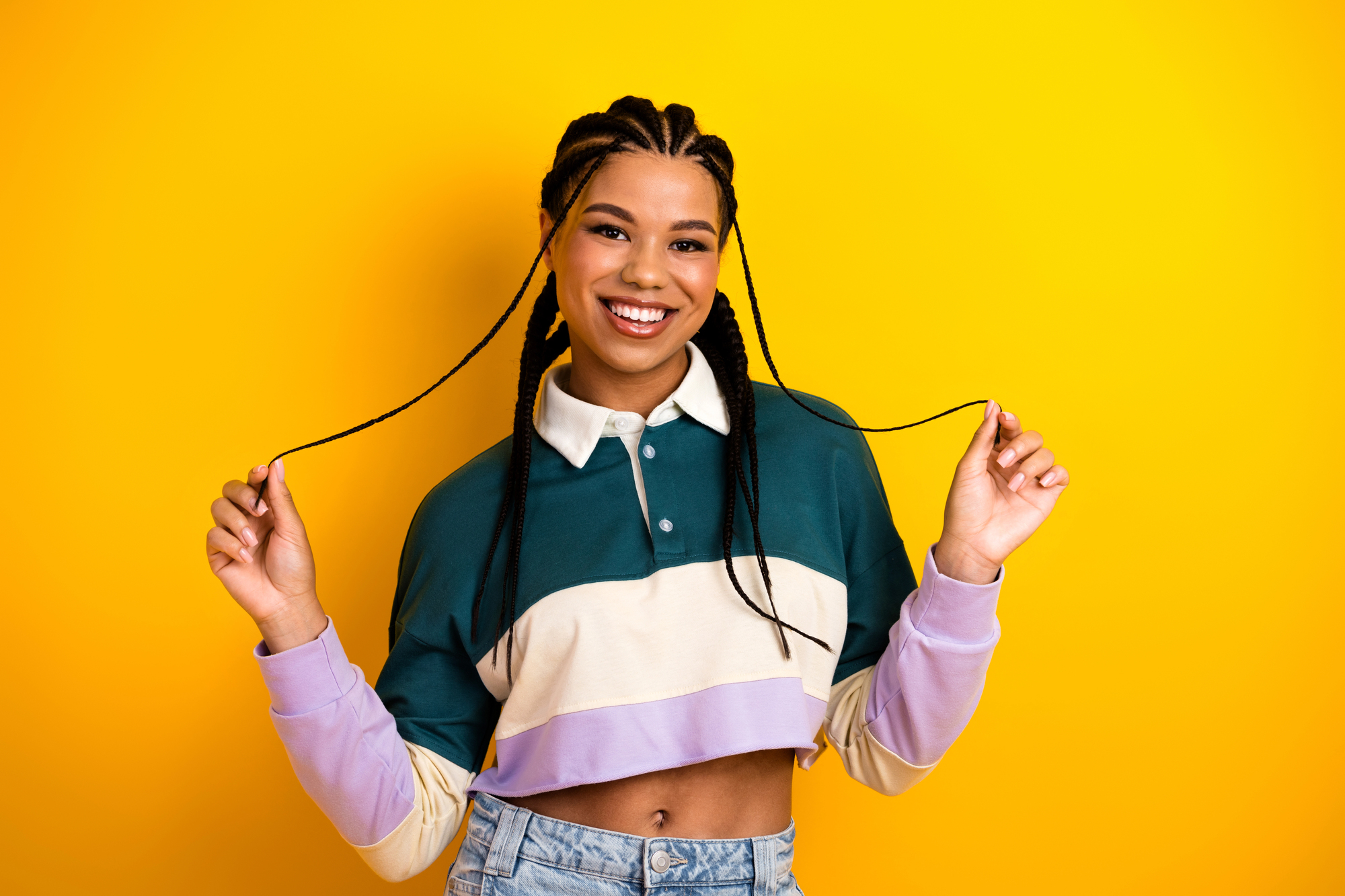
Natural hairstyles give you plenty of ways to wear and protect your curls. However, a protective style only protects your hair when it's installed without too much tension, cared for properly while you wear it, and taken down on time. Get those things right, and it can help you retain length. Get them wrong, and the style can damage the same edges it was supposed to protect.
Read this first
Tension is the price, and it's negotiable.
Traction alopecia is hair loss caused by repeated pulling on your hair strands, and it's one of the most preventable types of damage in this category. It often starts around your hairline and temples. If the repeated pulling continues for too long, the hair loss can eventually become permanent.
The warning signs are simple, but they're easy to talk yourself out of. If your style hurts, it's too tight; you don't have to wait until tomorrow to decide. Small bumps around your temples, a headache after your appointment, or edges that feel sore when you touch them are all signs that your hair needs relief.
None of this is an argument against protective styling. When it's done properly, protective styling can support length retention by reducing daily handling and keeping your ends tucked away. It's an argument for paying attention to how you install, maintain, and remove your style.
Every style in this section has its place. How you install, maintain, and take it down determines whether your hair benefits.
You're in the right place if
You want a style that lets you leave your hair alone for a few weeks
Your last install was too tight and you don't want a repeat
You're deciding between braids, twists, locs, and a wig
You want a wash-and-go that survives past the first afternoon
You need something to wear while you grow out a cut or a big chop
Your path
Start here
Four guides, in order. The first explains what makes a style protective, and the rest help you put that information into practice.
1
Protective styling, properly explained
What makes a style protective, and when it stops protecting your hair.
2
Box braids
One of the most popular protective styles, and one where too much installation tension can seriously damage your edges.
3
How to relieve tight braids
Read this the day you get your braids, not a week later. Acting early can keep one uncomfortable night from turning into lasting hairline damage.
4
The wash-and-go
For the weeks between protective styles. Your hair stays loose instead of tucked away, so your product order and nighttime routine make a big difference.
Common questions
Which of these sounds like you?
Start from where you are right now.
My braids are too tight and my scalp hurts
Deal with it today. Continued tension on hair and scalp increases your risk of breakage and traction alopecia, so don't wait for the pain to settle on its own.
I want to start locs but don't know which method
Your starting method affects how your locs will look, how much maintenance they'll need, and how difficult they may be to take down later.
I'm choosing between braids, a wig, and extensions
Each option comes with a different level of commitment, cost, and daily upkeep. They also place tension on different parts of your natural hair.
My wash-and-go never lasts more than a day
The problem is usually your product order or what happens to your curls overnight, not the wash-and-go technique itself.
My hair is short and I'm out of ideas
A TWA, or teeny weeny afro, may be short on length, but it still gives you plenty of styling options. Start with styles designed for shorter natural hair.
What this section covers
Three style families, and each one asks something different from you from week to week.
Braids & twists
Box braids, cornrows, twists, and knots. This is a large style family, and it's where installation tension deserves the most attention around your edges.
Box braids →
Locs & dreadlocks
Starting methods, maintenance, detoxing, and takedown. Locs are a longer commitment than most of the other styles in this section.
The complete loc guide →
Wigs & extensions
Units, installs, and what happens to your natural hair underneath. How protective they are depends on the installation, the braided base, and how you care for your hair while wearing them.
Hair extensions →
Free tool
Hair Shrinkage Calculator
Curly and coily hair can look much shorter than it is when stretched, so a style that looked shoulder-length on someone else may land at your chin. Check your stretched length before choosing a style based on where you expect it to fall.
Before and after an install
What you do before your install, and after you take it down, matters just as much as the style you choose.
If you're styling for length retention
Protective styling is one way to retain the length you grow. These guides cover the other habits that matter alongside it.
Who's behind these guides
KB
Licensed barber, hairstylist & natural hair educator
This section is reviewed by Kira Byrd, a licensed barber, hairstylist, and natural hair educator. That experience matters here because installation technique can be the difference between a protective style and a damaging one.
When to see a professional. Bumps, sores, or pus along your hairline after an install, or edges that haven't started growing back after several months, are reasons to see a board-certified dermatologist. Traction alopecia may improve when it's caught early and the pulling stops, but advanced cases can become permanent. This section is educational and isn't medical advice.
Free guide
The Protective Style Checklist
One page. What to ask for at the salon, the tension test to run before you leave the chair, and a safer wear-time range for each style family.
No spam. Unsubscribe anytime.
Related sections
Hair Growth & Length Retention
Your edges, breakage, and why protective styling helps you retain the length you grow.
Hair Care & Routines
Washing, conditioning, and detangling your hair while your style is installed.
Products, Tools & Ingredients
Edge control, heat protectants, and the products each style family may need.
Locs & Dreadlocks
Starter locs, microlocs, Sisterlocks, and freeform locs, plus what taking them down involves.
Everything else
All guides in this section
Every article filed under Natural Hairstyles, newest first. New tutorials show up here the day they go live.