
Camphor oil, extracted from camphor trees (Cinnamomum camphora), has a long history of use in hair care. This article will explore the benefits of using camphor oil for hair growth, hair loss, dandruff, and much more.
Camphor oil has a strong, fresh smell and gives your scalp a cool, tingly feeling, which is why it shows up in scalp oils and hair masks. But camphor is also poisonous if it's swallowed, so how you use it and where you store it really matter.
We'll also share camphor hair mask recipes with the right number of drops for each, plus who should skip camphor oil completely.
Is Camphor Oil Good for Hair?
Camphor oil can be a nice addition to a scalp oil or hair mask, as long as you dilute it well. It gives your scalp a cool, tingly feeling and leaves your hair smelling fresh. But if you're hoping to use camphor oil for hair growth, it won't make your hair grow faster or stop hair loss on its own. Camphor has been used for centuries, and today you'll find it in muscle rubs, chest rubs, and fragrances.
Before you try it, know this: camphor is poisonous if it's swallowed, and it's especially dangerous for young children. Always dilute camphor oil, keep the bottle where children can't reach it, and never use it on a child under 2. Our safety section below covers who else should skip it.

Free 50-page guide
Your hair is already growing. The problem is keeping it.
On average, hair grows a third to half an inch a month, and curlier hair tends to grow more slowly. If your length looks stuck, that’s your hair breaking off as fast as it grows in. Here are the seven causes of breakage and the weekly routine that stops them.
Free. One email a week after that. Unsubscribe anytime.
Key Takeaways
- Benefits of Camphor for Hair Care: Camphor oil adds a strong, fresh smell and a cool tingle to a scalp oil or hair mask. It isn't a treatment for scalp infections or dandruff, so reach for a dandruff shampoo when you have flakes.
- Combating Scalp Irritations and Dandruff: Camphor oil can make an itchy scalp feel cooler while it's on, but it doesn't treat what's causing the itch. For dandruff, a dandruff shampoo works better.
- Hair Growth and Strength: Camphor oil won't make your hair grow faster or stop hair loss. The tingle you feel is camphor acting on the nerve endings in your skin, not proof that more blood is reaching your hair roots.
- Not a Lice Treatment: Camphor oil isn't a lice treatment, and it doesn't belong on a young child's head. Use a lice treatment from the drugstore or your child's doctor instead.
- Safe Usage and Precautions: Always dilute camphor oil in a carrier oil like coconut oil, about 6 drops for every 2 tablespoons. Never swallow it, keep it away from children, and never use it on a child under 2.
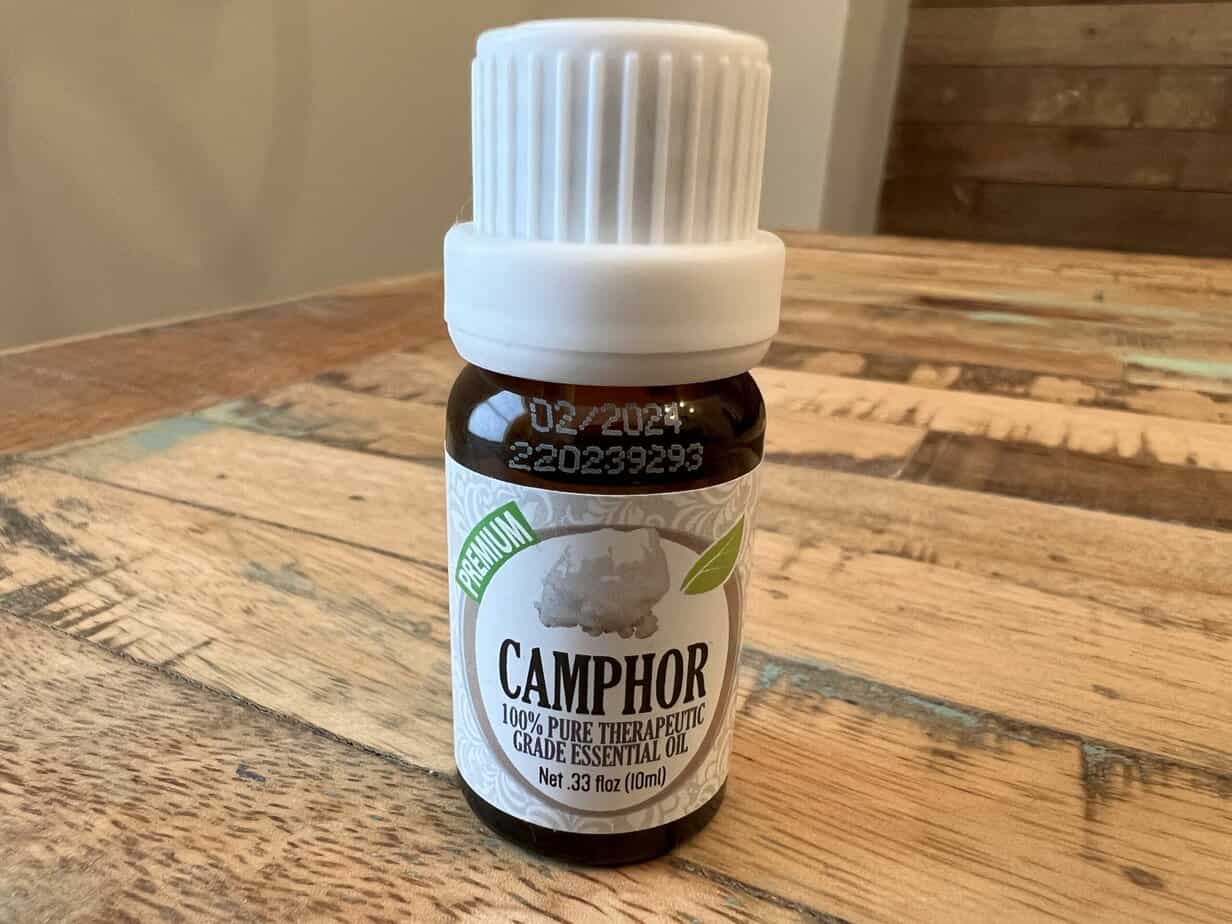

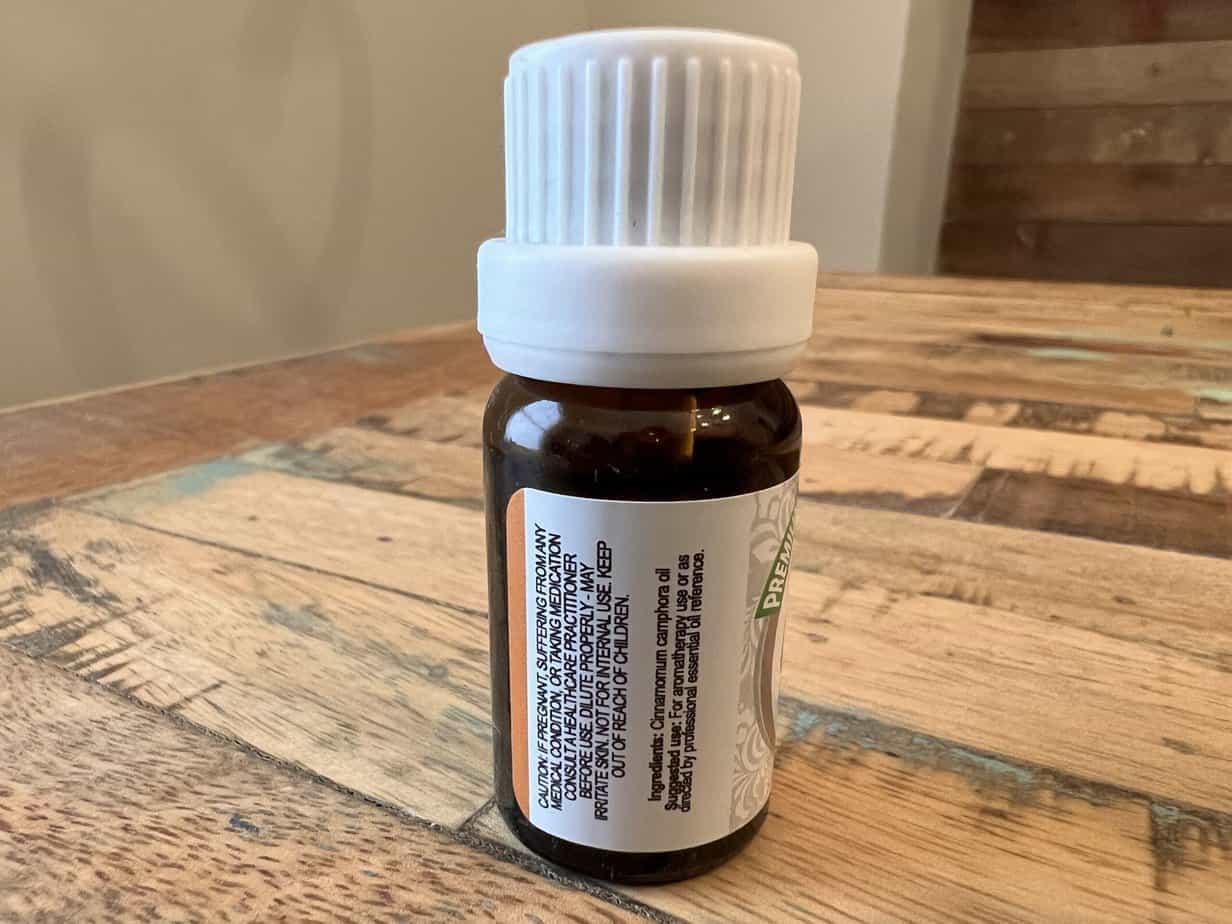
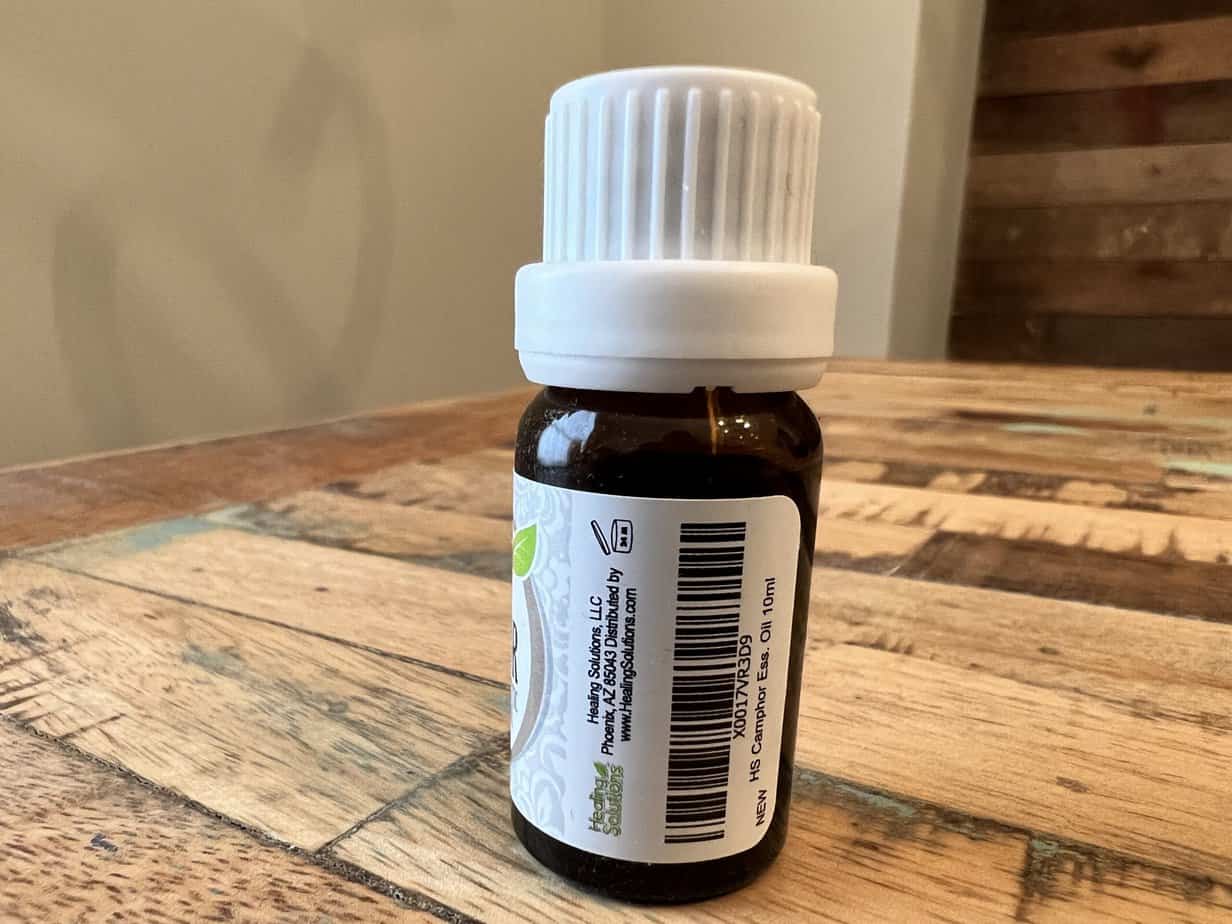
This camphor oil is labeled white, the grade that’s processed to remove most of its safrole. Plant Therapy steam distills it from the wood of the camphor tree and sells it undiluted in a 10 mL bottle, so mix a few drops into a carrier oil before it goes on your scalp.
A bottle like this one is pure camphor oil, so it always needs to be diluted before it touches your scalp. Most of the recipes below use just a few drops.
When you shop, look for white camphor oil on the label or the product page. Camphor oil comes in several grades, and only the white grade has had most of its safrole taken out so it can be used in cosmetics. Safrole is a compound that causes cancer in lab animals.
You'll also see camphor sold as tablets, blocks, and powder, often for religious rituals or to keep moths and bugs away. Those aren't for your hair. Young children have had seizures after getting into camphor products like these, so keep them somewhere kids can't reach.
What Does Camphor Oil Do for Your Hair?
Camphor oil mostly changes how your scalp feels and how your hair smells. It switches on the nerve endings in your skin that sense cold and heat, the same way menthol does, so your scalp feels cool and tingly. In lab tests, camphor has also killed some germs and molds, but that isn't the same as treating dandruff or hair loss on your scalp.
Camphor has been used for centuries to treat skin problems, and it's still widely used today in hair and scalp products. In a camphor hair mask, the softness and shine come from the carrier oil and the other ingredients you mix it with, not from the camphor.
In addition to 100% pure oil, you'll also see camphor products marketed as brown, yellow, or white camphor oil, camphor powder, and camphor tablets, and we've seen people selling the wood of camphor trees.
If you're wondering whether camphor is good for your hair, here's what it can and can't do for each of the uses you'll see it sold for.
1. Soothes Your Itchy Scalp and Removes Dandruff
Oily and irritated skin is a cause for concern for many women, especially if a build-up of dead skin cells and an itchy, flaky scalp accompanies it.
Dandruff is a common scalp condition where small pieces of dry skin flake off your scalp, and it can make your scalp itch. Sometimes it's a sign of seborrheic dermatitis, a condition that makes the skin red, oily, and scaly. Camphor oil can make an itchy scalp feel cooler while it's on, but it won't clear dandruff.
Camphor oil did stop the growth of three molds that rot palm-leaf crafts in one lab study, but those molds don't live on your scalp. So for flakes, use a dandruff shampoo with an ingredient like zinc pyrithione, selenium sulfide, or ketoconazole, and follow the directions on the bottle. If you still want a camphor mask for the cool feel, mix the camphor oil with a carrier oil and lemon juice.
Below are the ingredients and instructions.
Ingredients
- 6 drops of camphor oil
- 1 teaspoon of lemon juice
- 2 tablespoons of coconut oil or another carrier oil
- Egg Yolk (optional)
Directions
- Stir the camphor oil into the carrier oil first. Then beat the egg yolk, if you're using it, and mix everything together in a bowl with the lemon juice.
- Apply the mixture to your scalp, lightly massaging the mixture in and around the hair roots.
- Work the mixture throughout your hair, applying the recipe evenly.
- Wear a plastic shower cap or cover your head with a clean microfiber towel.
- Wait for 30 to 50 minutes before rinsing your hair and scalp with a mild shampoo.
- Condition your hair afterward.

2. Camphor Cleanses Your Scalp and Hair
Camphor oil leaves your scalp feeling fresh and smelling clean, but your shampoo is what actually cleans it. In lab studies, camphor has shown several biological properties, such as antimicrobial, insecticidal, and antiviral activities. Camphor oil is widely used as a fragrance in cosmetics and is a common ingredient in household cleaners.
Don't count on camphor oil to treat head lice, though. Head lice treatments are usually for children, and camphor rubbed on a young child's skin has caused seizures. For lice, see our head lice guide for the treatments that work. If you'd like a camphor scalp oil for yourself, here's a simple one.
Directions:
- Mix two tablespoons of coconut oil with 6 drops of camphor oil.
- Massage the oil into your scalp, and leave it on for 30 minutes to a few hours, not overnight.
- Wash your scalp and hair with shampoo and lukewarm water.
- Condition your hair.
3. Helps with Hair Loss and Hair Thinning
Men and women often begin to notice thinning of their hair strands as they grow older. Camphor oil won't slow that thinning, and it won't make your hair grow faster than it already does, which is about ⅓ to ½ inch a month depending on your hair type.
The warm or cool tingle you feel is camphor acting on the nerve endings in your scalp. It isn't proof that more blood, or more nutrients, are reaching your hair follicles.
Camphor did raise collagen, a protein that keeps skin firm, in one lab study on human skin cells and mouse skin. But that study looked at wrinkles, not hair, so it doesn't tell you anything about your hair follicles.
If you want to try a scalp oil for thinning hair, rosemary oil has more research behind it than camphor oil. That's why this recipe leans on rosemary oil and adds just a few drops of camphor oil for the cool feel.
Ingredients:
- 3 drops of camphor oil
- Two tablespoons of burdock oil
- One raw yolk
- 3 drops of rosemary essential oil
Directions:
- Stir the camphor oil into the burdock oil, then add the raw yolk.
- Stir the mixture, then add the rosemary essential oil while stirring to get an even mixture.
- Apply the paste to your scalp as you massage lightly.
- Work the paste through your hair as you pay attention to your scalp and hair roots.
- Wait for 30 to 50 minutes before rinsing your hair and scalp with a mild shampoo.
- Condition your hair.
Remember, hair loss can result from hormonal changes, genetics, medical conditions, aging, or more. A hair loss recipe isn't a quick fix and isn't guaranteed to work in every situation.
If you're shedding a lot more hair than usual, your part is getting wider, or you find round bald patches, see a board-certified dermatologist. Those aren't signs a scalp oil can fix, and finding the cause early gives you more treatment options.
4. Improves Hair Texture
Your natural hair can become dull and lifeless due to ongoing wear and tear from styling, handling, and other environmental reasons.
When mixed with other essential oils such as rosemary oil and a carrier oil like coconut oil, a camphor oil mask can leave your hair softer and smoother. The softening comes from the carrier oil, though, not the camphor.
Camphor oil itself doesn't condition your hair. What it adds to the mix is the scent and the cool, tingly feeling on your scalp.
5. Strengthens Hair Roots
Camphor oil won't make your hair roots stronger. What a carrier oil can do is help your hair strands themselves. In lab tests, plant oils like coconut oil soaked into hair and made the strands less likely to break.

Does Camphor Oil Penetrate the Hair Shaft?
Camphor oil isn't the oil in your mask that soaks into your hair strands. Camphor is a terpene (i.e., one of the strong-smelling compounds plants make), not a fat like the oils that coat and soften hair. It even slowly turns to vapor at room temperature, which is why you can smell it so easily.
So add camphor oil by the drop for its scent and cool tingle, and let the carrier oil do the softening. The carrier oil is the part that can soak into your hair shaft.
Some of the carrier oils that penetrate the hair shaft include coconut, avocado, and olive oil.
Coconut oil is the best-studied one. It's made mostly of lauric acid, a small, straight fat that's drawn to the proteins in your hair, so it can soak into the hair shaft. In one study, coconut oil was the only oil tested that cut the protein your hair loses when you wash and comb it.
Mineral oil didn't help with protein loss in that study. It isn't a plant fat, so it isn't drawn to the proteins in hair the way coconut oil is.
Sunflower oil didn't help with protein loss in that study either. But newer lab work, linked above, found that many plant oils can soak into hair, including oils with the same kind of fats as sunflower oil.
A rule of thumb is to mix camphor oil into a carrier oil that soaks into hair, such as olive or coconut oil.

How to Use Camphor Oil for Hair
Camphor oil is best used diluted in a carrier oil, either on its own or with ingredients such as lemon juice, egg, and yogurt. This oil can also be used with many different hair types or textures.
If you have dry, weak hair, you can mix camphor oil with ingredients like egg yolk and coconut oil for a softening mask. The coconut oil is what helps your dry hair here.
How Much Camphor Oil to Use
Use about 6 drops of camphor oil for every 2 tablespoons of carrier oil. That makes a mix of about 1%, the gentle strength in our essential oil dilution calculator for a scalp oil you wash out the same day. Start there, and count every essential oil in the bowl, not just the camphor.
For a scalp oil you leave in until wash day, use half as much: 3 drops for every 2 tablespoons. Never put camphor oil on your scalp straight from the bottle, and don't try to dilute it in water. Essential oils float on water instead of mixing in, so the drops land on your skin at full strength.
Trying camphor oil for the first time? Test your diluted mix on your arm before it goes on your scalp, using our patch test steps.
When making a camphor oil hair mask, ensure that the solution is thick and more of a paste so that camphor doesn't get into your eyes or mouth, as it can cause irritation.
Before applying the mask, wash your hair and do not dry it thoroughly. This ensures that the hair is pliable, so it's easy to work with.
For optimal results, always massage the scalp while applying the camphor hair mask. After the treatment, cover your head with a plastic bag or a microfiber towel.
To avoid difficulties when washing the mask, apply the shampoo directly to the hair strands and rinse them gently with warm water. You can also follow with a diluted vinegar rinse before conditioning your hair.
Original Curl Centric chart
Is this camphor oil reaction normal?
Find the row that matches what you’re feeling or seeing during or after a camphor oil mask, then follow the last column.
| Is it normal? | What you notice | Why it happens | What to do |
|---|---|---|---|
| Normal | A cool, tingly feeling on your scalp while the mix is on. | Camphor switches on the nerve endings in your skin that sense cold and heat. Menthol does something similar. | Nothing. Leave the mix on for the time your recipe says, then shampoo it out. |
| Too strong | Burning or stinging that keeps getting worse instead of settling into a mild tingle. | The mix is too strong for your skin, usually from too many drops of camphor oil or other essential oils. | Shampoo it out right away. Next time, use fewer drops, or skip camphor oil. |
| Not working | Flakes or an itchy scalp that keep coming back after a few weeks of camphor masks. | Camphor oil can make your scalp feel cooler, but it doesn’t treat dandruff. | Switch to a dandruff shampoo with an ingredient like zinc pyrithione or ketoconazole. See a dermatologist if your flakes don’t clear. |
| Stop using it | A red, itchy, or swollen rash on your scalp, hairline, or neck in the hours or days after. | Your skin is reacting to the camphor oil or to another ingredient in the mix. | Wash the area with soap and water, and don’t use the mix again. See a dermatologist if the rash is bad or doesn’t calm down. |
| Rinse now | The mix ran into your eyes. | Camphor irritates your eyes on contact. | Rinse your eyes with plenty of clean water, then call Poison Control at 1-800-222-1222 to ask what to do next. |
| Emergency | Someone swallowed camphor oil, or a child got into the bottle. | Camphor is poisonous when swallowed, and even a small amount can cause seizures, especially in young children. | Call Poison Control at 1-800-222-1222 right away, even if they seem fine, and don’t make them throw up. If they have a seizure or trouble breathing, call 911. |
Never use camphor oil on a child under 2, and keep every camphor product, including tablets and chest rubs, where children can’t reach it. If anyone swallows camphor, call Poison Control at 1-800-222-1222.

Camphor Oil Hair Mask Recipes
Camphor oil can be paired with several other essential oils and natural ingredients, and it's easy to apply these recipes to the hair and scalp. There are several recipes you can make from different ingredients and for various uses.
As we've seen above, people use camphor oil masks for everything from dandruff to an itchy scalp and hair loss. Each recipe below keeps the camphor oil to a few drops:
Lemon-Camphor Hair Oils Mask Recipe
Ingredients:
- 1 tablespoon of lemon juice
- 3 to 5 drops of camphor oil
- 3 tablespoons of coconut oil
Directions:
- Warm the coconut oil to slightly above room temperature.
- Add 3 to 5 drops of camphor oil.
- Add 1 tablespoon of lemon juice, then stir the mixture.
- Massage your scalp with the mixture for a few minutes.
- Work the remaining mixture through your hair, particularly the base of the hair.
- Wrap your hair with a warm towel and wait for about 20 minutes.
- Rinse off your scalp and hair with a mild shampoo.
- Condition your hair.
If you like, finish with a rinse of apple cider vinegar mixed with water. It's an optional last step, not something that feeds your scalp.
Camphor-Castor Filming Mask
Another common hair mask is a combination of camphor oil and castor oil with a few other ingredients, such as raw egg yolk and rosemary oil. Many people use it as a hair loss remedy, but it won't regrow hair on its own.
Mixing camphor oil with rosemary oil, a potent essential oil, and castor oil, a thick carrier oil, gives you a heavy mask that coats your hair. Castor oil is sticky, so plan on a thorough shampoo afterward.
Besides making a potent hair mask, you can also make camphor oil shampoos for both oily and dry hair. However, the shampoo you'll get is mild, and for the best results, you want to alternate this with a commercial shampoo.
To make a camphor shampoo for oily hair, mix the following:
- 3 drops of camphor oil
- 2 tablespoons of water
- 1 raw egg yolk
To make a camphor shampoo for dry hair, mix the following:
- 3 drops of camphor oil
- 2 tablespoons of burdock and almond oil
- 1 raw egg yolk
- 4 to 5 drops of tea tree essential oil
For either one, stir the essential oils into the egg yolk first, then whisk in the rest, and stir again right before you use it, since essential oils float on water. Massage it into your scalp, leave it on for a few minutes, and rinse well.

Is Camphor Oil Good For Hair?
Camphor oil is good for your hair only when you use it safely: diluted, kept off broken skin, and never swallowed. Camphor is poisonous when it's swallowed. For a young child, as little as a teaspoon of a product with 10% camphor has been reported to cause death.
Undiluted camphor oil can irritate your skin and eyes, causing redness, itching, or burning. In the U.S., camphor medicines like chest rubs have been capped at under 11% camphor since 1982, after children were poisoned by stronger products. Before using camphor oil on your skin, you want to do a skin patch test or consult your medical doctor (or dermatologist).
To patch test, dermatologists recommend putting a small amount of your diluted mix on a quarter-sized spot on the bend of your elbow or the underside of your arm, twice a day for 7 to 10 days. If your skin gets red, itchy, or swollen, wash the mix off and don't use it again.
Camphor oil is sold in several grades, and the others can contain safrole, so stick with white camphor oil. Never swallow camphor, and don't put it on open wounds or damaged skin, including a scalp that's scratched, raw, or freshly irritated.
Children need the most care. Never use camphor oil on a child under 2, and keep it off young children's heads in general: a small amount swallowed, breathed in, or rubbed on the skin can cause seizures. Even camphor chest rubs say not to use them on children under 2.
Those rubs also tell you to ask a health professional first if you're pregnant or breastfeeding, and camphor can reach a baby through the placenta. So if you're pregnant or breastfeeding, check with your doctor before using camphor oil.
To ensure safety, do not use camphor oil, camphor hair mask, or homemade camphor shampoo if:
- You have allergic reactions to the smell of camphor
- You have epilepsy or have ever had a seizure
- You're pregnant or breastfeeding, unless your doctor says it's OK
- The skin on your scalp is broken, scratched, or irritated
You should also dilute the oil before using it so that, in case it accidentally gets into your eyes, you won't suffer from adverse side effects.
If it does get in your eyes, rinse them with plenty of clean water. If anyone swallows camphor oil, call Poison Control at 1-800-222-1222 right away, even if they seem fine, and don't make them throw up. Call 911 if they have a seizure or trouble breathing.
Does Camphor Mitigate Premature Gray Hair?
No, camphor oil won't stop premature graying or bring your natural color back. Hair color is still the main way to cover gray hair. If you'd still like a hibiscus and camphor scalp oil for how it feels and smells, here's how to make it.
Below is the recipe.
Ingredients:
- 4 hibiscus flowers (preferably fresh)
- 2 tablespoons virgin coconut oil
- 6 drops of camphor oil
Direction:
- Warm coconut oil slightly above room temperature.
- Add hibiscus flowers to the coconut oil and stir for approximately 1 minute.
- Add camphor oil and let the mixture cool down to room temperature.
- Use the mixture to massage the scalp and hair roots gently.
- Wait for 20 to 30 minutes before rinsing off your scalp and hair with a mild shampoo.
- Repeat once a week if you like how it feels. For ways to cover or blend gray hair, see our guide.
Graying of the hair can start at any age and can be caused by a range of factors. In a review of the research, low levels of vitamin B12, folic acid, or biotin, and low iron stores or calcium, were all linked to premature graying.
Other causes include your family history, stress, smoking, and thyroid problems. If you're going gray early, ask your doctor about checking your vitamin levels and thyroid. When graying comes from a cause like these, treating it has brought color back for some people.
Related Articles
- Best Essential Oils for Hair Growth and Thickness
- How Often To Use Coconut Oil for Hair Growth
- How To Use Peppermint Oil for Hair Growth
- Does Almond Oil Expire?
Camphor oil is sold both pure and already diluted, so check the label to see how strong your bottle is, and always read and follow the manufacturer's instructions.
If you have questions or concerns about the potential uses of camphor, be sure to discuss this product with a medical professional to avoid allergic reactions or other complications.