
Do you take biotin for hair growth? What about vitamin B7, coenzyme R or vitamin H?
These are just different names for a very common vitamin that many naturals take for hair growth called biotin. The real question is does taking biotin for hair growth really work?
Let's dive a little deeper.
Is Biotin Good for Curly Hair Growth?
Biotin supplements may help hair grow back if a biotin deficiency is causing the hair loss, but that's rare. Biotin is a water-soluble B vitamin your body needs for healthy hair. If you already get enough, there isn't good evidence that taking more makes your curls grow faster, thicker, or longer. High doses can also interfere with some blood tests.
Rather hear this than watch it? It's also an episode of Curl Science, our podcast, on Apple Podcasts and Spotify.

Free 50-page guide
Your hair is already growing. The problem is keeping it.
On average, hair grows a third to half an inch a month, and curlier hair tends to grow more slowly. If your length looks stuck, that’s your hair breaking off as fast as it grows in. Here are the seven causes of breakage and the weekly routine that stops them.
Free. One email a week after that. Unsubscribe anytime.
What Is Biotin?
There are many names for biotin, including coenzyme R, vitamin B7, and vitamin H.
In simple terms, vitamin B7 is a water-soluble B-complex vitamin that is often found in foods. Biotin is required by the human body for cell growth, producing fatty acids and it's also essential for the metabolism of amino acids and fats.
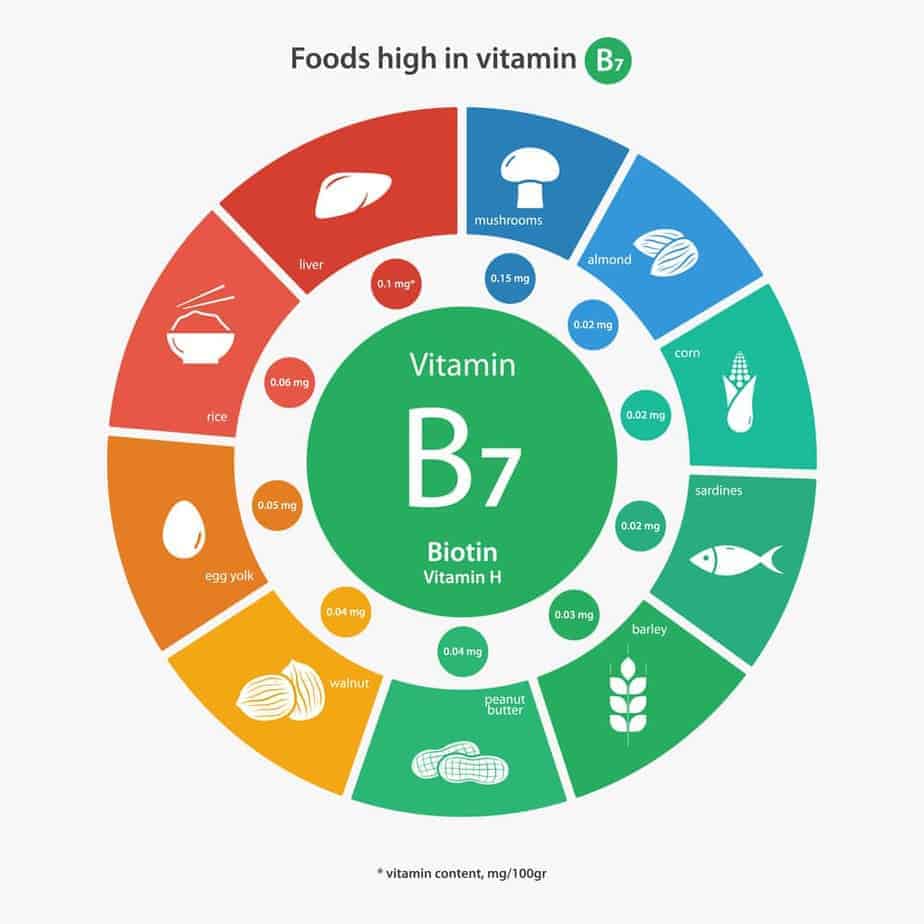
Sources: Food High in Vitamin B7
Using Biotin for Healthy Hair Growth: The Reason People Are Taking Biotin Supplements
Over the years, biotin supplements have been used to treat numerous conditions, but most naturals who take it have one common goal. There is a common belief that taking a biotin supplement will improve your ability to grow long hair.
Using vitamins for hair growth is common in the natural hair community. Biotin supplements are frequently recommended for faster hair growth (i.e., increasing the overall hair growth rate) and for strengthening nails - even though there's not sufficient scientific data to support its effectiveness.
According to clinical references, researchers haven't come to an agreement on the benefits of taking additional biotin as an oral supplement. There is anecdotal evidence that suggests biotin may have additional benefits.
However, I have not found any supporting scientific evidence that verifies the perception that biotin improves hair growth potential. Nevertheless, biotin is commonly found in a variety of health and cosmetic products for skin and hair.
Did You Know That Biotin Deficiencies Are Very Rare?
Biotin deficiency is extremely rare, particularly due to the fact that it's available in a wide range of foods and that the human body needs very little biotin. The average person doesn't need a biotin supplement. Certain factors can increase your risk, including rare inherited conditions, regularly eating large amounts of raw egg whites, taking certain seizure medicines long term, or long-term heavy alcohol use.
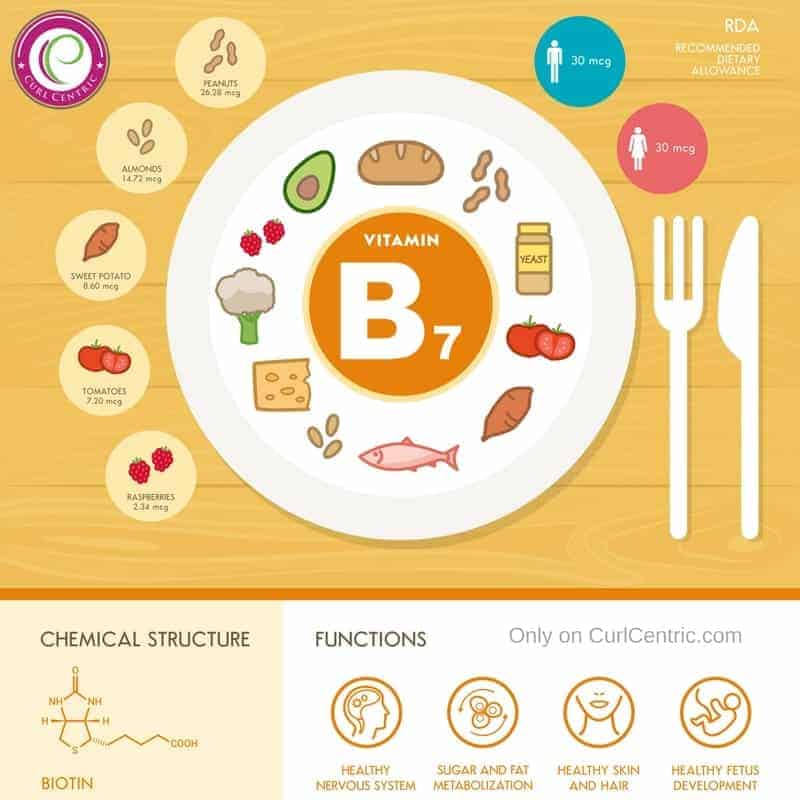
You receive vitamin B7 naturally in everyday foods like eggs, salmon, sunflower seeds, sweet potatoes, and almonds. Note that this isn't a complete list of foods that provide vitamin B7.
Although, it's important to note that since our bodies can recycle vitamin B7 that the body already contains, genuine deficiencies of vitamin B7 are very rare.
If you believe you have a deficiency, we always recommend working with an appropriately licensed medical professional to create a personalized plan of treatment.
What Does Biotin Deficiency Look Like?
A biotin deficiency can cause hair loss, and treating that deficiency may help your hair grow back. In a 2017 review, researchers found 18 reported cases of improvements in hair or nails after biotin supplementation. All involved an underlying condition, such as an inherited enzyme problem or a rare hair disorder. The researchers concluded that there wasn't enough evidence to recommend biotin supplements for healthy people.
Regardless of the cause of the deficiency, it can usually be directly addressed by nutritional supplementation.
Examples of deficiency symptoms are:
- Conjunctivitis
- Hair loss ( alopecia)
- Thin and brittle fingernails
- Neurological symptoms such as lethargy, depression, tingling and numbness on the extremities, and hallucination
- Dermatitis (usually a scaly red rash around the nose, mouth, eyes, and genital area)
According to the European Journal of Paediatric Neurology, children who take certain anti-epileptic drugs (AEDs) may suffer hair loss as a secondary effect. This hair loss might be treated with biotin supplementation. The medication may cause biotin deficiency, and supplementation improves hair back to normal levels.
How Much Vitamin B7 Should You Take?
The Food and Nutrition Board (i.e., The Institute of Medicine) provided updated Estimated Average Requirements (EARs) and Recommended Dietary Allowances (RDA) for B vitamins in 1998.
At the time, they did not have enough information to establish RDAs and EARs for Vitamin B7. In such instances, the board often established Adequate Intakes (AIs), with the expectation that they will be replaced by RDAs and EARS at a later date.
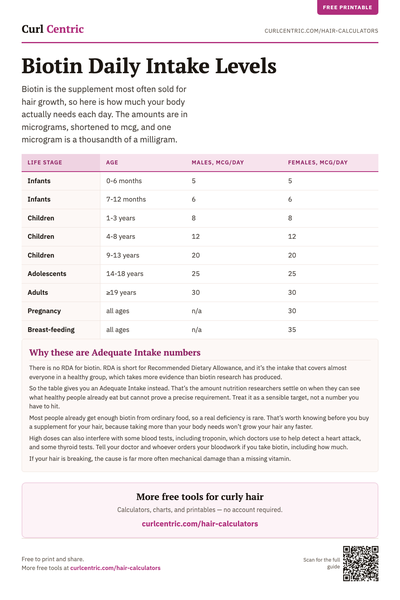
We've put those Adequate Intake levels by age and life stage on a one-page printable you can save or print.
 1 page
Free printable
Biotin Daily Intake Levels
Every daily biotin amount on one page, from babies to adults, so it’s easy to check a supplement label against what your body actually needs.
The Institute of Medicine has set parameters defining an adequate intake of biotin: 30 micrograms (mcg) a day for adults, including during pregnancy, and 35 mcg while breastfeeding. If you eat a healthy hair diet, you should receive an adequate amount of biotin naturally without requiring supplements. Some hair gummies contain 2,500 to 6,000 mcg per serving, roughly 83 to 200 times the 30 mcg adult intake. Biotin pills are also sold in 5,000 and 10,000 mcg doses.
If you decide to take biotin, the "appropriate" dose needed depends on many factors and should really be prescribed by a medical doctor.
Should You Worry About Toxicity with Vitamin B7?
Certain animal studies have indicated very few, if any, side effects of consuming high doses of vitamin B7.
These studies suggest that both humans and animals can tolerate doses at least one order of magnitude higher than the adequate intake recommended by the Institute of Medicine's Food and Nutrition Board.
Biotin hasn't been shown to cause toxicity at the doses studied. In one large study, people with multiple sclerosis took 300 mg of biotin a day under medical supervision. Health problems reported during the study were about as common in the biotin group as in the placebo group. That doesn't mean high doses are harmless, though.
One important concern is your bloodwork. Some lab tests use biotin to measure substances in your blood, so extra biotin can make the results inaccurate. The FDA has warned that biotin can cause falsely low results in some troponin tests, which doctors use to help detect a heart attack. This could make a heart attack harder to identify. Biotin can affect some thyroid tests, too. According to the NIH, even a single 10 mg dose, or 10,000 mcg, has interfered with thyroid tests performed within 24 hours. Tell your doctor and whoever orders your bloodwork if you take biotin, including how much. Check hair, skin, and nails gummies, multivitamins, and prenatal vitamins, since biotin may be included even when it isn't named on the front of the bottle.
I've seen many women discuss taking very high levels of biotin. These high intake levels may prove to be safe eventually; however, researchers haven't been able to determine if consuming high dosages of biotin over an extended period of time will pose health risks.
I encourage you to focus on your eating habits since you can get plenty of biotin by eating a healthy diet.
If you're thinking about a supplement, the American Academy of Dermatology says to take biotin only when a blood test shows you're low. If your levels are normal, it doesn't recommend it.
The Best Hair Vitamins (Other Than Biotin) for Faster Hair Growth

Regardless of whether we agree with the general sentiment, long healthy natural hair can be seen as a sign of beauty. Just think of all the natural hair idols online and the comments that you read under their photos.
With hair growth being a common desire of many women, let's talk about hair growth vitamins other than biotin. There are numerous factors that must be considered when trying to encourage your hair to grow longer, including age, genetics, and hormones.
Click here if you want to read our advanced guide to hair growth, otherwise let's discuss hair growth vitamins and supplements, other than biotin, that are supportive of hair growth.
Vitamin A
Within the body, all human cells including your hair need vitamin A.
An appropriate amount of vitamin A can help your skin make sebum, which is an oily substance to help keep your scalp moisturized and your hair healthy.
Deficiency in vitamin A can cause issues related to hair loss, but too much vitamin A can be just as detrimental. There are studies that have shown that too much vitamin A can lead to hair loss.
Many foods contain an abundance of beta-carotene, which is later turned into vitamin A within the body, including sweet potatoes, carrots, pumpkins, spinach, and kale. Yogurt, eggs, milk, and cod liver oil are also a good source of vitamin A.
Vitamin C
Vitamin C identifies as a powerful antioxidant that protects your hair against oxidative stress caused by free radicals. Free radicals have the ability to block hair growth and leave your hair with an aged appearance.
Vitamin C also assists with creating collagen which is an important aspect of the hair's structure.
Vitamin C assists the body with iron absorption, which is another mineral needed for hair growth. Within food, vitamin C can be found in strawberries, peppers, guavas, and citrus fruits.
Vitamin D
Deficiencies in vitamin D are directly linked to alopecia, which is the medical term for hair loss. According to this study, a sufficient supply of vitamin D may also help create new hair follicles, which are the pores where hair grows.
Many researchers believe that vitamin D plays a significant part in hair production, although most research has only focused on vitamin D receptors.
There is little known about how vitamin D assists with the hair growth process. Many people have vitamin D deficiencies, and it's usually a good idea to increase your vitamin D levels.
Your body can produce vitamin D naturally through sun exposure, so spend some time outside enjoying the sun. Although, vitamin D can also be absorbed through foods such as fatty fish, cod liver oil, fortified foods, and some mushrooms.
It's unknown exactly how vitamin D plays a role in hair growth, but a vitamin D deficiency can be directly linked to certain forms of hair loss.
Vitamin E
Vitamin E has similar characteristics to vitamin C as it prevents free radicals from harming the hair.
In one research study, whose population were those who experienced hair loss, there was a 34.5% increase in hair growth after taking vitamin E supplements for 8 months, compared to the placebo group within the study, which only had a .1% increase in hair growth.
Foods rich in vitamin E include sunflower seeds, almonds, spinach, and avocados.
Iron
Iron also has benefits for hair growth by assisting your red blood cells in carrying oxygen to cells. Women are prone to anemia when they are deficient in iron, which has a side effect of hair loss.
Foods with plenty of iron include clams, oysters, eggs, red meat, spinach, and lentils.
Zinc
Hair loss is also common in those who are zinc deficient, as zinc encourages hair tissue growth and repair. Studies have proven that when people take zinc supplements, their hair loss issues improve, however, there is anecdotal evidence that too much zinc can lead to hair loss issues (source).
To ensure that you don't intake too much zinc, it's best to get zinc from whole foods such as oysters, beef, spinach, wheat germ, pumpkin seeds, and lentils.
Protein
It is essential to consume an appropriate amount of protein, especially for hair health as hair is made from protein.
Studies have shown that those who do not consume enough protein will likely suffer from slower hair growth and potentially hair loss. However, for people that reside in Western countries protein deficiencies are extremely rare.
Related Articles
- How to Get Thick Hair With Coconut Oil
- How Long Does It Take for Hair to Grow 2 Inches
- How Often Should You Use Rice Water on Natural Hair
- When Is the Best Time to Take Biotin Vitamins?
Are Hair Growth Vitamins and Supplements Safe?
Most of the vitamins and minerals needed for healthier hair and hair growth can be found naturally in foods. If you already get enough of these nutrients from a balanced diet, a hair growth supplement is unlikely to provide additional benefits.
Research has determined that those who are already deficient will find supplements most beneficial.
It is important to remember that, in some cases, too many vitamins and minerals can be just as harmful as not consuming enough.
We suggest speaking with your medical doctor or another appropriately licensed medical professional, before starting a regimen of hair growth vitamins or supplements. I'm not trying to scare you, but I do want you to be careful. Take care.