
Chances are you've heard that we all need vitamins to grow healthy hair - and that's true. But it's important to know that every vitamin has a different set of benefits.
So, if you want to use vitamins for hair growth, it's wise to ensure that you've chosen the right vitamins. So, what vitamins are good for hair growth?
The vitamins your hair needs most are vitamins A, C, D, and E, plus two B vitamins, biotin and B12. Your hair also needs four minerals: iron, zinc, iodine, and selenium.
But here's the catch. A vitamin only helps your hair grow if you're low in it. If your levels are already normal, taking more won't make your hair grow faster, and taking large amounts of vitamin A or selenium can cause hair loss.
In this article, we'll go over the main vitamins that stimulate and support hair growth. Let's get right into it!

Free 50-page guide
Your hair is already growing. The problem is keeping it.
On average, hair grows a third to half an inch a month, and curlier hair tends to grow more slowly. If your length looks stuck, that’s your hair breaking off as fast as it grows in. Here are the seven causes of breakage and the weekly routine that stops them.
Free. One email a week after that. Unsubscribe anytime.
These Vitamins are Good for Hair Growth
When you were a kid, you probably heard about the importance of getting the right vitamins in your diet. It's because they can have a monumental effect on how you fare healthwise - and your hair isn't exempt.

If you want to reach your hair growth and thickness goals, you need to know what vitamins to prioritize, and that's what we'll address in this section:
Vitamin C for Collagen Production
Vitamin C is one of the vitamins everyone needs for healthy hair growth. It has several functions in the body, including the following, which pertain to the hair:
- It helps your body absorb iron, a non-negotiable mineral the body needs to grow hair.
- It helps the body produce collagen, a protein that gives your skin, including your scalp, its strength.
- It's an antioxidant, which means it helps protect your cells from damage.
Vitamin C matters most for your hair when you're low in iron, because it helps your body absorb more of it. So if you're not getting enough vitamin C, you could be missing out. But before you go and buy a vitamin C supplement, continue reading.
Vitamin C deficiencies are rare - the vitamin is present in so many foods we eat every day that most people get enough of the vitamin without even trying.
You can get your vitamin C in foods like red and green bell peppers, cantaloupe, broccoli, citrus fruits, and potatoes.
How Much Vitamin C Do You Need?
For the vast majority of men, 90 milligrams of vitamin C a day is enough. Women don't generally need as much of this vitamin - 75 milligrams would be enough for the average adult female. You need a bit more if you're pregnant (85 milligrams) or breastfeeding (120 milligrams), and smokers need 35 milligrams more than nonsmokers.
Going a little over these amounts is fine, since your body gets rid of extra vitamin C in your urine. The upper limit for adults is 2,000 milligrams a day, and more than that can cause diarrhea, nausea, and stomach cramps.
Biotin and Other B Vitamins for Hair Follicle Health
Moving on to the B vitamins - your body uses them to turn the food you eat into energy and to make new cells, including the red blood cells that carry oxygen to your hair follicles.
There are several B vitamins that you should be aware of, but the most popular one is biotin or vitamin B7. Biotin is a vitamin that many take as a supplement with varying results.
It's thought to be a cure-all for excessive hair shedding and hair loss.
But a 2017 review found only 18 reported cases where biotin helped someone's hair or nails, and every one of those people had an underlying condition, such as a rare inherited enzyme problem. If you already get enough biotin from food, there isn't good evidence that taking more will change your hair. Biotin can help your hair grow back when you're truly low in it, and that's rare.
Vitamin B12 is another B vitamin worth knowing about. Your body needs it to make healthy red blood cells. You're more likely to run low on B12 if you don't eat animal foods, are an older adult, have had stomach surgery, or take metformin or stomach acid medicine for a long time.
If you are deficient in either of these B vitamins and aren't seeing much hair growth, dietary supplements or a change in your diet may be able to help.
You can get your B vitamins in food items like:
- Eggs
- Poultry
- Milk
- Breakfast cereal
How Much Biotin Do You Need for Healthy Hair Growth?
The daily amount set for adults is 30 micrograms of biotin. This applies to both men and women, including during pregnancy, and it rises to 35 micrograms while breastfeeding. You'll notice that many supplements out there contain way more than 30 micrograms. Many hair gummies have 2,500 to 6,000 micrograms per serving, which is between 83 and 200 times what adults need each day.
Biotin hasn't been shown to be toxic at the doses studied, but that doesn't make high doses harmless.
Also, it's important to know that taking a biotin supplement can throw off some lab tests. The FDA has warned that biotin can make some troponin tests, which doctors use to check for a heart attack, read falsely low. It can affect some thyroid tests, too. So, if you're on a biotin supplement and will be having labs done, ensure that your healthcare provider knows you're taking biotin and how much. Check hair, skin, and nails gummies, multivitamins, and prenatal vitamins as well, since biotin isn't always in the product's name.

Vitamin A for Sebum Production and Cell Growth
Vitamin A, which isn't always regarded as a hair growth vitamin, plays a big part in the creation of hair. And it does so in a couple of ways, including:
- Supporting sebum (scalp oil) production. The oil glands in your scalp need vitamin A to develop and work normally, and getting too little or too much can both cause problems.
- Facilitates cell growth all over the body, including the cells in your scalp and hair follicles. With healthy hair follicles, you're more likely to grow healthy hair.
Vitamin A supplements sometimes get a bad rap because of the fact that they have caused hair loss in some. The key to avoiding hair loss with vitamin A is not to overdo it. You can get vitamin A from foods like:
- Fish
- Dairy
- Meat
- Eggs
If you fear that you're not getting enough of the vitamin in your diet, there are supplements out there. But vitamin A deficiency is rare in the United States, so most people don't need one. If you do take a vitamin A supplement, stop and talk to your doctor if your hair starts shedding more than usual.
How Much Vitamin A Do You Need for Hair Growth?
Since excessive vitamin A can lead to hair loss, it'd be wise to get educated on just how much vitamin A is too much. Health professionals have found that men should take in 900 micrograms of vitamin A daily.
For women, that amount is reduced to 700 micrograms daily. Those are the amounts to aim for, not the limit. The upper limit for adults is 3,000 micrograms a day of preformed vitamin A, the kind found in animal foods and many supplements. Beta-carotene, the orange pigment in carrots and sweet potatoes that your body turns into vitamin A, doesn't count toward that limit. If you're pregnant or could become pregnant, stay under 3,000 micrograms a day, because too much vitamin A can cause birth defects.

Vitamin D for Hair Follicle Stimulation
Vitamin D helps your hair follicles work. The cells at the root of each hair have receptors for vitamin D, and people born with a rare condition that blocks those receptors often lose most of their hair. When you don't have enough vitamin D in your diet via food or supplementation, your hair growth may stall.
In fact, low vitamin D shows up again and again in people with alopecia areata, a condition where your immune system attacks your hair follicles.
So, if you are currently dealing with this scalp condition, it's a good idea to reach out to your primary care provider or a local dermatologist to see if a vitamin D deficiency could be part of the picture. A simple blood test checks your level.
Vitamin D also helps control your immune system, which may be one reason low levels are so common in alopecia areata.
You can get vitamin D in foods like:
- Salmon
- Beef liver
- Fortified orange juice
- Milk
How Much Vitamin D Should You Take for Hair Growth?
Health experts recommend that you should get 600 IU (15 micrograms) of vitamin D every day, regardless of your gender, and 800 IU once you're over 70. This is considered the sweet spot, but if you go a little over, you shouldn't have negative health consequences to deal with.
Going way over the recommended vitamin D allowance could result in systemic issues like heart problems, nausea, and more. The upper limit for adults is 4,000 IU a day. Too much vitamin D almost always comes from supplements, since sun on your skin can't push you into the danger zone.

Vitamin E to Combat Oxidative Stress
Like vitamin C, vitamin E is an antioxidant. It helps protect your cells from damage, which matters for the health of your scalp. So, you'd do well to ensure that you're getting enough vitamin E daily.
You can find vitamin E in a wide variety of foods, including:
- Sunflower seeds
- Pumpkin
- Red bell pepper
You can also get yourself some vitamin E oil, which you can apply topically to your scalp daily. As for supplements, vitamin E deficiency is rare in healthy people, so most people get enough from food and don't need one.
How Much Vitamin E Should You Take for Hair Growth?
For both women and men, 15 milligrams is the recommended dietary allowance for vitamin E. Of course, as we see with many other vitamin supplements, you'll find vitamin E supplements with doses way higher than 15 milligrams.
Unfortunately, going too far over the allowance of 15 milligrams can lead to serious health consequences - hemorrhaging is one of them. That's why the upper limit for adults is 1,000 milligrams a day from supplements. If you take a blood thinner like warfarin, talk to your doctor before you take any vitamin E supplement.
Which Vitamin Is Best for Hair Growth?
If you're thinking about choosing just one vitamin to promote hair growth, we urge you to reconsider. Each vitamin we've mentioned up until this point plays a different part in your hair and scalp health, and your hair needs all of them.
So, choosing one vitamin as "best for hair growth" is impossible. The best possible thing to do in this regard is to consume a balanced diet and try to get all of these vitamins daily. You don't want to neglect any of these vitamins.
With that understanding, if you suspect you're deficient in a hair growth vitamin, it would make sense to prioritize that vitamin to resolve that deficiency. The best way to find out is a blood test. If you're losing hair, ask your doctor whether to check your iron and vitamin D levels, since low levels of both are linked to hair loss and can be treated.

Which Vitamin Deficiency Causes Hair Loss?
As you may have gathered, vitamin deficiencies can lead to hair loss. Theoretically, being deficient in any vitamin that plays a substantial role in the hair growth cycle can cause hair loss. But if we're only considering formal studies, the vitamin deficiencies most clearly tied to hair loss are biotin (vitamin B7) and vitamin D. Low biotin can thin your hair, though it's rare. Low vitamin D is common in people with alopecia areata.
Two minerals matter just as much: low iron and low zinc can both cause hair loss, and the hair can grow back once your body gets enough. Vitamin B12 has a weaker link to hair loss, so it's worth checking mainly if you have other signs of being low.
Does Hair Loss From a Vitamin Deficiency Grow Back?
When it comes to vitamin deficiencies, many wonder whether addressing the deficiency will result in an improvement in hair growth. The answer is "sometimes."
For instance, if a vitamin D deficiency is the cause of your hair loss, you should see increased hair growth when you take in more vitamin D. And the same goes for biotin.
But what happens a lot of the time is that, although vitamin D has been linked to hair loss, there are many other influences that could be to blame for thinning hair and hair loss.
So, if the vitamin D deficiency wasn't the only culprit behind your declining hair growth, getting more of that vitamin in your diet won't give you the hair growth results you're looking for.
Even when a missing vitamin is the cause, regrowth takes time. It can take months before you see a difference, because new hair grows in slowly.
It's normal to shed 50 to 100 hairs a day. Sudden, heavier shedding follows its own timeline. It often starts a few months after a stressful event like childbirth, a high fever, or surgery, and your hair usually looks full again within six to nine months as your body settles. That's normal, and it happens with or without a supplement. If you're not sure whether you're shedding or breaking, look at the ends of the hairs you find.
Do Hair Growth Vitamins Actually Work?
Hair vitamins are touted as hair growth miracles, and thousands of people try them in pursuit of longer, thicker hair, whether they have a vitamin deficiency or not. But do they actually work?
Hair vitamins work when they fix something that's missing. If you're low in a vitamin or mineral your hair needs, getting enough can help your hair grow back. If your levels are already normal, extra vitamins won't make your hair grow faster, thicker, or longer.
Plenty of people swear a hair vitamin saved their hair, and there's a simple reason why. Sudden shedding often stops on its own after a few months. If you started a supplement while you were shedding, it can look like the supplement fixed it when your hair was already on its way back.
What medical experts do agree on is that certain hair vitamins can help if you do indeed have a deficiency in a vitamin necessary for healthy hair growth (like one of the vitamins we mentioned earlier).
Still, you're not guaranteed to see astronomical growth due to the nature of bodily differences. Everyone is different, so you may not react the same way to a vitamin that your friend or favorite YouTuber did.
And more isn't better. Many hair vitamins pack far more of one nutrient than you need, and too much vitamin A or selenium can cause the very hair loss you're trying to stop. If your hair seems stuck at one length, breakage is a more common reason than slow growth, and no vitamin fixes breakage. Use the chart below to see whether you need a supplement, a blood test, or neither.
Original Curl Centric chart
Do you need a hair vitamin, a blood test, or neither?
Find the row that sounds most like you, then start with the last column. A blood test is the only way to know if you’re low in a vitamin or mineral.
| What to do | If this sounds like you | Why | Your next step |
|---|---|---|---|
| Neither | Your hair sheds the usual 50 to 100 hairs a day, you eat a varied diet, and you just want your hair to grow faster. | If your levels are already normal, extra vitamins won’t make your hair grow faster, thicker, or longer. | Skip the hair vitamin. If your hair seems stuck at one length, look for breakage, since no vitamin fixes that.Shedding or breakage? |
| Wait it out | Heavy shedding that started a few months after childbirth, a high fever, surgery, major stress, or losing 20 pounds or more. | That’s sudden shedding after a shock to your body. It’s normal, and it usually stops on its own. | Give it time. Your hair usually looks full again within six to nine months, with or without a supplement. |
| Test your iron | Shedding or thinning, plus tiredness or weakness. Heavy periods, pregnancy, or giving blood often make this more likely. | Low iron is common in women with hair loss, and it can be treated. | Ask your doctor to check your ferritin, which shows how much iron your body has stored. Take iron only if the test shows you’re low. |
| Test B12 and D | You don’t eat animal foods, you’re an older adult, you’ve had stomach surgery, or you take metformin. | These make you more likely to run low on vitamin B12, and avoiding dairy and eggs makes low vitamin D more likely too. | Ask your doctor whether to check both before you buy anything. If a test shows you’re low, a supplement makes sense. |
| Tell your doctor | You take biotin, in a hair gummy, a multivitamin, or a prenatal vitamin, and you have bloodwork coming up. | High doses of biotin can make some lab tests read wrong, including a heart attack test and some thyroid tests. | Tell whoever orders your bloodwork how much biotin you take, and follow their instructions on when to stop. |
| Cut back | You take a hair vitamin and a multivitamin, or more than one product with added vitamins. | Doubling up adds up. Too much vitamin A or selenium can cause the hair loss you’re trying to stop. | Add up the labels. Stay under 3,000 micrograms of preformed vitamin A, 400 micrograms of selenium, and 40 milligrams of zinc a day. |
| See a dermatologist | Round bald patches, a widening part, thinning edges, or shedding that lasts longer than six to nine months. | These usually point to a condition, like alopecia areata or hair loss from tight styles, not a missing vitamin. | See a board-certified dermatologist, who can order blood tests to check your thyroid, iron, and vitamin levels. |
This chart can’t diagnose you. When you’re not sure which row fits, ask your doctor for a blood test before you buy any supplement.

Hacks to Get More Hair-Healthy Vitamins in Your Diet
If you're not into supplements, you might wonder just how you're going to get enough hair vitamins in your diet. We're not afraid to tell you that it can be difficult to do so.
But there are some hacks you can use to get more hair-healthy vitamins into your diet, and we've included them below:
- Eat a wide variety of foods. Due to your own unique tastes, you may gravitate towards a small number of foods. That's completely normal. But try your best to get a variety of foods in your diet. Doing so will make it easier to keep your vitamin levels balanced and stave off deficiencies. At a minimum, eat leafy green vegetables, berries, eggs, milk, meat, fish, sweet potatoes, and your favorite nuts and seeds. Cutting out whole food groups makes it harder to get every vitamin, and losing 20 pounds or more can trigger hair shedding on its own. So, even if you are on a diet, try not to restrict the types of food you eat whenever possible.
- Look at your food labels. We've gone over some of the best vitamins for hair growth. Now, it's your turn to do a little research on the foods you have in your kitchen. Take a look at the nutrition facts on the packaging of the foods and drinks you normally consume. If you notice that you're missing one or more of the vitamins we mentioned earlier, see which foods you can switch out for more nutrient-dense ones.
- Take your time. It's easy to become overwhelmed when making dietary changes, so have patience with yourself and switch foods out one at a time. You don't have to do a complete overhaul all at once. Taking your time can make the process much more bearable.
Signs You Might Have a Vitamin Deficiency
If you suspect that you might have a vitamin deficiency, you may be tempted to go and pick up a supplement right away, but that's often not the best choice. Before you begin feverishly searching for vitamins, take a moment to see if you might actually have a vitamin deficiency.
Keep in mind that these signs overlap with plenty of other health problems, and several of these deficiencies are rare in people who eat a varied diet. So treat this list as a reason to ask your doctor for a blood test, not as a diagnosis. Here are some of the most common signs:
- Vitamin C
- Swollen or bleeding gums
- Body weakness
- Aches and pains
- Corkscrew-shaped body hairs
- Vitamin B7 (biotin)
- A scaly red rash around your eyes, nose, and mouth
- Pink eye
- Hair loss
- Tiredness
- Brittle nails
- Depression
- Vitamin B-12
- Loss of appetite and weight loss
- Heart palpitations
- Pale skin
- Tiredness
- A sore, swollen tongue
- Numbness or tingling in your hands and feet
- Vitamin A
- Difficulty seeing at night
- Dry eyes
- Getting sick more often, especially with lung infections like pneumonia
- Vitamin E
- Loss of muscle control or muscle weakness
- Trouble with your vision
- Weak immune system
- Arm and leg numbness

Minerals for Hair Growth
Up until this point, we've focused on vitamins for hair growth, but they aren't the only dietary factor to consider if you want to grow your hair out. Like vitamins, certain minerals are instrumental in the hair growth process. And we'll go over the main ones in this section.
Iron for Oxygen Delivery to Hair Follicles
Iron is a fundamental mineral for hair growth. Your red blood cells use it to carry oxygen from your lungs to the rest of your body, including the cells in your hair follicles.
Without sufficient iron, you could develop hair loss. Low iron turns up often in women with hair loss, and it's especially common in women who have heavy periods, are pregnant, or give blood often.
Just like the vitamins we explored earlier, iron can be found in the foods you eat every day. Here are some of the most iron-rich foods out there:
- Beans
- Leafy green veggies
- Seafood
- Peas
- Iron-fortified cereals
To get more out of plant foods like beans and leafy greens, eat them with a food rich in vitamin C, like bell peppers or citrus. Vitamin C helps your body absorb the iron in them.
In the case of an iron deficiency, you could develop a plethora of problems, including hair loss. Thankfully, if your hair loss is due to an iron deficiency, you can turn it around with mindful eating or supplements. But get a blood test first. Ask your doctor to check your ferritin, which shows how much iron your body has stored. Don't take iron pills on a hunch. Too much iron is bad for your health, too: it can cause stomach pain and vomiting, and very high doses are poisonous.
How Much Iron Do You Need in a Day?
The ideal daily iron intake depends on the person. The average male or postmenopausal woman should have about 8 milligrams per day. Women ages 19 to 50 need more than twice that, about 18 milligrams a day, and 27 milligrams during pregnancy. The upper limit for adults is 45 milligrams a day.
Zinc for Hair Follicle Strength
In addition to iron, you should ensure that you're getting enough zinc in your diet. Why? Your body uses zinc to make new cells, and the cells at the root of each hair divide quickly. Without enough zinc, you could end up seeing much more hair in your brush.
Hair loss has been found to be related to zinc deficiencies in some cases.
Wondering where you can find zinc-containing foods? Here are some of the main sources of zinc you should be on the lookout for:
- Oysters
- Poultry
- Red meat
And, of course, if you're not into these foods and aren't interested in seeking out alternative zinc-containing foods, you can get your zinc in supplement form. But more isn't better here either. Taking 50 milligrams of zinc or more a day for weeks can keep your body from absorbing copper, and the upper limit for adults is 40 milligrams a day.
How Much Zinc Does a Person Need in a Day?
The amount of zinc you need in a day will depend mostly on your gender. If you're a guy, you should aim for 11 milligrams of zinc per day. Women who aren't lactating won't need as much as guys do - 8 milligrams. Pregnant women need 11 milligrams, and breastfeeding women need 12 milligrams of zinc.
Iodine
Iodine is a mineral that most people have never heard of, and those who have probably don't think about it much. But, as it says on your salt container, it is a necessary nutrient.
Your thyroid uses iodine to make thyroid hormones, which help control many processes in your body. If you don't have enough iodine in your diet, your thyroid can't make enough of these hormones, and a thyroid problem can cause changes in your hair.
Some people notice thinning hair, or hair that comes out in clumps when they brush it. You may not have been aware, but iodine is in many foods that you probably already eat on a regular basis, including:
- Tuna
- Cod
- Iodized salt (table salt)
- Dairy products
There are also iodine supplements you can look into if you'd like. These supplements usually contain sodium iodide or potassium iodide. Be careful with them, though. Too much iodine can cause the same thyroid problems as too little, and the upper limit for adults is 1,100 micrograms a day.
How Much Iodine Does a Person Need Daily?
If you want to avoid an iodine deficiency, shoot for 150 micrograms of the mineral per day. If you're pregnant or breastfeeding, you'll need more: 220 micrograms during pregnancy and 290 micrograms while breastfeeding.
Selenium
Selenium is a mineral your body needs in tiny amounts for good health, and for your hair, getting too much is the bigger worry. Your body uses it to make proteins that help your thyroid work and protect your cells from damage. Most people get enough from seafood, meat, poultry, eggs, and grains.
How Much Selenium Does a Person Need Daily?
Adults need 55 micrograms of selenium a day, 60 during pregnancy, and 70 while breastfeeding. The upper limit is 400 micrograms a day, and taking more than that over time can make your hair fall out and your nails brittle.
Watch out for Brazil nuts. A single Brazil nut can have 68 to 91 micrograms of selenium, so eating several every day can push you past the limit. Check every supplement you take, too, since selenium shows up in many hair vitamins.

Top 3 Hair Growth Supplements
We've gone over the top vitamins and minerals you need for healthy hair growth, and we've highlighted where you can find them in food. But for those who need to get their vitamins or minerals elsewhere, this section will be helpful.
We'll go over the top 3 hair growth supplements you can find online and tell you everything you need to know about them. Before you buy one, check the chart above to see whether you need a supplement at all. All three of these contain biotin, so tell your doctor you take it before any bloodwork.
Berg's All-in-One Hair Growth Vitamins for Men & Women
Dr. Berg's is a hair supplement made for both men and women.
It contains several of the hair growth vitamins and minerals we've been focusing on in this article, including vitamin C, vitamin D, vitamin B12, biotin, zinc, and selenium. It also has herbs like saw palmetto and horsetail.
On the label we checked, most of its vitamins come in at less than a full day's value, though its biotin is still far above the 30 micrograms adults need. The supplement is in vegetable capsule form, and you get 90 of them in one bottle. You'll take two capsules daily.

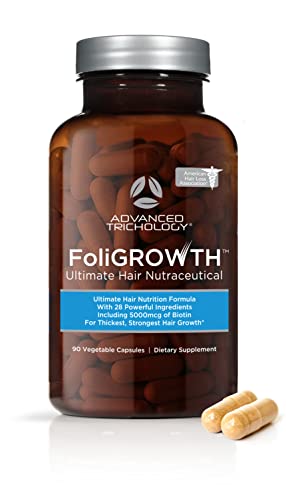
FoliGROWTH Hair Growth Supplement for Thicker Fuller Hair
FoliGROWTH is another great supplement to consider. Like Dr. Berg's supplement, it contains many hair growth vitamins and minerals. Its capsules contain vitamin A, vitamin C, vitamin D, biotin, vitamin B12, and more.
Its daily dose is high in several nutrients, including 5,000 micrograms of biotin on the label we checked, so it's one to clear with your doctor first. To use the supplement, you'll take two capsules in the morning and one capsule in the evening; you get 90 capsules in one bottle.
HUM Hair Strong: Hair Growth Supplement
If you want to get the benefits of hair growth vitamins without having to swallow a big pill, you can try these gummies. They contain a few of the vitamins and minerals from this article.
They include zinc, vitamin B12, folic acid, and biotin. The gummies are vegan and non-GMO. The listing below comes with 60 gummies, and the recommended daily dose is two gummies with or without food.

Should You Take a Supplement for Hair Growth?
Supplements are often used to fill gaps in your diet and ensure you're getting the nutrition you need. If you'd like, you can try a supplement under a doctor's supervision for a few months and see if it makes a difference in your hair.
It's always a good idea to talk to your doctor before making dietary changes.
The American Academy of Dermatology says to take biotin, iron, or zinc only when a blood test shows you're low, because if your levels are normal, a supplement can be harmful to your health. Hair formulas also tend to pack a lot of one nutrient, so many dermatologists suggest a plain multivitamin instead. And if you already take a multivitamin, add up the vitamin A, selenium, and zinc on both labels before you add a hair vitamin.
While you're taking the supplement, it can be helpful to track your progress. Take photos of your hair before starting the supplement, and use a soft tape measure to measure your hair growth in a few designated areas of your head to keep the results consistent.
If a blood test shows you're low and your doctor recommends a supplement, remember that your hair grows about ⅓ to ½ inch a month, depending on your hair type. Measure once a month, and give the supplement at least three months before you decide whether it's helping. Our hair growth calculator shows how long your goal length will take.

Don't Forget That Vitamin Deficiencies Are Not the Sole Cause of Hair Issues
It's really easy to get caught up in the thought that your hair loss or slow growth is due to a vitamin deficiency. But it's important to remember that vitamin deficiencies are only the culprit some of the time.
Here are some other causes of hair loss that you should consider:
- Alopecia areata - A condition where your immune system mistakenly targets and damages your hair follicles.
- Scalp infection
- Certain medications
- Postpartum hair loss - Hair loss that occurs after having a baby.
- Shedding after a stressful event - A high fever, surgery, major stress, or losing 20 pounds or more can trigger heavy shedding a few months later. That's normal, and it usually stops on its own.
- Chemical hair treatments - Relaxers, curly perms, hair color, and bleach can all lead to hair loss.
- Tight hairstyles - Any hairstyle that puts constant tension on your scalp can cause hair loss.
- Hormonal issues or instability, including thyroid disease
Take a look at your whole health picture, preferably with a doctor or dermatologist, if you're not able to pinpoint why your hair isn't thriving. Only then will you be able to take meaningful steps to fix the problem.
See a board-certified dermatologist if you notice round bald patches, a widening part, thinning edges, or shedding that lasts longer than six to nine months. A dermatologist can review your health history and order blood tests to check your thyroid, iron, and vitamin levels to find the real cause.
Related Articles
- Vitamin E Oil for Hair Growth
- How Long Does Biotin Take To Work?
- When Is the Best Time to Take Biotin?
- Biotin for Natural Hair Growth
So, there you have it - everything you need to know about vitamins for hair growth. We hope you found all the information you were looking for, and we wish you the best with your hair growth goals!