Is poofy hair putting a damper on your natural hair journey? If so, you're one of many struggling with this issue.
Some think that you've got no choice but to live with poofy hair, but the truth is that there are steps you can take to prevent frizz regardless of whether you have curly, wavy, or straight hair.
In this article, we'll take a deep dive into poofy hair, the most common causes of it, prevention techniques, and more. Let's get right into it!
Key Takeaways
- Prevent Poofy Hair. To prevent poofy or puffy hair, avoiding heat damage is essential. Mitigate the use of heated tools like flat irons and use heat protectants. Use a sulfate-free shampoo and hydrating conditioner to help maintain the hair's natural oils and moisture. For curly or coily hair types, use hair masks or deep conditioning treatments. These products provide extra moisture, enhancing curl definition and reducing frizz.
- Dry Hair Gently. After washing, dry hair with a microfiber towel or an old t-shirt to reduce friction. This drying technique will mitigate poofy tresses. Avoid rubbing hair strands vigorously. Instead, pat gently or let hair air dry to maintain its natural texture. This is particularly important for curly and fine hair.
- Moisturize and Seal. Use leave-in treatments, curl creams, and essential oils to moisturize your hair. Our favorite essential oils are argan and coconut oil. Sealing in moisture with oils such as jojoba, almond, or castor oil is crucial. This is even more important in humid weather. The idea is to prevent hair from becoming voluminous and unruly due to frizz.
- Styling Tips for Poofy Hair. When detangling, use a wide-toothed comb on damp hair to prevent breakage. This comb will also help maintain your hair's outer layer integrity. For styling, lightweight hairsprays or serums can help achieve a smooth look. They also won't weigh down the hair. These lightweight sprays are good for all hair types, including thick and coarse hair.
- Nighttime Hair Care. Sleeping on a silk pillowcase can reduce hair frizz and damage. Silk has less friction than cotton, which helps. Also, protecting your hair with a silk or satin bonnet or scarf can help retain moisture. Nighttime hair care is especially essential for coily and curly hair types.
Causes of Poofy Hair

Poofy hair may be caused by a number of influences, from hair dryness to heat styling (e.g., use of a curling iron, blow dryer, etc.) and much more. We'll cover all of them in the below list:
- Dry hair - Dry hair is one of the most prevalent causes of poofy hair. When your hair is dry, it may become brittle, frizzy, and split ends may develop. This damage is visible and may be apparent regardless of how you try to style your hair.
- Heat styling - Regularly heat styling your hair can damage your hair cuticles over time and lead to split ends and damage. Damaged hair doesn't behave as healthy hair does - it sticks out and looks rough, which contributes to poofiness.
- Washing your hair too often or with the wrong shampoo- Washing your hair too often is another cause of poofiness. Every time you wash your hair, the natural oils on your hair are washed away, so washing your hair daily or even biweekly may be a mistake. If you use a sulfate shampoo or clarifying shampoo, your hair could end up bone dry and poofy even quicker. We recommend using a moisturizing shampoo and conditioner within your natural hair regimen.
- The weather - When the weather outside is humid, and your hair isn't adequately moisturized, your hair cuticles swell up and begin to change in shape, creating poofiness. Also, on a windy day, when the wind blows your hair, it can separate your curls and create a poofy look. In addition, when you sweat on a hot day, this can cause your hair to frizz up.
- Chemical processing - Getting your hair colored, permed, or relaxed can make it poofy due to the damage it inflicts on your hair cuticles, inner structure, and curl pattern. Perms and relaxers essentially destroy the internal structure of your hair to alter its natural texture - it's normal for your hair to get poofy due to the damage (split ends, dryness, brittleness). Hair dyeing and bleaching sessions open up your hair cuticles to remove your natural hair pigment and deposit the new color. Once your hair cuticles are chemically opened, they never go back to normal, and this also causes poofiness.

How to Prevent Poofy Hair
Preventing poofy hair is pretty straightforward if you have the correct information. In this section, we'll give you some actionable tips you can use to avoid poofy hair.
Free 8-page guide
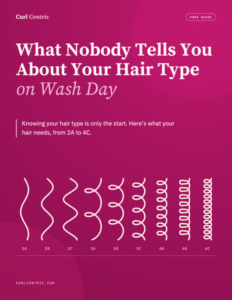
You know your hair type. Here’s what it needs on wash day.
Our free guide gives you one page for each hair type group, from 2A to 4C. Each page tells you how often to start washing, what helps your waves, curls, or coils clump, and the problems your hair type runs into most. It also has a protein or moisture chart and a log for testing one change at a time.
Free. You’ll get the guide by email, two more emails on how to use it, and then one every Thursday, plus the occasional extra. Unsubscribe anytime.
Limit Heat from Hot Tools
Limiting heat is not only great for your hair's health, but it helps to ensure that your hair remains smooth and tame.
If you must use heat, we recommend using a heat protectant to minimize the damage to your hair shaft. You should also set the heat tool to as low a temperature as possible to get the job done without ruining your hair.

Keep Your Hair Moisturized
Keeping your hair moisturized is one of the best ways to prevent poofiness, given the fact that dry hair is more prone to frizz.
Here are some things you can try to maintain your curls' moisture levels:
- Use water-based moisturizers and styling products. Hair products that have water as one of the first few ingredients will be more moisturizing to your hair than those that don't. Incorporating water-based moisturizing products (i.e., hydrating products) will ensure that your hair doesn't get dry.
- Cover up your hair at night. Part of keeping your hair moisturized is protecting your hair at night. As you toss and turn in your sleep, your cotton sheets and pillowcase can pull moisture from your hair. Stop this by using a silk or satin bonnet or scarf. You'll be amazed at the difference in your hair's hydration levels.
- Avoid hands-in-hair syndrome. Hands-in-hair syndrome refers to the inability to stop touching your hair. Every time you touch or rub your strands, you remove moisture from them. So, to keep your hair nice and moisturized, we recommend only touching your hair when necessary.
- Seal in the moisture. At one time, natural hair enthusiasts and hair experts thought it was enough to simply moisturize curly hair. We now know that's not the case. In order to keep your hair moisturized in between wash days, it's essential to seal in your hair's moisture. To do so, all you need to do is moisturize your hair first and then apply a sealing oil to lock in that moisture. Some great sealing oils to try include:
- Jojoba oil
- Castor oil
- Grapeseed oil
- Deep condition regularly. Sometimes, regular rinse-out conditioners just don't make the cut. Every week or so, after washing your hair, apply a moisturizing deep conditioner, leave it on for 10-30 minutes, and then rinse it out.
Let Your Conditioner Do the Smoothing
A cold rinse doesn’t smooth your hair or control poofiness. Your conditioner’s formula does that work. A low-pH conditioner can reduce the electrical charge and friction between your strands, while its conditioning ingredients coat and smooth your hair.
Use the coolest water you find comfortable if you enjoy it, but you don’t need an icy rinse. Your conditioner and styling products will make a much bigger difference in how smooth your curls look.

Dry Your Hair Gently
When you're dealing with poofy hair, we urge you to dry your hair gently. Here are two options that you can choose from that won't leave your hair a poofy mess:
- Let your hair air dry. Air drying is the gentlest way that you can dry your hair. It doesn't require you to manipulate your hair at all. After you get done washing, conditioning, and applying your moisturizer and styling products, let your hair be.
- Towel dry your hair gently. While air drying is the best option to prevent poofiness, the next best thing you can do is towel dry your hair gently. And by gently, we mean taking a small microfiber towel in your hand and softly patting away the excess water. If you squeeze, do so lightly so that you won't disturb your curls and create poofiness. Note: An old cotton T-shirt works just as well, since its smooth fabric won't snag your curls. What we don't recommend is a regular bath towel, because its rough loops rub against your hair and leave it frizzy.

Don't Overseparate Your Curls
After setting your hair in a twist out, braid out, or wash and go, you may need to separate your curls to get the look you're going for.
But if you're trying to prevent poofiness, it's essential not to over-separate your curls. There's a fine line between volume and poofiness, and you don't want to cross that line.
Separate a few curls here and there and look in the mirror the whole time. If you decide to use tools, consider using a wide-tooth comb or boar bristle brush to combat frizz.

When I separate a twist-out, I do it once, all at the same time, with a little oil on rubber gloves, and then I'm done. The gloves keep my fingers from snagging the curls. Every extra pass splits the curls smaller, and that's where the poof comes from.
Kira Byrd, trained barber and hairstylist, co-founder of Curl Centric
How to Fix Poofy Hair
Every now and again, you'll be faced with poofy hair and wonder what to do about it. There are several ways that you can fix your frizzy hair, and we'll reveal them to you in the list below:
- Mist your hair with cool water. If you suspect that your hair's poofiness is caused by the weather or completely dry hair, water will be your savior. Just spray your hair lightly with water, and you'll see the poofiness go away before your eyes.
- Reapply your styler. When spritzing your hair with water isn't enough to fix the poofiness, you can reapply your styling products as needed to achieve the sleek look you desire.
- Try a serum. Serums are hair care products designed to smooth your hair cuticles, giving you frizz-free curls. In a pinch, apply a few drops of serum to the palm of your hand, rub it together, and apply it to your curls.
- Spray it with a holding spray. Holding sprays are great for taming your poofy curls in just a few seconds. Spray some of the holding spray onto your fingers and quickly apply it to individual curls to lay them down.

Related Articles
- How to Make Your Hair More Fluffy
- Layered Deva Cut Wavy Hair
- Rezo Cut on Wavy Hair
- Wolf Cut on Black Girl
Now you know what causes frizz, and you've gathered some valuable tips for how to prevent and fix poofy hair. We hope this article gives you the information you need to bid poofiness goodbye for good!