
Did you flip over your shampoo bottle and find DMDM hydantoin on the ingredient list? Maybe you heard about the shampoo lawsuits, or someone told you it causes hair loss. Now you're wondering if you should throw the bottle out.
In this article, we'll tell you what DMDM hydantoin is, what the research actually says about it, and who should avoid it.
We'll also show you how it compares to the formaldehyde in smoothing treatments, where the real danger is. And you can paste any ingredient list into our checker to see every formaldehyde releaser on it. Let's get into it.
What Is DMDM Hydantoin?
DMDM hydantoin is a preservative that keeps shampoos, conditioners, and styling products from growing mold and bacteria. It works by giving off tiny amounts of formaldehyde over time, which kills germs in the bottle.
That's why it's called a formaldehyde releaser (i.e., an ingredient that slowly lets off formaldehyde, instead of containing it outright). Washington State lists 25 of them, and DMDM hydantoin is the one you'll see most often on hair products.
Free 8-page guide
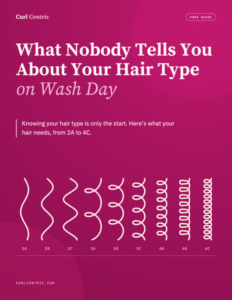
You know your hair type. Here’s what it needs on wash day.
Our free guide gives you one page for each hair type group, from 2A to 4C. Each page tells you how often to start washing, what helps your waves, curls, or coils clump, and the problems your hair type runs into most. It also has a protein or moisture chart and a log for testing one change at a time.
Free. You’ll get the guide by email, two more emails on how to use it, and then one every Thursday, plus the occasional extra. Unsubscribe anytime.
Any product with water in it needs a preservative. Without one, a shampoo sitting in your warm, wet shower would grow mold. So the question isn't whether your products have a preservative. It's which one.
Where You'll Find DMDM Hydantoin
You'll mostly find DMDM hydantoin in shampoos, rinse-out conditioners, and leave-in conditioners. It also shows up in gels, edge controls, curl creams, and hair oils.
In a national database of product labels, about 1 in 5 hair care and styling products listed formaldehyde or a formaldehyde releaser. In a 2025 study of products used by women in South Los Angeles, DMDM hydantoin was in 58% of the hair products that had any formaldehyde releaser at all. So if your product has a releaser, there's a good chance it's this one.
Look near the end of the ingredient list. Preservatives are used in tiny amounts, so they're usually printed in the last few names.
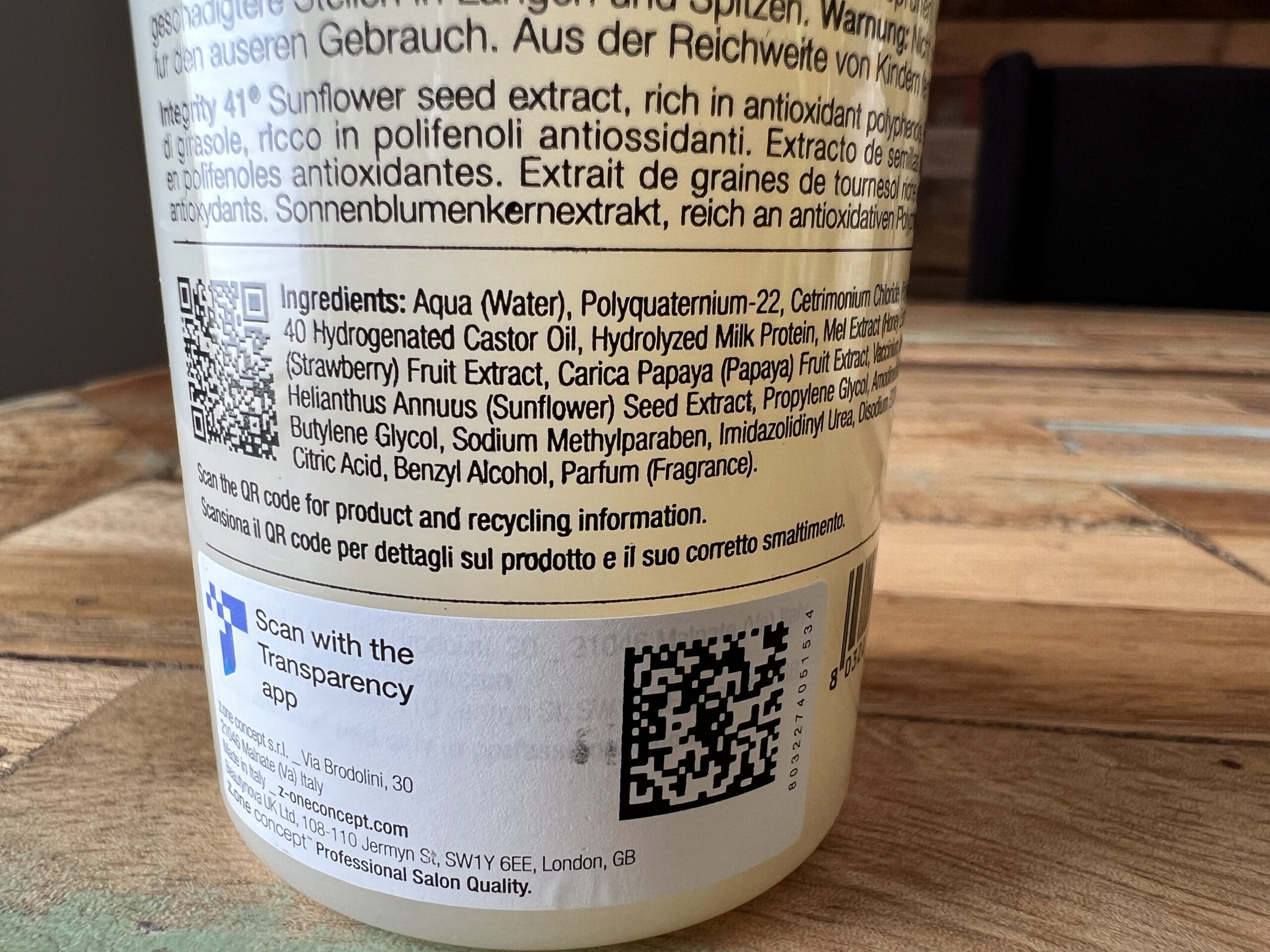
Is DMDM Hydantoin Safe?
DMDM hydantoin is safe for most people at the amounts used in hair products. The Cosmetic Ingredient Review, the panel of scientists that reviews cosmetic ingredients in the US, rates it safe at up to 1% of a product. The EU allows up to 0.6%.
The real risk is an allergy. The FDA lists DMDM hydantoin as a possible allergen because some people's skin reacts to formaldehyde. If you're one of them, a product with DMDM hydantoin can leave your scalp itchy, red, or flaky where it touched.
This allergy isn't rare among people who already get skin reactions. When dermatologists in North America patch test patients for skin allergies (i.e., tape small amounts of common allergens to your back and check for a reaction), about 7 in 100 react to formaldehyde. About 2 in 100 react to DMDM hydantoin itself.
Those numbers come from people who were already having skin problems, so they're higher than they'd be for everyone.
And if you're allergic to formaldehyde, you'll often react to releasers too. Somewhere between 40% and 60% of positive patch-test reactions to most formaldehyde releasers are really reactions to the formaldehyde they give off.
Does DMDM Hydantoin Cause Hair Loss?
No published study has found that DMDM hydantoin causes hair loss. We searched the medical research for any link between DMDM hydantoin, or formaldehyde releasers in general, and hair loss or shedding, and found none.
The idea comes from lawsuits. Starting in 2020, people sued the makers of TRESemmé and OGX, claiming that DMDM hydantoin in the shampoo made their hair fall out.
The class action suits were dismissed in 2022. In 2026, three more cases against Unilever, the company that makes TRESemmé, lost in court. In two of them, the judge threw out the expert testimony that linked the shampoo to hair loss. A few appeals are still open, but no court has found that DMDM hydantoin in shampoo causes hair loss.
That doesn't mean your shedding isn't real. It means DMDM hydantoin hasn't been shown to cause it.
Most shedding on your brush has other reasons, like stress, a recent illness, or breakage you're mistaking for shedding. If your hair started falling out in clumps, or you're seeing bald patches, see a doctor or dermatologist.
Hair loss has been reported after formaldehyde smoothing treatments, which are a different product. We'll cover those below.
How Much Formaldehyde Is in Your Shampoo?
Very little. A risk assessment of shampoo containing 1% DMDM hydantoin assumed about 0.02% formaldehyde was present in its free form (i.e., loose in the shampoo, not still bound up in the preservative). In one study, hair smoothing treatments made with formaldehyde measured between 3% and 11.5%.
That's roughly 150 to 575 times as much formaldehyde as the shampoo estimate. And the difference doesn't stop at the amount.
- Your shampoo goes on wet hair and rinses off within a few minutes.
- A smoothing treatment is painted onto your hair and then sealed in with a hot flat iron. The heat turns the formaldehyde into a gas that you and your stylist breathe in.
That's why the scientists who review cosmetic ingredients called formaldehyde unsafe in hair smoothing products, but left DMDM hydantoin approved as a shampoo preservative. They're the same chemical at very different doses, used in very different ways.
Check Your Label for Formaldehyde Releasers
Copy the ingredient list from your product's website, or type it in from the bottle, and paste it below. The checker names every formaldehyde releaser on it and tells you where it sits on your list. It also tells you which of the other preservatives on your label are not formaldehyde releasers, so you don't have to look each one up.
Check your label for formaldehyde releasers
Copy the ingredient list off your bottle and paste it below. We’ll name every formaldehyde releaser on it, using the 25 that Washington State lists.
This checker reads the exact names printed on the label, so a misspelled name won’t match. It checks for formaldehyde releasers only; it can’t tell you whether a product is safe for you or works for your hair.
The checker reads the names exactly as they're printed, and a label can't tell you how much formaldehyde a product actually gives off. So if you're allergic to formaldehyde, a dermatologist is the best person to tell you which products are safe for your skin.
Every Formaldehyde Releaser, by Name
Here's every formaldehyde releaser on Washington State's list, which is the newest list any US regulator has published. We've put formaldehyde itself at the top, then the 12 releasers you're most likely to see on a hair product.
Original Curl Centric table
Formaldehyde releasers, by the name on your label
Formaldehyde itself comes first, then the 12 releasers you’re most likely to see on a hair product. The last row lists the other 13 on Washington State’s list, which are rare in hair care.
| Name on the label | Also printed as | Where you’ll see it | Banned or restricted |
|---|---|---|---|
| Formaldehyde | Formalin | Smoothing and keratin treatments | Banned in the EU, California, Maryland, Vermont, and Washington |
| Methylene Glycol | Methanediol | Smoothing and keratin treatments | Banned in the EU, California, Maryland, Vermont, and Washington |
| DMDM Hydantoin | DMDMH, Glydant | Shampoo, conditioner, leave-ins, gels, edge control, curl creams | Washington and Oregon from 2027 |
| Diazolidinyl Urea | Germall II | Mostly skin care; some conditioners and stylers | Washington and Oregon from 2027 |
| Imidazolidinyl Urea | Germall 115 | Shampoo, conditioner, stylers | Washington and Oregon from 2027 |
| Quaternium-15 | Dowicil 200 | Older shampoos and conditioners | Banned in the EU, California, Maryland, and Vermont |
| 2-Bromo-2-Nitropropane-1,3-Diol | Bronopol | Shampoo, conditioner | Washington and Oregon from 2027 |
| Sodium Hydroxymethylglycinate | Suttocide A | Products sold as gentle or for babies | Washington and Oregon from 2027 |
| 5-Bromo-5-Nitro-1,3-Dioxane | Bronidox | Rinse-out products | Washington and Oregon from 2027 |
| Benzylhemiformal | Benzyloxymethanol | Rinse-out products | Washington and Oregon from 2027 |
| MDM Hydantoin | Monomethylol dimethyl hydantoin | Sold in some of the same preservative mixes as DMDM hydantoin | Washington and Oregon from 2027 |
| Methenamine | Hexamethylenetetramine | Rare in hair products | Washington and Oregon from 2027 |
| Paraformaldehyde | Solid formaldehyde | Smoothing treatments | Banned in the EU, California, and Maryland |
| Timonacic | None common | Heat-activated smoothing treatments only | Washington from 2027, in those treatments |
| The other 13 | 7-Ethylbicyclooxazolidine, Dimethyl Oxazolidine, Dimethylol Glycol, Dimethylol Urea, Dimethylhydantoin Formaldehyde Resin, Methylal, Polyoxymethylene, Polyoxymethylene Melamine, Polyoxymethylene Urea, Tetramethylol Glycoluril, Tris(Hydroxymethyl)Nitromethane, plus an isobutylated urea resin and the nail polish resin Tosylamide/Formaldehyde Resin | Rare in hair products | Washington and Oregon from 2027 |
Washington State’s list takes effect January 1, 2027, and it’s the newest list any US regulator has published. Formaldehyde and methylene glycol aren’t releasers; they’re formaldehyde itself. Sources: Washington WAC 173-339, FDA, Allergens in Cosmetics.
You may also see phenoxyethanol, sodium benzoate, potassium sorbate, or a paraben on the same label. None of those are formaldehyde releasers. They're just other preservatives.
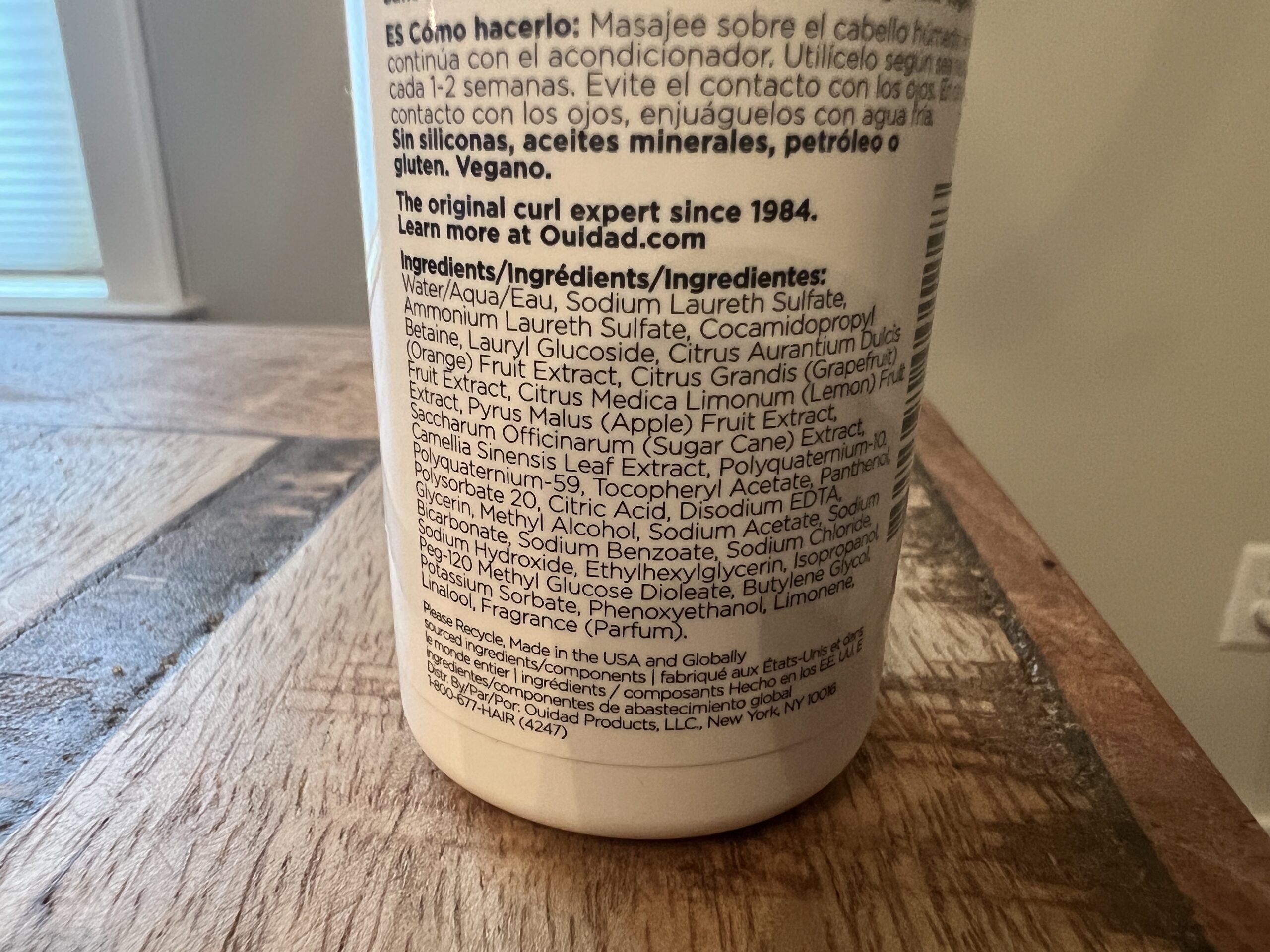
Which Shampoos Contain DMDM Hydantoin?
We read the ingredient lists of popular shampoos, conditioners, and styling products on each brand's own website. We found 42 products that list a formaldehyde releaser, and we've included 18 popular products that list none.
Read the ingredient list, not the description. On two of the product pages we checked, the description said the product was free from DMDM hydantoin, and the ingredient list on the same page included it. Some products that dropped DMDM hydantoin now use a different releaser, like diazolidinyl urea, so check for all of them.
Original Curl Centric data
Hair products that list a formaldehyde releaser, and some that don’t
We read the ingredient list for each product on the brand’s own website on September 26, 2026. The first 10 brands have products that list a releaser. The green rows are popular products we checked that list none.
| Brand | Products we checked | Releaser on the label |
|---|---|---|
| Suave | Moroccan Infusion Shine Shampoo; Moroccan Infusion Shine Conditioner; Almond & Shea Butter Moisturizing Shampoo; Coconut Oil Infusion Damage Repair Shampoo; Avocado & Olive Oil Smoothing Shampoo; Keratin Infusion Smoothing Shampoo; Keratin Infusion Smoothing Conditioner; Keratin Infusion Color Care Shampoo; Biotin Infusion Strengthening Shampoo; Ocean Charge 2-in-1 Shampoo and Conditioner; Kids Silly Apple Detangler Spray; Kids Berry Awesome Detangler Spray | DMDM Hydantoin |
| TRESemmé | Bouncy Curls Shampoo; Bouncy Curls Conditioner; Revitalized Color Shampoo; Amplified Volume Conditioner; TRES Two Extra Hold (Strong Hold) Gel | DMDM Hydantoin |
| Dove | Damage Therapy Soothing Moisture Anti-Dandruff Shampoo (DMDM Hydantoin); Damage Therapy Soothing Moisture Anti-Dandruff Conditioner (DMDM Hydantoin); Men+Care Thick & Strong Fortifying 2-in-1 Shampoo + Conditioner (DMDM Hydantoin); Men+Care Alcohol-Free Taming Gel (Diazolidinyl Urea); Men+Care Dermacare Scalp Dandruff Defense 2-in-1 (DMDM Hydantoin) | DMDM Hydantoin, Diazolidinyl Urea |
| ORS | Olive Oil Deep Cleansing Creamy Aloe Shampoo (DMDM Hydantoin); Olive Oil Strengthen and Restore Replenishing Conditioner (DMDM Hydantoin); Olive Oil Edge Control Hair Gel (DMDM Hydantoin and Diazolidinyl Urea); HAIRestore Hair Fertilizer (DMDM Hydantoin and Diazolidinyl Urea); Olive Oil Built-In Protection Full Application No-Lye Relaxer kit (Extra Strength) (in the neutralizing shampoo) (DMDM Hydantoin); Olive Oil Professional Neutralizing Shampoo (DMDM Hydantoin); Olive Oil Texlax & Stretch Semi-Straightening System (in 3 of its 5 parts) (DMDM Hydantoin) | DMDM Hydantoin, Diazolidinyl Urea |
| Luster’s | Pink Oil Moisturizer Hair Lotion (Imidazolidinyl Urea); Pink Essentials Hold and Shine Perfecting Gel (Sodium Hydroxymethylglycinate); SCurl No Drip Curl Activator Moisturizer (DMDM Hydantoin); SCurl Curl & Wave Jel Activator (Sodium Hydroxymethylglycinate); SCurl Twist & Lock Gel (DMDM Hydantoin and Diazolidinyl Urea); SCurl Texturizer Stylin' Gel (Imidazolidinyl Urea) | DMDM Hydantoin, Diazolidinyl Urea, Imidazolidinyl Urea, Sodium Hydroxymethylglycinate |
| OGX | Extra Strength Coconut Miracle Oil Shampoo; Coconut Curls Frizz-Defying Curl Styling Milk; Coconut Curls Decadent Creamy Mousse | Diazolidinyl Urea |
| Aussie | Instant Freeze Gel with Jojoba Oil & Sea Kelp | DMDM Hydantoin |
| L’Oréal Paris | Studio Line Extreme Hold Above It All Invisi Gel | DMDM Hydantoin |
| KeraCare | KeraCare Edge Tamer | Diazolidinyl Urea |
| Axe | High Shine Pomade | DMDM Hydantoin |
| TRESemmé | Bouncy Curls Defining Cream | None listed |
| Dove | Love Those Bold Curls Defined Curls Sulfate-Free Co-Wash | None listed |
| SheaMoisture | Coconut & Hibiscus Curl & Style Milk; Jamaican Black Castor Oil Strengthen & Restore Shampoo | None listed |
| Mielle | Sea Moss Anti-Shedding Leave-In Conditioner | None listed |
| Creme of Nature | Pure Honey Moisturizing Dry Defense Shampoo; Pure Honey Moisture Infusion Edge Control | None listed |
| Pantene | Pro-V Miracles Curl Define & Shine Coconut + Shea Sulfate-Free Shampoo | None listed |
| Herbal Essences | Jojoba Oil & Lavender Curls Shampoo | None listed |
| Head & Shoulders | Classic Clean Dandruff Shampoo | None listed |
| Garnier Fructis | Curl Nourish Sulfate-Free Shampoo | None listed |
| Dark and Lovely | Triple Nourished Shea Moisture Relaxer kit (Regular) | None listed |
| Let’s Jam! | Condition & Shine Gel, Regular Hold | None listed |
| Johnson’s | Kids Curl Defining Shampoo | None listed |
| Aveeno | Kids Curly Hair Conditioner | None listed |
| Suave | Moisture Repair Sulfate-Free Shampoo | None listed |
| Paul Mitchell | Tea Tree Lavender Mint Curl Refresh Foam | None listed |
| OGX | Nourishing + Coconut Milk Shampoo | None listed |
Formulas change, so the list on the bottle you own is the one that counts. Some brands don’t publish ingredient lists online, so they aren’t in this table. That doesn’t mean their products are free of releasers.
Brands change their formulas, so the ingredient list on your bottle wins over any list, including ours. If you bought your bottle a while ago, check the label you actually have.
Who Should Avoid DMDM Hydantoin?
You should avoid DMDM hydantoin and the other formaldehyde releasers if you know you're allergic to formaldehyde. A dermatologist can tell you with a patch test.
You should also think about skipping them if your scalp itches, burns, or breaks out after you use a product, and it calms down when you stop. That pattern points to a reaction to something in that product.
It could be the preservative in your product, and it could just as easily be the fragrance. So note which product it was, and bring the bottle to your dermatologist.
If you're allergic, leave-in products matter more than rinse-out ones. Dermatologists advise avoiding leave-in products with formaldehyde releasers, because they sit on your scalp all day. Many people with the allergy can still use some rinse-out products, since those are on your skin for only a few minutes.
If none of that describes you, you don't need to throw out a product just because it has DMDM hydantoin. If you'd simply rather avoid it, that's a fine choice too, and plenty of products use other preservatives.
Is DMDM Hydantoin Banned?
DMDM hydantoin isn't banned anywhere in the US yet. Two states will restrict it starting January 1, 2027.
- Washington State will restrict all 25 formaldehyde releasers on its list, including DMDM hydantoin, from January 1, 2027. Stores can keep selling what's already on their shelves through the end of 2027.
- Oregon will ban formaldehyde releasers as a whole group from January 1, 2027.
- California and Maryland have banned formaldehyde, paraformaldehyde, methylene glycol, and quaternium-15 since January 1, 2025. Quaternium-15 is the only preservative releaser on that list.
- Vermont has banned formaldehyde, methylene glycol, and quaternium-15 since January 1, 2026.
In Europe, DMDM hydantoin is still allowed. But since August 2026, any product there that gives off more than a tiny amount of formaldehyde (10 parts per million) has to say "releases formaldehyde" on the label.
What About the FDA's Formaldehyde Ban?
The FDA hasn't banned formaldehyde in hair products, and its planned ban doesn't cover shampoo or conditioner.
In 2023, the FDA announced that it planned to propose a ban on formaldehyde and formaldehyde-releasing chemicals in hair smoothing and straightening products. Since then, its target date has moved five times. The latest target is November 2026, and as of September 2026, the FDA still hasn't published the proposal.
The plan is only about smoothing and straightening products, and since 2025 it describes products that are heated on your hair. The only releaser it names is methylene glycol, which is formaldehyde mixed with water. So it isn't clear yet whether it would cover a preservative like DMDM hydantoin at all.
Original Curl Centric timeline
Formaldehyde in hair products: what’s happened, and what’s next
We checked every date below against the government filing, court record, or study it comes from.
| When | What happened | What it means for you |
|---|---|---|
| 2013 | The Cosmetic Ingredient Review calls formaldehyde unsafe in hair smoothing products. | The panel left DMDM hydantoin approved as a shampoo preservative. |
| Nov 2020 | The first lawsuit claims DMDM hydantoin in TRESemmé shampoo caused hair loss. OGX suits follow in 2021. | These are the suits you may have heard about. |
| 2022 | The OGX class suits are dismissed in March, and the TRESemmé class action is dismissed in December. | No court found the shampoo caused hair loss. |
| Oct 2022 | The NIH Sister Study links frequent straightener and relaxer use to uterine cancer. | The relaxer lawsuits followed this study. It’s about relaxers, not shampoo. |
| Feb 2023 | Federal relaxer lawsuits are combined in one court in Illinois. | The claims focus on phthalates and other hormone-disrupting chemicals. |
| 2023 | The FDA lists a plan to propose a ban on formaldehyde in hair smoothing and straightening products, with a target of April 2024. | The plan never covered shampoo or conditioner. |
| 2024 to 2026 | The FDA moves its target to July 2024, September 2024, March 2025, December 2025, and then November 2026. | As of September 2026, no proposal has been published. |
| Jan 1, 2025 | California and Maryland ban formaldehyde, paraformaldehyde, methylene glycol, and quaternium-15. | Quaternium-15 is the only preservative releaser in these laws. |
| Jan 1, 2026 | Vermont bans formaldehyde, methylene glycol, and quaternium-15. | Vermont’s law doesn’t cover DMDM hydantoin. |
| Mar to Jul 2026 | Three individual DMDM hydantoin cases against Unilever lose in court. Some are on appeal. | Still no court finding that DMDM hydantoin causes hair loss. |
| Aug 1, 2026 | Every product sold in the EU that gives off more than 10 parts per million of formaldehyde must say “releases formaldehyde.” | The EU requires this warning. The US doesn’t. |
| Sep 1, 2026 | 12,129 relaxer lawsuits are waiting in federal court. No settlement has been announced. | No court has ruled on whether relaxers caused the cancers. |
| Jan 1, 2027 | Washington restricts all 25 formaldehyde releasers, and Oregon bans the whole group. | This is the first US limit on DMDM hydantoin. Washington stores can sell old stock through 2027. |
Last checked September 26, 2026. We’ll update this table when the FDA publishes its proposal. Sources: FDA Unified Agenda, RIN 0910-AI83, JPML pending MDL report, EU Regulation 2022/1181.
Formaldehyde in Keratin Treatments and Smoothing Treatments
This is where formaldehyde really matters for your hair. Keratin treatments and Brazilian blowouts are smoothing treatments (i.e., salon treatments that loosen your curl and cut frizz for a few months), and many of them use formaldehyde.
When your stylist runs a flat iron over the treatment, the formaldehyde turns into a gas. The FDA has received reports of eye irritation, breathing problems, nausea, chest pain, and rashes from people exposed to it. Formaldehyde is also classified as a known human carcinogen (i.e., something known to cause cancer in people), based on people who breathed it in at work for years.
Here's what to look for on a smoothing treatment's label. The FDA says these names mean the product contains formaldehyde or will give it off:
- Formaldehyde
- Formalin
- Methylene glycol
Be careful with "formaldehyde-free" on the label, too. When researchers and safety agencies tested smoothing products, several that were sold as formaldehyde-free contained formaldehyde. The FDA sent warning letters to two smoothing treatment companies, including the maker of Brazilian Blowout.
Many newer treatments use glyoxylic acid instead. It isn't a formaldehyde releaser, but heating it can still produce small amounts of formaldehyde. Glyoxylic acid also has a risk of its own. Doctors in France and Israel have reported acute kidney injury (i.e., sudden damage that stops your kidneys from working properly) after glyoxylic acid straightening treatments. In 2025, France's health safety agency called the link highly likely and advised against using these products until European regulators finish a safety review.
So ask your stylist what's in the treatment before your appointment. Good airflow cuts down on the fumes, but it won't protect your kidneys. If you get nausea, vomiting, or pain in your belly or lower back in the hours after a straightening treatment, see a doctor right away and tell them what you had done.
Do Hair Relaxers Contain Formaldehyde?
No, hair relaxers don't straighten your hair with formaldehyde. A relaxer is a strong base (i.e., the chemical opposite of an acid) that breaks the bonds holding your curl in place, so your hair stays straight until it grows out.
- Lye relaxers use sodium hydroxide.
- No-lye relaxers use other strong bases, like guanidine hydroxide or lithium hydroxide. They still break the same bonds in your hair.
A few relaxer products list a formaldehyde releaser as a preservative, so you can check a relaxer's label in the checker above, too.
What Are the Hair Relaxer Lawsuits About?
The hair relaxer lawsuits claim that chemicals in relaxers, mainly phthalates (i.e., chemicals often hidden under "fragrance" on a label) and other hormone-disrupting chemicals, caused uterine, ovarian, and breast cancer. These are separate from the DMDM hydantoin shampoo lawsuits.
As of September 1, 2026, 12,129 of these cases were waiting in one federal court in Illinois. No court has ruled on whether relaxers caused the cancers, and no settlement has been announced.
Do Hair Relaxers Cause Cancer?
The research on relaxers and cancer is split, and scientists don't agree yet.
- The NIH Sister Study followed more than 33,000 women. Women who used straightening products more than four times a year were more than twice as likely to develop uterine cancer. By age 70, that meant a risk of about 4% for frequent users, against about 1.6% for women who never used them.
- The Black Women's Health Study found no higher risk of uterine cancer overall. It did find a higher risk among women past menopause who had used relaxers for many years.
- A 2025 review of eight studies concluded that the evidence doesn't support relaxers as a cause of these cancers. It was written by a risk consulting firm.
One finding is consistent. In a study of more than 23,000 women, the more scalp burns women had from relaxers, the higher their risk of uterine fibroids.
So if you relax your hair, don't let the relaxer burn your scalp. Coat your scalp with petroleum jelly first (i.e., base your scalp), and rinse the relaxer out right away if it starts to burn.
Compare the four
Relaxer, texturizer, keratin treatment, or silk press?
All four can get your hair straighter or smoother. But they work in very different ways, and only two of them change your hair for good.
| Treatment | What it does to your hair | How long it lasts | What to watch for |
|---|---|---|---|
| Relaxer | A strong base breaks the bonds that hold your curl, so your hair stays straight. Lye relaxers use sodium hydroxide; no-lye relaxers use other bases, like guanidine hydroxide. | Permanent. Your new growth comes in with your natural curl, so you’ll need touch-ups on just the new growth. | Scalp burns and breakage where your relaxed hair meets your new growth. The cancer research is split, and the lawsuits focus on phthalates and other hormone-disrupting chemicals.More on relaxers |
| Texturizer | The same kind of chemicals as a relaxer, left on for less time. It loosens your curl instead of straightening it. | Permanent. Most people wait 8 to 12 weeks between touch-ups on new growth. | The same risks as a relaxer. Your hair still has curl, but it needs the care of chemically treated hair.Texturizer touch-ups |
| Keratin or smoothing treatment | A solution is painted on and sealed in with a hot flat iron. It cuts frizz and loosens your curl. | Anywhere from a few weeks to about six months, then it washes out. | Formaldehyde gas when it’s heated. Check the label for formaldehyde, formalin, or methylene glycol, and don’t trust “formaldehyde-free” on its own.Keratin on curly hair |
| Silk press | Heat only. Your hair is washed, blow-dried, and flat ironed straight, with no chemicals that change it. | About one to three weeks. Your curl comes back when you wash your hair. | Too much heat. If some sections stay straight after you wash, that’s heat damage, and it won’t curl again.What a silk press is |
Only relaxers and texturizers change your hair permanently. A keratin treatment wears off over a few months, and a silk press lasts until your next wash, unless too much heat leaves some of your hair straight for good.
How to Avoid Formaldehyde Releasers in Your Hair Products
If you want to skip formaldehyde releasers, here's how to do it without spending more money.
- Check the last few ingredients. Preservatives are near the bottom of the list. Look for DMDM hydantoin, the two ureas (imidazolidinyl urea and diazolidinyl urea), quaternium-15, bronopol, and sodium hydroxymethylglycinate.
- Paste the list into the checker. It knows all 25 releasers and their other names, so you don't have to memorize them.
- Start with your leave-ins. Leave-in conditioners, creams, gels, and edge controls sit on your scalp the longest, so they matter most if your skin reacts.
- Check smoothing treatments before your appointment. Ask your stylist for the product name and look up its label for formaldehyde, formalin, or methylene glycol.
- Don't throw out a product that's working unless your scalp reacts to it or you know you're allergic. There's no research showing DMDM hydantoin harms your hair.
Key Takeaways
- DMDM hydantoin is a preservative that gives off tiny amounts of formaldehyde to keep your products free of mold.
- No published study links it to hair loss, and the lawsuits we covered haven't shown that it does.
- The documented risk is an allergy. If your scalp reacts, see a dermatologist.
- In one study, smoothing treatments made with formaldehyde measured roughly 150 to 575 times as much formaldehyde as the shampoo estimate above, and they're heated, so that's where to be careful.
- Relaxers don't straighten with formaldehyde. Their lawsuits focus on phthalates and other hormone-disrupting chemicals, and the cancer research is split.
FAQ
Is phenoxyethanol a formaldehyde releaser?
No, phenoxyethanol isn't a formaldehyde releaser. It's a different kind of preservative, and it isn't on any regulator's list of releasers. Neither are sodium benzoate, potassium sorbate, or parabens.
What does "releases formaldehyde" mean on a label?
It's a warning the EU has required since August 2026 on any product that gives off more than 10 parts per million of formaldehyde. You may see it on products sold in Europe. US labels aren't required to carry it.
Does "formaldehyde-free" mean a product has no formaldehyde?
Not always. Several smoothing treatments sold as formaldehyde-free have tested positive for formaldehyde. Check the label for formaldehyde, formalin, and methylene glycol, and ask your stylist what the treatment contains.