Most people know that after taking down a braided protective style, the hair may need some time to recover before braiding it up again. But do you have to wait to dye your hair? This article will tell you the answer to that question and much more. Let's get right into it!
Can I Dye My Hair After Taking Out Braids?
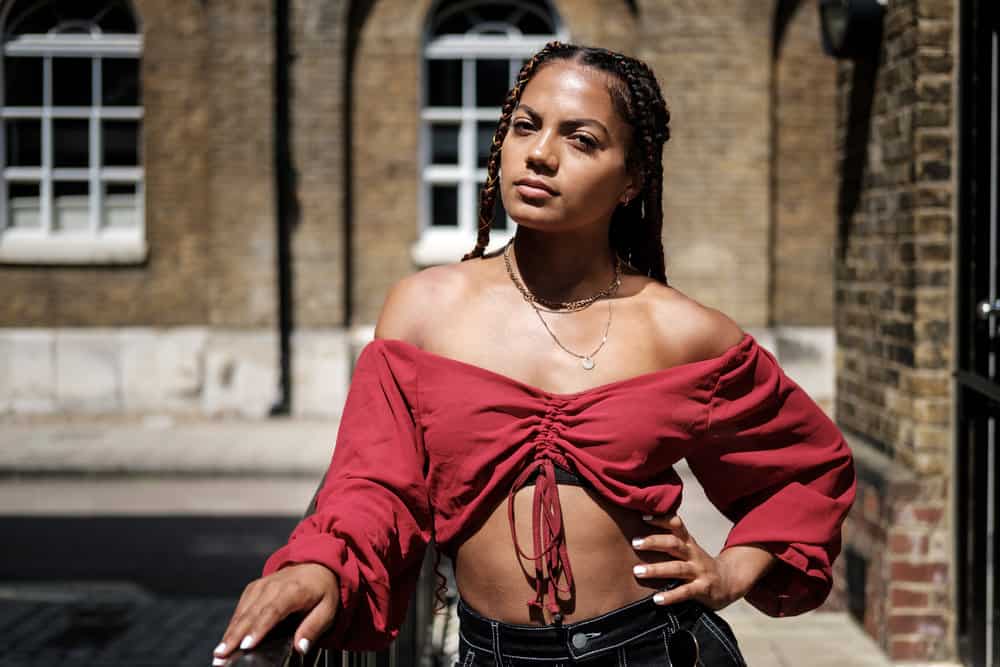
The good news is that you don't have to wait to dye your hair after taking out braids! You can dye your hair right after the takedown process is complete. The rule instructing you to give your hair a break after taking down braids only applies if you intend to braid it up again.
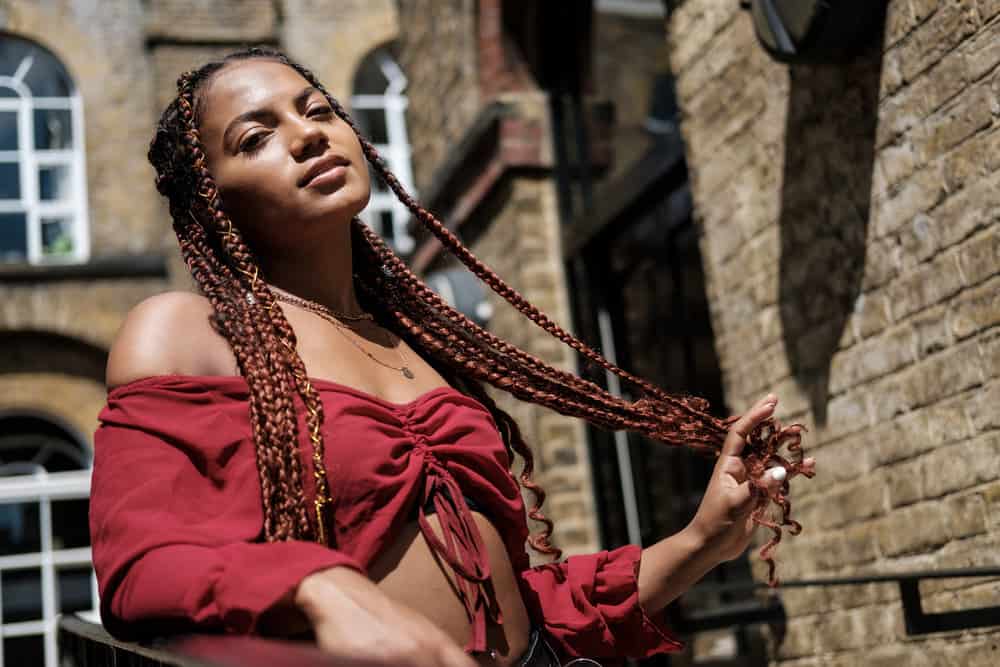
You shouldn't re-braid your hair right after taking down a braided protective style because your scalp goes through a lot while in protective styles.
Once you take your hair down, that's even more manipulation.
So, it's best to wait a couple of weeks or longer before putting your hair through the wringer with a new braided style.

Free 50-page guide
Your hair is already growing. The problem is keeping it.
On average, hair grows a third to half an inch a month, and curlier hair tends to grow more slowly. If your length looks stuck, that’s your hair breaking off as fast as it grows in. Here are the seven causes of breakage and the weekly routine that stops them.
Free. An email every few days for two weeks, then one every Thursday, plus the odd extra. Unsubscribe anytime.
That principle of waiting does not apply to hair dye.
The hair-dyeing process doesn't put mechanical stress on the scalp as braids do. So, feel free to dye your hair right after taking down braids!
Note: Though you don't have to wait to dye your hair after taking down braids, there is still an extra step that you need to take to ensure that you get an even color result. That's what we'll cover in the next section.
Buildup Problems: How to Prep Hair for the Dyeing Process After Braids
After taking down braids, it's common to have a lot of buildup at the roots and sometimes throughout the length of your hair. The buildup will prevent the hair dye from penetrating your strands consistently, resulting in an uneven color result.
This can cause issues when trying to dye your hair.
To avoid this, you must thoroughly cleanse your hair before attempting to dye it. We recommend clarifying shampoo to remove all the buildup from your strands. Here's how to do it right.

Clarifying Shampoo Steps
Here are the steps you need to follow to clarify your hair post-takedown.
Detangle Carefully
Began by detangling your hair thoroughly. If your hair is full of mats and tangles, you will not be able to get the deep clean you need.
So, while your hair is still dry, take a wide tooth comb and gently begin detangling your hair in sections starting at the ends.
We don't want you to wet your hair before detangling it if you've just taken down braids. That's because the lint, dirt, and debris in your hair can cause matting if you add water to the mix. Don't rip through your hair at any point.
Apply the Shampoo
Once your hair is detangled, hop in the shower and drench it with water. Add your clarifying shampoo all over, and don't be afraid to be generous. You want to ensure all your hair is fully coated with the clarifying shampoo.

Massage
Now, begin massaging your scalp with your fingertips for a few minutes to remove all the buildup. Once you're done, let the clarifying shampoo sit in your hair for 3-5 minutes before rinsing it out.
You may need to repeat the process a few times if you have a lot of buildup in your hair. But once you've removed it all, you're ready to move to the next step, which is conditioning your hair.
Deep Condition
After clarifying your hair, you need to put back all the moisture that was stripped away. The best way to do this is by doing a deep conditioning treatment.
There are two ways that you can do a deep conditioning treatment.
You can use a store-bought deep conditioner or make your own at home. If you go the store-bought route, get a deep conditioner specifically for dry, damaged hair. It'll have the right ingredients to lock in hydration and strengthen your hair.
If you decide to make your own deep conditioner, here are some recipes to try:
Avocado Deep Conditioner
Ingredients:
- 1 ripe avocado
- ¼ cup of olive oil
- ¼ cup of honey
Instructions:
Mash the avocado in a bowl until it's smooth. Add the olive oil and honey and mix everything until thoroughly combined. Apply the deep conditioner to your damp hair and let it sit for 30 minutes. Rinse it out with cool water and style as usual.
Banana Deep Conditioner
Ingredients:
- 1 ripe banana
- ¼ cup of plain yogurt
- 1 tablespoon of honey
Instructions:
- In a mixing dish, mash the banana first.
- Add the yogurt and honey and combine until smooth.
- Apply the mixture to your damp hair and let it do its magic for up to half an hour.
- Rinse your hair with cold water and shampoo and condition as usual.

Wait 24-48 Hours
We get it; you want your new hair color now. But if you want to avoid a burning sensation like you've never felt before, we recommend you wait 24 to 48 hours before dyeing your hair.
After all the scrubbing and detangling you did in the previous steps, your scalp will be raw, even if you don't realize it. So, you'll need to give your scalp some time to calm down.
After you've done that, your hair will be ready for the dyeing process.
The rest of the dying process will proceed as usual. You'll want to follow all of the instructions on the hair dye insert.
Can You Get Braids After Dyeing Hair?
Yes, you can certainly get braids after you've dyed your hair. Many people like to do this because it helps them achieve an evenly colored result. But if you can, we recommend giving your hair time to rest after dyeing it.
Your scalp can feel a bit raw after the dyeing process, and pulling on your strands to manipulate them into a new hairstyle may be a bit much for your scalp. At a minimum, we recommend waiting a day or two before getting your braids.
If that's not possible, do these things to give your scalp some TLC during the braiding process:
- Pay attention to the size of the braid in relation to the size of your parts. If the parts are small, then go for smaller braids. Conversely, if the parts are large, you can go for bigger braids. If your parts are small and you get large braids, there'll be lots of tension on your scalp.
- Don't pull too tight. This will cause pain and can damage your hair follicles. If a stylist is doing your hair, make sure they're not pulling too tight and let them know if they are.
- Oil your scalp and massage it in before and after getting your braids. Natural oils will help keep your scalp moisturized and can help prevent pain.
By following these steps, you can minimize the pain and discomfort you may feel while getting braids after dyeing your hair.
Related Articles
- Guide to Hair Coloring
- Can You Dye Freshly Washed Hair?
- Is It Better to Dye Your Hair Dirty or Clean?
So, there you have it - everything you need to know about dying your hair after taking out braids! We trust that you can now take down your braids and prep your natural hair for the dyeing process without issue.
Doing so will ensure a better overall color result. We hope this article was helpful to you, and we wish you the best of luck with your new hair color transformation!