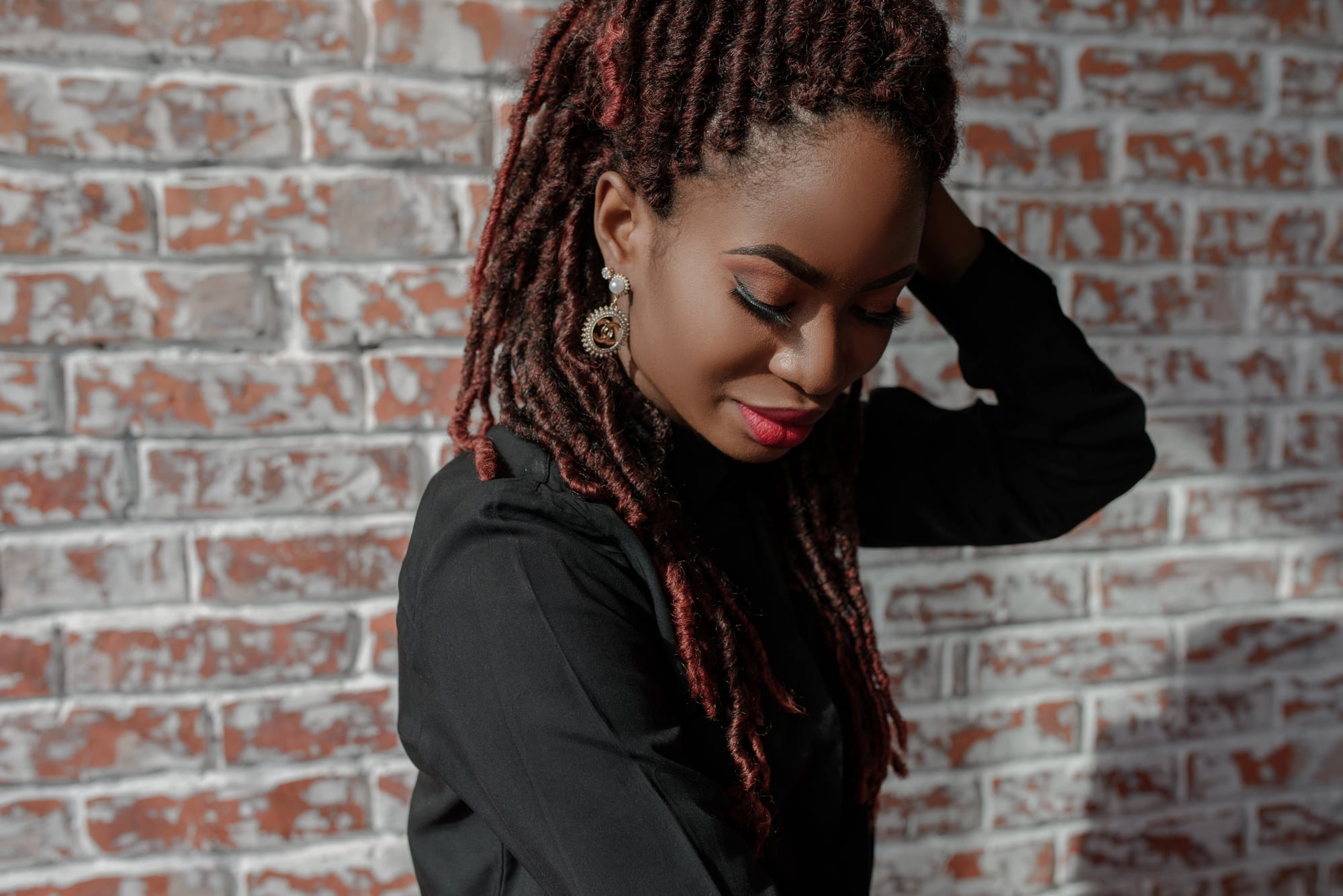
Are you looking at soft locs and wondering how they're different from the faux locs you've already seen? You're not alone. They look similar in photos, and they're installed on the same kind of braided base.
The names also get used interchangeably all over the internet.
In this article, we'll tell you what soft locs actually are, what hair you need to buy, what an install costs, how long they last, and how to take care of them. Let's get into it.
What Are Soft Locs?
Soft locs are pre-made locs that your stylist attaches to your own braided hair, then wraps with soft, springy extension hair. The base underneath is usually small plaits, though some stylists cornrow it instead. They're a type of faux loc (i.e., a temporary style that gives you locs to wear without your natural hair locking).
The "soft" part is literal. The wrapping hair used for this style is lighter and springier than the hair used on a standard faux loc, so the finished loc bends and moves instead of sitting stiff against your head. That lighter weight is the reason most people pick this style over a wrapped faux loc.

Free 50-page guide
Your hair is already growing. The problem is keeping it.
On average, hair grows a third to half an inch a month, and curlier hair tends to grow more slowly. If your length looks stuck, that’s your hair breaking off as fast as it grows in. Here are the seven causes of breakage and the weekly routine that stops them.
Free. One email a week after that. Unsubscribe anytime.
Your own hair isn't meant to lock underneath. Every loc you see is extension hair sitting over a plait of your natural hair, and the whole set comes down at the end of the wear window.
So soft locs are a protective style with a takedown date, not a first step into locs you keep.
Soft Locs, Faux Locs, and Butterfly Locs: What's the Difference?
All three are faux locs. They differ in what gets wrapped around the braid underneath and how the finished loc looks.
Soft locs use passion twist or spring twist hair, which is springy and light, so the loc stays flexible. Butterfly locs use water wave hair and leave small loops free along each loc, which is what creates that distressed look. Standard wrapped faux locs are wrapped firmly along the whole loc for a sleeker, more uniform finish.
One practical difference is weight. A loc that's wrapped firmly along its full length can carry more extension hair than one wrapped lightly, and all of that weight hangs from your own hair at the root.
We put together a chart comparing all four versions, including goddess locs, on our faux locs guide. If you're still deciding which one to book, start there.
What Hair Do You Need for Soft Locs?
You need two different kinds of hair, and this is where most of the confusion about "how many packs" comes from.
The first is the locs themselves. These come pre-made, sometimes sold as pre-looped crochet locs, and a full head usually takes two to three packs at roughly 24 locs per pack. Longer locs take more.
The second is the wrapping hair. Passion twist and spring twist hair are the two common choices, and you'll need another two to three packs depending on whether your stylist wraps the whole loc or just the root.
So when you see "five to eight packs" quoted for soft locs, that number is usually both hairs added together. When you see "two to three packs," it's usually just one of them. Ask your stylist which one they mean before you order anything, because buying the wrong one twice is how this style gets expensive.
Lengths run from short bob-length sets up to 36 inches, with 18 and 24 inches among the most common. Longer locs use more wrapping hair and add more weight, so your length choice affects both your bill and how your soft locs feel by week three.
How Soft Locs Are Installed
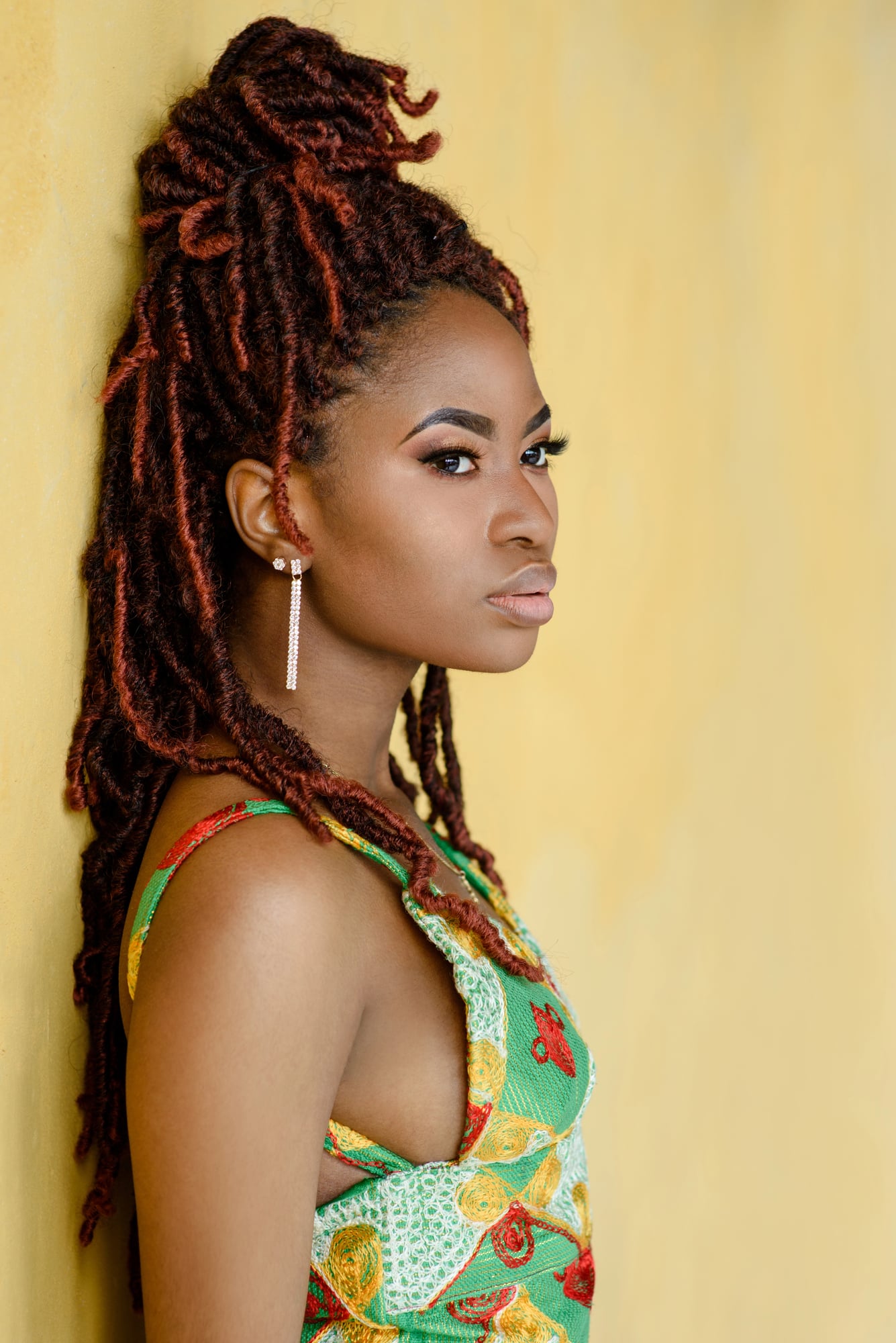
Soft locs can be installed in a few ways. The method you'll see most often goes like this: your stylist washes and stretches your hair, parts it into sections, plaits each section, attaches a pre-made loc to each plait with a crochet needle, and then wraps the springy hair around each loc from the root down.
That plaiting step is worth noticing. Standard crochet faux locs are usually installed on cornrows, while soft locs are more often installed on individual plaits, which is part of why the finished style moves more freely.
Expect four to eight hours in the chair. Smaller locs and longer hair push you toward the top of that range, and a large set may be split across two appointments.
You can do this yourself, and plenty of people do. The parting and the wrapping are manageable alone. Attaching the locs evenly across the back of your head is the part that's hard to do without a second pair of hands.
What Are Knotless Soft Locs?
Knotless soft locs skip the bulky knot that normally sits at your scalp where the extension attaches. Instead, the hair is fed into your plait a little way down, so nothing is cinched tight right at the root.
The benefit is less tension on your hairline. Since there's no tight knot sitting on your edges, your soft locs pull less in the place that's most vulnerable to it.
If your edges are the part you worry about, this is the version to ask for by name. It usually costs a little more, and it's worth asking whether your stylist charges separately for it.
Distressed, Boho, and Butterfly Soft Locs
These are finishes rather than different installs, and your stylist creates them by changing what happens to the wrapping hair.
Distressed soft locs are deliberately roughed up so they look like locs that have been worn for a while rather than installed yesterday. Boho or bohemian soft locs have curly pieces left loose along the loc. Butterfly soft locs borrow the loop technique from butterfly locs, so you get the soft loc base with visible loops.
All three start from the same base install. The hair is where they differ: butterfly soft locs use water wave hair rather than passion or spring twist, and a boho finish needs extra curly pieces, so check what your stylist wants you to buy before you order.
How Much Do Soft Locs Cost?
Now, let's talk about what you'll actually pay. A full head of soft locs usually runs $150 to $400, and most installs land between $150 and $280.
Your price moves on a handful of things: how many locs you want, how long they are, whether your stylist includes the hair, where you live, and how experienced they are. Salon listings we checked ranged from about $220 for a standard set to around $250 for a knotless install.
Ask what the quote covers. Some stylists include the hair in the price, and some expect you to bring it, and that difference alone can swing what you pay by a hundred dollars.
How Long Do Soft Locs Last?
Soft locs last four to six weeks for most people.
Your soft locs don't end because the loc hair wears out. They usually come down because your new growth makes the base of each loc looser, so how fast your hair grows is one factor in how long the style lasts.
You'll know it's time when the roots start to feel loose, and your parts stop looking clean. Taking your soft locs down at around six weeks is easier on your hair than stretching them, because the longer your new growth sits wrapped up, the more it mats at the base.
| Measure | Value |
|---|---|
| Style type | Temporary install Your own hair is plaited underneath extension hair, so soft locs come down when the wear window ends. Your hair never locks, and this isn’t a first step into locs you keep. |
| How it differs from faux locs and butterfly locs | Lighter, springier wrapping hair All three are faux locs, and the wrapping hair is the difference. Soft locs use passion twist or spring twist hair, so the finished loc bends and moves. Butterfly locs use water wave hair and leave loops free along each loc. Standard faux locs are wrapped firmly along the whole loc for a sleeker finish. |
| Install time | 4 to 8 hours Smaller locs and longer hair push you toward the top of that range, and if you’re getting a large set, it may be split across two appointments. Published figures run from two to ten hours depending on loc size and whether your base is plaited or cornrowed. Sources disagree |
| Salon cost (US) | $150 to $400 Most installs land between $150 and $280. Salon listings we checked ran about $220 for a standard set and around $250 for a knotless install. Ask whether the quote includes the hair, because that one difference can swing what you pay by a hundred dollars. |
| DIY cost | The price of 5 to 8 packs of hair That plus a crochet needle is the whole shopping list. We don’t publish a dollar range here because pack prices swing with brand and length more than with anything about your hair. |
| Can you do it yourself | Yes, with help at the back The parting and the wrapping are manageable alone, and plenty of people do the whole set themselves. Attaching the locs evenly across the back of your head is the part that’s hard without a second pair of hands. |
| Hair needed | 2 to 3 packs of pre-made locs, plus 2 to 3 packs of wrapping hair That’s two separate purchases, and it’s where most of the confusion about pack counts comes from. Pre-made locs run about 24 locs per pack. The wrapping hair is passion twist or spring twist. When you see “five to eight packs” quoted, that’s both added together; when you see “two to three,” it’s usually only one of them. Ask your stylist which one they mean before you order. |
| Safe wear window | 4 to 6 weeks Your new growth loosens the base of each loc, which is what ends your soft locs rather than the loc hair wearing out. Take them down around six weeks; the longer new growth sits wrapped up, the more it mats at the base. One retailer publishes two to four weeks, which is shorter than every other source we checked. Sources disagree |
| Tension risk on edges | Moderate Soft locs are among the lighter options in the faux loc family, and there’s no glue and no heat on your own hair. Two things move the risk for your install: how tightly the plaits underneath are braided, and how long the locs are, because length is weight. Ask your stylist to keep your edges loose, and ask for the knotless version by name if you’re worried about your edges. |
| How to tell it’s too tight | Pain, stinging, scalp crusts, tenting, or broken hairs These are warning signs from the AAD. Say something during your install rather than after, because loosening a section in the chair is far easier than repairing your hairline months later. If pain or irritation keeps up, take your soft locs down. |
| Knotless version | Worth asking for by name Knotless soft locs skip the bulky knot that normally sits at your scalp. The hair is fed into your plait a little way down instead, so nothing is cinched tight right at the root. It’s usually a little more, so ask whether your stylist charges separately for it. |
| Smoothing frizz | Dip the ends in hot water Passion twist and spring twist hair are soft, which is exactly why they frizz sooner than a firmly wrapped faux loc. Dipping a frizzed end in hot, not boiling, water for a few seconds smooths it back. That works because the hair is synthetic, so skip it if your set uses human hair. Covering your hair at night slows the frizz more than any product will. |
| Removal | Unravel, or cut the wrap and unpick the plait Our takedown guide walks through three methods, including the one that saves the loc hair for reuse. Make sure you know where your own hair ends before you cut any extension hair. Work in sections and don’t rush the detangling step. |
| Not for you if | Your edges are already thinning, or you want to keep one install past six weeks No protective style fixes edges that were thinning before you booked, and a style that adds weight at the root can make it worse; that’s worth raising with a dermatologist rather than a stylist. Leaving the set in past about six weeks lets your roots mat, which is hard to detangle without losing hair at takedown. |
How we got these numbers. The cost, install, wear, and hair figures match our soft locs article. Install time and hair counts are for a full head of mid-back soft locs, so your results may vary. Where published sources disagree we say so in the row rather than averaging them. The tension rating uses the same scale we apply across the site and is informed by AAD guidance on hairstyles and hair loss.
Sources: Curl Centric’s soft locs article and the American Academy of Dermatology’s guidance on hairstyles and hair loss. Costs vary by region, stylist, length, and fullness. Last verified October 2026.
How to Care for Soft Locs
Soft locs are low maintenance, but they aren't no maintenance. Wash your scalp at least every other week. Dilute a gentle shampoo, work it into your scalp with your fingertips rather than your nails, and rinse thoroughly so nothing is left sitting between the locs.
If your scalp feels dry between wash days, apply a small amount of light oil directly to your parts rather than the locs themselves.
Cover your hair at night with a satin scarf or bonnet. This is the single easiest thing you can do to keep the wrapping hair from frizzing early.
And if anything hurts, say so. A style that stings, itches persistently, or leaves bumps along your parts may be too tight, and that's worth getting checked rather than waiting it out.
Are Soft Locs Bad for Your Hair?
Soft locs aren't bad for your hair when they're installed loosely and taken down on time. They're one of the lighter options in the faux loc family, and nothing in the install uses glue or heat on your natural hair.
Two common causes of the damage people blame on this style are avoidable.
The first is a plait that's braided too tight underneath. Tension at the root is what thins edges over time, and it doesn't matter how light the loc on top of it is if the braid holding it is pulling.
The second is leaving your soft locs in too long. Past about six weeks, your new growth can start to mat at the base, and matted roots are hard to detangle without losing hair at takedown.
So the damage question is really an install-and-timing question, not a soft locs question. If your scalp feels fine on day three and you take the set down on schedule, you're less likely to see damage at takedown.
One thing to separate out: if your edges were already thinning before you booked, no protective style fixes that, and a style that adds weight at the root can make it worse. That one is worth raising with a dermatologist rather than a stylist.
Common Soft Loc Problems, and What to Do
Three things come up again and again with this style.
Frizzing early. Passion twist and spring twist hair are soft, which is exactly why they frizz sooner than a firmly wrapped faux loc.
Covering your hair at night slows the frizz more than any product will.
Once a loc has frizzed, dipping the end in hot water for a few seconds smooths it back. That works because the hair is synthetic, so skip it if your set uses human hair. Use hot water rather than boiling. Pour it into a mug, and keep it away from your skin.
Locs slipping or sliding down. This usually means the loc wasn't anchored firmly enough to the plait, and it shows up in the first week. Go back to your stylist rather than pulling it tight yourself, because tightening at the root is how you trade a loose loc for a sore scalp.
An itchy scalp. A little itch can happen in the first day or two as your scalp settles.
An itch that keeps going, especially with flaking or bumps along your parts, isn't something to ignore. Product buildup and a tight install are two possible causes.
Soft Locs Hairstyles

Soft locs style much like real locs, which is part of their appeal. You can wear them down, pull them into a high bun or a half-up style, braid a few at the front, or add cuffs and beads.
Go easy on the tight updos, though. A style that pulls all of your locs up and back puts the extension weight on your hairline for hours at a time, and your edges are already carrying that weight all day.
Color is another option, and it's one to settle before you buy. The locs and wrapping hair come in a wide range of shades, so choosing colored hair upfront is simpler and far kinder to your hair than dyeing a synthetic set after it's installed.
Taking Out Your Soft Locs
Takedown is its own job, and we've written a full guide explaining how the process works. Our article on how to take out soft locs walks through three different methods, including which one saves the hair for reuse, plus how to detangle and clarify afterward.
The short version: give yourself more time than you think you need, work in sections, and do not rush the detangling step.