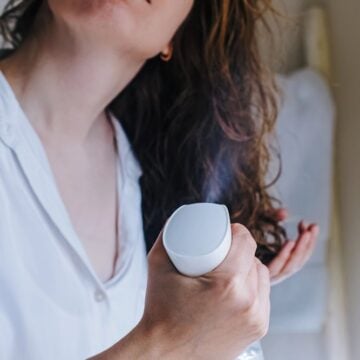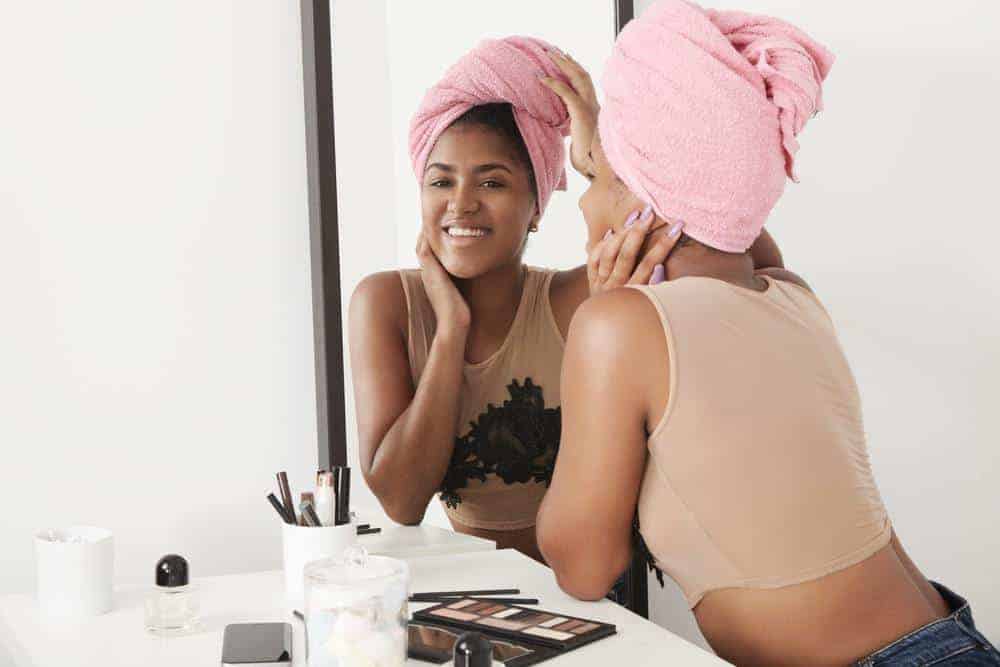
For most women with curly hair, the best option is a flat microfiber towel that is large enough to hold all of your hair without forcing you to twist it tightly. The same goes if you're shopping for the best hair towel for wavy hair, since microfiber and plenty of room help keep your waves from frizzing.
Have you ever taken a regular bath towel off your head and noticed frizz before you even applied your products? The towel may be part of the reason. Traditional terry towels have loops that can catch on raised areas of your hair's outer layer, called the cuticle. That friction can leave your curls looking frizzy and feeling rough. Microfiber has much finer fibers, so it can absorb excess water with less rubbing.
less rubbing and friction may mean less frizz
Curlsmith Microfiber Towel
The biggest flat towel here, so there's room to cup and squeeze your curls instead of wringing them.
39 × 27.5 in · 88% polyester
Only Curls Microfibre Hair Towel
Almost as large as the Curlsmith towel, so it gives longer or thicker curls more room without forcing you to twist them tightly.
37 × 23 in · 80% polyester, 20% polyamide
Only Curls Towel Turban
The same fabric as the flat towel in a hands-free shape that works well for plopping.
25.6 × 11 in · 80% polyester, 20% polyamide
Turbie Twist Microfiber
The smallest towel here, which is what you want if your hair is short. Check that you're buying their microfiber one.
10 × 24.5 in · 87% polyester
Every hair towel here, by size and material
| Towel | Shape | Size | Material | Best for |
|---|---|---|---|---|
| Curlsmith Microfiber Towel | Flat towel | 39 × 27.5 in | 88% polyester, 12% polyamide | Most curl types, medium to long hair |
| Only Curls Microfibre Hair Towel | Flat towel | 37 × 23 in | 80% polyester, 20% polyamide | Long or thick hair |
| Only Curls Towel Turban | Turban | 25.6 × 11 in | 80% polyester, 20% polyamide | Plopping and hands-free drying |
| Turbie Twist Microfiber | Twist turban | 10 × 24.5 in XL 10 × 29.9 in | 87% polyester, 13% polyamide | Short to shoulder-length hair |
| Turbie Twist 100% Cotton | Twist turban | 10 × 24.5 in | 100% cotton | Anyone who prefers cotton |
| Kitsch XL Hair Towel Wrap | Wrap with an elastic strap | 40 × 24 in | Polyester | Long or thick hair and hands-free drying |
| Kitsch Microfiber Hair Towel | Wrap with an elastic pocket | Not published | Polyester microfiber | Everyday use |
| Kitsch Organic Bamboo Hair Towel | Wrap with an elastic pocket | Not published | Bamboo rayon | Anyone who prefers a plant-derived fabric |
| Aquis Hair Towel | Flat, multi-use | Current size not confirmed | Current material not confirmed | Confirm availability before buying |
| DevaCurl DevaTowel | Flat towel | 39 × 20 in | Microfiber blend not published | Most curl types; may be small for very long or dense hair |
We checked the sizes and fabric details available on each brand's product page on September 24, 2026. When a detail was unavailable, the table says so instead of guessing. We left prices out because they can change.
Hair towels come in very different sizes, and the size matters more than the brand
A standard Turbie Twist measures 10 inches by 24.5 inches, while the Curlsmith towel measures 39 inches by 27.5 inches. Because the towels have different shapes, the measurements are not a perfect comparison, but the Curlsmith gives you considerably more surface area. If you have long or dense curls, a smaller wrap may force you to bunch or twist your hair more tightly to make it fit.
That tight twisting is what you want to avoid. Wet hair can stretch more easily, so pulling it tightly into a wrap may add unnecessary tension. A properly sized towel lets you blot or wrap your curls without forcing them into a small space. If you cannot lay your hair across the towel with enough room to fold it over, the towel may be too small for your hair.
Check whether the Turbie Twist you're buying is microfiber or cotton
Turbie Twist sells both a microfiber version and a 100% cotton version under very similar names, so check the material before ordering. If you want the microfiber version, look for a blend of 87% polyester and 13% polyamide.
Cotton is not automatically harmful to curly hair, but a looped cotton towel can create more friction if you rub it against your strands. If your goal is to disturb your curl clumps as little as possible, choose the microfiber version and gently blot or squeeze your hair. Check multipacks carefully because the fabric may differ from the product shown in the first photo.
A closer look at each towel
Curlsmith Microfiber Towel
Best overallFlat towel39 × 27.5 in88% polyester, 12% polyamide
The Curlsmith towel is the biggest flat towel in this group, and that shape is why we recommend it first. A flat towel lets you cup a section of your hair in both hands and squeeze upward toward your scalp. That's the motion that helps your curls clump together instead of separating into frizz. It also means you can lay your length out on the towel rather than folding your hair back on itself.
What to know before you buy: a towel this big takes up real space on a towel rail, and it's bulky to travel with. If your bathroom is small or you want something for the gym, one of the turbans below will fold down much smaller.
Only Curls Microfibre Hair Towel
Long or thick hairFlat towel37 × 23 in250 g80% polyester, 20% polyamide
The Only Curls towel is two inches shorter and 4.5 inches narrower than the Curlsmith towel, so it may still give women with long or thick hair plenty of room. Size is more useful than the towel's listed weight because weight alone does not tell you how much water a towel can hold.
What to know before you buy: Only Curls is a UK brand, so check shipping costs and delivery times before you order.
Only Curls Towel Turban
PloppingTurban25.6 × 11 in200 g80% polyester, 20% polyamide
The Only Curls turban uses the same microfiber blend as the flat towel in a shape that stays on your head while you get ready. That makes it a convenient option for hands-free plopping. Keep the wrap comfortable rather than tight, especially around your hairline.
What to know before you buy: A turban gives you less control over how your curls are positioned. If you prefer to cup and squeeze one section at a time, a flat towel may work better.
Turbie Twist Microfiber
Short to shoulder lengthTwist turban10 × 24.5 in, XL 10 × 29.9 in87% polyester, 13% polyamide
The Turbie Twist is one of the most compact wraps in this group, which can make it a convenient option for short, fine, or shoulder-length hair. The brand also offers an XL version that measures 29.9 inches long, so consider that version if the standard towel feels tight around your curls.
What to know before you buy: The brand also sells a cotton version under a similar name. Check the material before ordering.
Kitsch XL Hair Towel Wrap
Long or thick hair, hands freeWrap with an elastic strap40 × 24 inPolyester
The Kitsch XL wrap measures 40 by 24 inches and is made from polyester microfiber. Its larger surface area gives long, thick, or dense curls more room, and the elastic strap holds the wrap in place while you get ready.
What to know before you buy: This is still a wrap rather than a flat towel, so you will not have the same flexibility to cup and squeeze individual sections.
Kitsch Organic Bamboo Hair Towel
If you'd rather skip synthetic fabricWrap with an elastic pocketBamboo rayonsize not published
The Kitsch towel is made from bamboo rayon rather than polyester microfiber. It gives you a plant-derived option if you prefer not to use a synthetic microfiber towel. An elastic pocket helps hold the wrap in place without tying a knot.
What to know before you buy: Kitsch does not publish its dimensions, so you cannot compare its fit directly with the other towels. Follow the care instructions and let it dry completely between wash days.
Squeeze your hair, don't rub it
Whichever towel you buy, how you use it matters as much as the fabric. Cup a section of your hair in the towel, squeeze gently, and lift toward your scalp. Then move to the next section and repeat the process.
Try not to rub the towel back and forth across your strands. Rubbing creates friction and can disturb the curl clumps you just formed, which may lead to more frizz. If you want the longer version, we walk through it in how to plop hair overnight and how to dry curly hair.
How to Towel Dry Curly Hair
The "plop method" is one of the most common methods of towel drying curly hair. It's also a method that's commonly recommended by stylists.
While sitting or standing, lay a towel out vertically in front of you. Then, bend over at the waist so that you can flip your hair over your head.
With your hair on the towel, fold the sides in, then bring the edge that is farther away from you over your hair to meet the nape of your neck. Tie the excess towel material in a knot on top of your head.

Free 50-page guide
Your hair is already growing. The problem is keeping it.
On average, hair grows a third to half an inch a month, and curlier hair tends to grow more slowly. If your length looks stuck, that’s your hair breaking off as fast as it grows in. Here are the seven causes of breakage and the weekly routine that stops them.
Free. An email every few days for two weeks, then one every Thursday, plus the odd extra. Unsubscribe anytime.
Within 10 to 20 minutes, the towel will have soaked up much of the water. Your hair won't be dry yet, so finish with a diffuser or let it air-dry the rest of the way.
After drying your hair, apply your preferred styling product and allow it to sit in your hair undisturbed. You may be tempted to touch it up but messing around with it will invite more frizz.
You can also leave the towel on your head overnight if you're washing your hair in the evening. This will be an individualized thing so experiment with what works best for you personally.
Unlike the twisted towel drying method, this plop method lessens your hair's exposure to breakage, split ends, and frizz by putting less tension on your strands.
Also, since your hair is drying on the top of your head rather than down your back, it will result in bouncier curls and more lift.
Some people like to cup a towel around their wet hair and scrunch it up but this isn't necessary with a good-quality microfiber cloth.
Besides, the plop method already scrunches up your curls to some extent, helping to further define your curl pattern.
If you want to bypass the towel turban process, then use your towel to cup your wet hair section by section and give it a gentle scrunch to remove excess moisture.
What Air-Drying and Blow-Drying Did to Hair After 30 Washes
Once you’ve squeezed the water out with your towel, your hair is still damp, and how long it stays that way may matter. Dermatology researchers in South Korea washed the same hair samples once a day for 30 days. After every wash, they gently blotted the hair with a towel and then either let it air-dry or dried it with a blow dryer. The air-dried hair took over 2 hours to dry each time. The blow dryer dried it in 15 to 60 seconds, depending on how close it was.
| How it dried | Time to dry |
|---|---|
| Air-dried at room temperature | |
| Blow dryer, 6 inches away | |
| Blow dryer, 4 inches away | |
| Blow dryer, 2 inches away |
| How it dried | Outer layer | Inside |
|---|---|---|
| Not washed or dried, for comparison | None seen | None seen |
| Air-dried at room temperature | None seen | Damaged |
| Blow dryer, 6 inches away | Cracks | None seen |
| Blow dryer, 4 inches away | More cracks | None seen |
| Blow dryer, 2 inches away | Holes | None seen |
The outer layer is the cuticle, the coating that protects each strand. “Inside” means the layer that holds the hair’s cells together, which is also the path water takes into the strand. The air-dried hair was the only hair damaged there, and that surprised the researchers. They think water sitting in the hair for over 2 hours every day caused it. The cortex, the deeper part that gives your hair its strength, wasn’t damaged in any sample. The hair had never been colored, relaxed, or permed. It was tested in a lab rather than on someone’s head, and the paper doesn’t say what hair type it was.
Here’s what this means when you towel-dry. Your towel gets the dripping water out, but it doesn’t dry your hair on its own. Every sample in this study was blotted with a towel first, and the air-dried hair still stayed wet for over 2 hours. So squeeze out as much water as you can with your microfiber towel, and don’t leave your hair sitting wet longer than you need to. If you finish with a blow dryer, hold it about 6 inches away and keep it moving. The researchers concluded that a dryer used that way did less damage than air-drying. This was one lab study, so it isn’t a reason to give up air-drying, but it is a reason to get the water out of your hair quickly.
Source: Lee et al., Ann Dermatol 2011;23(4):455–62.
FAQs
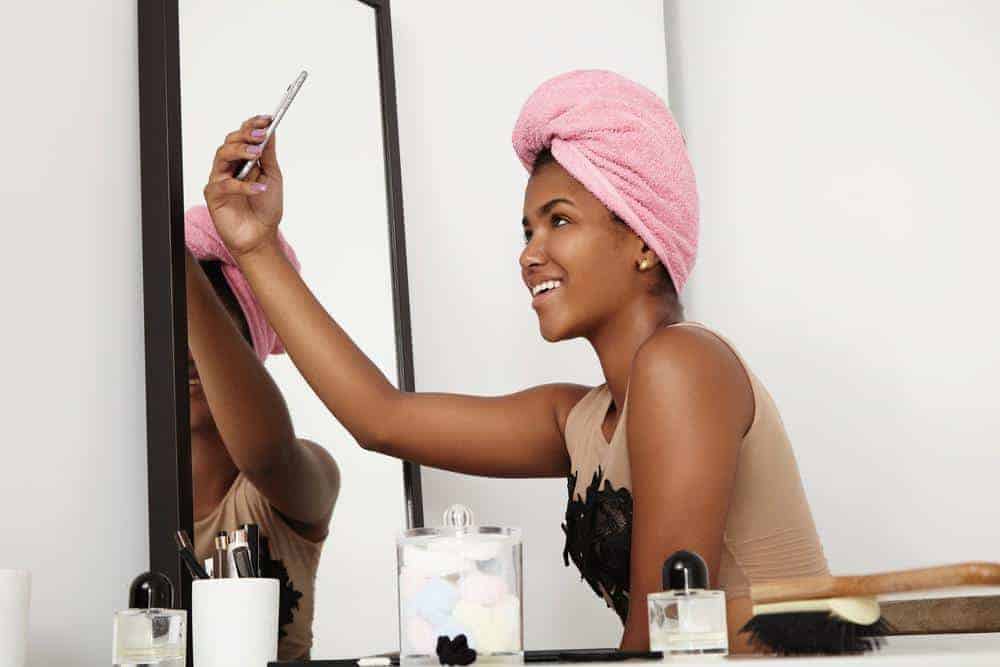
Don't worry. You're not the first person to have questions about using a microfiber towel. If you're new to using a microfiber towel to dry your hair, here's what you need to know.
Why Use Microfiber Towels for Hair?
Microfiber towels are designed specifically for drying your hair with minimal damage. Microfiber towels are better for your hair than using cotton towels, which could be damaging.
Cotton towels have a coarse texture that increases the likelihood of lifting your hair cuticle, which can lead to breakage and frizz. Also, they can increase your chances of split ends.
Cotton towels are also very drying and end up taking too much moisture out of your hair, leaving it prone to damage.
What Should I Look for When Choosing a Microfiber Towel?
Pay attention to the towel's material. Cotton towels might work okay for certain hair types, however we only recommend microfiber since the majority of our audience has curly hair.
Different microfiber towels will contain varying blends of polyester, polyamide, and nylon. You'll also want to consider the size of the towel.
If you don't have enough dry surface area on the towel to dry your hair, then you won't get the curl definition you want.
Your hair thickness will also come into play so if you've got thick, long hair, you'll need a towel that's big enough to dry all that hair.
Sometimes when women are in a pinch, they'll use t-shirts but you're likely to get better results with a microfiber towel.
How Do You Properly Clean a Microfiber Towel?
Keeping your towel neat and clean will help your scalp and hair stay in good condition. Since microfiber towels are made of fine materials, you're better off hand-washing them.
Use lukewarm water and a mild soap every week. If you must stick it in the washing machine, keep it paired with the more delicate laundry items and don't use fabric softener as it may result in a coarser texture.
Be aware that some brands of microfiber towels will have slightly different cleaning instructions. Some towels are machine-washable and can also go in the dryer.
Other suppliers recommend that you hand-wash the towel and then allow it to hang dry. So be sure to review the cleaning instructions after purchasing a microfiber hair towel.
My Stylist Says That I Should Apply Product Before Drying with a Hair Towel. Is That Okay?
Yes, of course. Everyone's hair is different and what works for you might not be the best option for another curly-haired lady.
There might be some trial and error that goes on before you find what works best for your particular hair type.
There are different types of curls and waves so if adding your styling product before drying works well for you, that's perfectly fine.
How we chose these towels
We compared the sizes and fabric blends that each brand publishes on its product pages, and we checked them on September 24, 2026. We have not personally used all ten towels, and we want to be clear about that.
When we picked the best towels for curly hair, we focused on size because a towel needs enough room to hold your hair without forcing you to twist or bunch your curls tightly. Many brands leave that useful detail off their product descriptions, so we collected the measurements they currently publish.