


Are you getting ready to put on a lace front wig for the first time? It can feel like a lot, especially when every video you watch seems to use a different method. The good news is that once you know how to put on a lace front wig, you'll follow the same few steps every time, and you can do all of them at home.
In short, you'll braid or flatten your own hair, cover it with a wig cap, line the lace up with your hairline, cut away the extra lace, and then secure the wig with a wig grip, tape, glue, holding spray, or a needle and thread. The last step is blending the lace so it looks like your own skin.
In this article, we'll walk you through each step, show you how to braid your hair down without putting stress on your edges, and help you choose the way of securing your wig that fits your skin and your schedule. Let's get into it!
How to Put On a Lace Front Wig: The Quick Steps
If you only need a refresher, here are the steps in order. We'll explain each one in detail below.
- Prep your hair. Wash, condition, and fully dry your hair, then braid it into flat cornrows or slick it back.
- Put on a wig cap. Choose a satin-lined cap if you can, especially if your cap rubs against your hairline. Keep it just behind your hairline.
- Clean your hairline. If you're using glue or tape, clean the skin where the lace will sit according to the product directions. Don't put rubbing alcohol or adhesive on irritated or broken skin.
- Place the wig. Hold the wig by the ear tabs, set the lace just in front of your hairline, and adjust the straps.
- Cut the lace. Lift the lace away from your skin, then trim the extra lace in small, zigzag snips. If you're not comfortable cutting it while wearing the wig, mark the lace and trim it on a wig stand.
- Secure the wig. Use a wig grip, tape, glue, holding spray, or sew it down.
- Blend and style. Tint the lace to match your skin, set it with a scarf, and style the hair.
What You'll Need

Before you start, gather everything in one place. That way, you won't have to stop halfway through with glue drying on your forehead. Here's what we recommend having on hand:

Free 50-page guide
Your hair is already growing. The problem is keeping it.
On average, hair grows a third to half an inch a month, and curlier hair tends to grow more slowly. If your length looks stuck, that’s your hair breaking off as fast as it grows in. Here are the seven causes of breakage and the weekly routine that stops them.
Free. One email a week after that. Unsubscribe anytime.
- Your lace front wig, brushed out and on a wig stand or foam head.
- A wig cap that's close to your skin tone. If wig caps rub against your hairline, a satin-lined cap may help reduce friction.
- Small, sharp scissors for cutting the lace. Eyebrow scissors or a small pair of shears work well.
- The skin cleanser recommended by the maker of your glue or tape. Use rubbing alcohol only if the product directions call for it.
- Whatever you're using to hold the wig, such as a wig grip, wig tape, lace glue, or a holding spray or gel.
- Adhesive remover, if you're using glue or tape. You'll need it on takedown day.
- Duckbill clips or bobby pins to hold the wig's hair out of the way while you work.
- A satin scarf or an elastic band to press the lace down while it sets.
- Foundation, concealer, or lace tint in your skin tone, if you want to blend the lace.
- A soft edge brush or a clean toothbrush for styling baby hairs.
What Is a Lace Front Wig?
A lace front wig is a wig with a sheer lace panel sewn across the front of the cap. Each hair along the front is tied into the lace by hand, so once the lace is laid flat, the hair looks like it's growing from your scalp. The rest of the cap is usually made of machine-sewn wefts (i.e., long strips of hair).
The lace only covers part of your head, though, and that decides where you can part the wig and how you can style it.
A 13x4 lace front has lace that's 13 inches across, from ear to ear, and 4 inches deep. A 13x6 goes 6 inches back. Since the average head measures about 14.5 inches from front to back, according to the American Cancer Society, the lace on a lace front stops well before the crown of your head.
Take a look at the diagram below. It shows where the lace sits on the most common wig types and where each one lets you part your hair.
Where the lace sits on each wig type
The shaded area is the lace, and it's the only part of the wig you can part or pull back without showing the cap. The dot marks your crown.
4x4 closure
A 4-inch square of lace at the front. Part it in the middle or a little to one side.
13x4 lace front
Lace from ear to ear, 4 inches back. Part it anywhere across the front.
13x6 lace front
Lace from ear to ear, 6 inches back. Room for a deeper side part.
360 lace
Lace all the way around the edge, so you can pull your hair up into a high ponytail.
Full lace
Lace over the whole cap. Part it anywhere, and wear it up or down.
Each head is seen from above, with the face at the top. Lace depth is drawn to scale on an average head, about 14.5 inches from the front hairline to the nape.
HD Lace vs. Transparent Lace
When you shop, you'll see lace described as HD, transparent, or Swiss. These are marketing labels that overlap, not standardized materials, and many wigs are sold as "HD transparent Swiss lace." In general, HD lace is sold as the thinnest and least visible option, and it's also the most delicate, so it can tear if you handle it roughly.
Since the labels vary from one seller to the next, look at close-up photos of the lace against real skin before you buy. You'll also see lace front wigs sold as lace frontal wigs or frontal wigs, so check the lace size in the listing, such as 13x4 or 13x6, to know how much lace you're getting.
Which Lace Lets You Wear a Ponytail?
You may be able to wear a lace front wig in a low ponytail or loose updo as long as the cap and wefts stay covered. A high ponytail is more likely to expose the back of the wig, so a 360 lace wig or full lace wig is usually a better choice for that style.
If you'd like to compare the smaller lace options, our guide on closure wigs vs. frontal wigs explains the difference.
Step 1: Prep Your Own Hair
Flattening your hair is the most important part of the prep, because your own hair needs to lie as flat as possible under the wig. If it doesn't, the wig will sit high on your head and the lace won't lie down at your hairline.
Start with clean hair. The American Academy of Dermatology (AAD) recommends making sure your hair is clean and free of buildup before you put in a weave or extensions, and moisturizing it with conditioner (AAD).
The same goes for a wig. Wash, condition, and detangle your hair, then let it dry all the way. Hair that goes under a wig cap damp stays damp for a long time.
Next, choose how you'll flatten your hair. We'll go over the three most common ways below.
Braid Your Hair Into Cornrows
Cornrows are the most common way to prep for a lace front wig, and they're a must if you plan to sew the wig down. Braid your hair straight back, from your hairline to the nape of your neck. If you have longer hair, tuck the ends of the braids flat against your head and pin them in place with bobby pins.
How many cornrows you do matters, but the amount of tension matters even more. The AAD recommends choosing thicker braids and loosening the braids around your hairline (AAD). Your cornrows should lie flat without hurting, stinging, or pulling at your edges.
The diagrams below show three ways to braid your hair down, and which one to avoid.
Three ways to braid your hair down
The first two options may reduce tension when the hair is braided loosely. The third concentrates more tension around the hairline.
Fewer, thicker cornrows
Braid straight back from your hairline to the nape. Thicker braids may put less tension on your hair than many tiny braids, but they still shouldn't hurt.
Edges left out
Start the braids just behind your hairline, and brush your edges back loose. It's a good choice if your edges are thin.
Avoid: many tiny, tight braids
Tight braids that pull right at the hairline put the most tension on your edges. Loosen anything that hurts.
Based on advice from the American Academy of Dermatology and a UK hospital dermatology leaflet on Afro-textured hair.
If your edges are thin or fragile, consider leaving them out of the braids altogether. A UK hospital dermatology leaflet on Afro-textured hair suggests leaving the edges out of braids to avoid putting tension on the delicate hairs there (St George's University Hospitals NHS Foundation Trust). Brush those loose hairs back gently, and the wig cap will hold them down.
How do you know if your braids are too tight? You'll feel it.
If your scalp hurts, stings, or feels sore, or if you see small bumps along your hairline, the braids are too tight, and they should be loosened before you go any further. Our article on whether cornrows hurt explains what's normal and what isn't.
Slick It Back
If your hair is too short to braid, or you'd rather not braid it, you can slick it back instead. Smooth a water-based gel through your hair, then brush it straight back with a soft brush. The AAD recommends water-based styling gels for your edges, since they're gentle on that fragile hair.
Use Two Low Ponytails
If your hair is medium length, you can also split it into two low ponytails at the back of your head. Cross them over each other, wrap them flat against your head, and pin them in place. Keep the ponytails loose; you only need the hair to lie flat, not to be pulled tight.
Step 2: Put On a Wig Cap
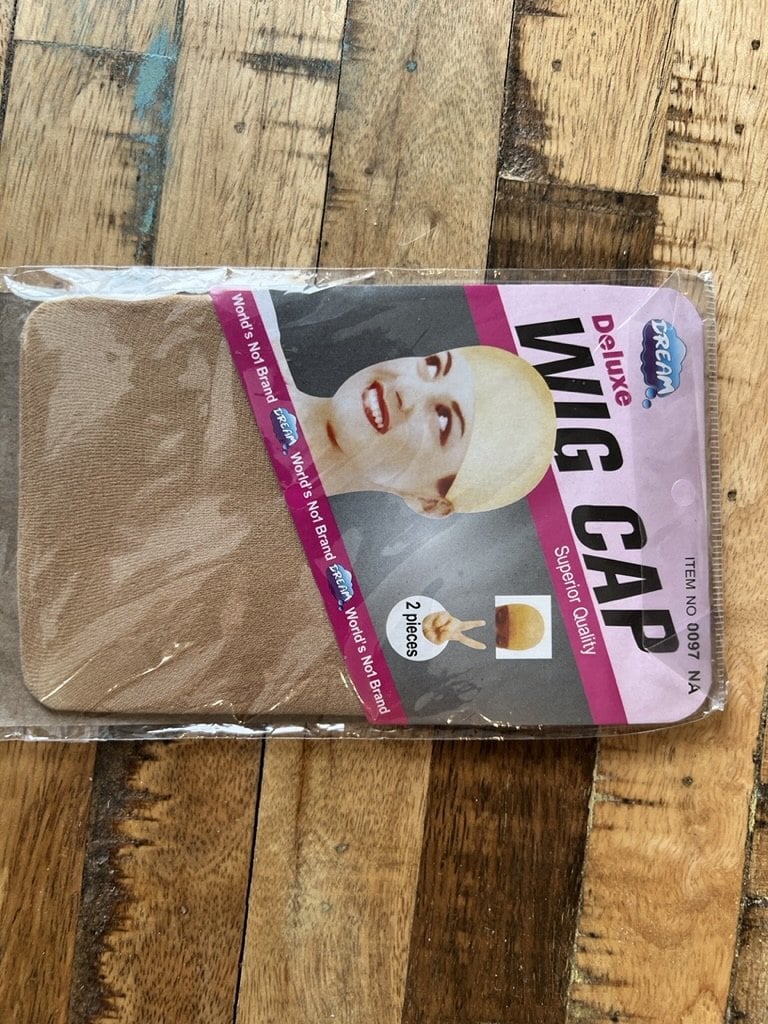
A wig cap holds your hair in place, keeps it from peeking out under the lace, and gives the wig a smooth base to sit on. It also helps keep the wig from sliding around.
The material of your wig cap makes a difference. Dermatologists Mayo and Callender recommend a satin wig cap when a wig rubs against your hairline, and they suggest avoiding cotton and nylon because those materials can cause friction and absorb moisture (Mayo and Callender, 2021). So if you can, choose a satin-lined wig cap, or wear a satin cap under a nylon stocking cap.
Here's how to put your wig cap on:
- Stretch the cap open with both hands, and place it at your forehead first.
- Pull it back over your head, and tuck in any hair that's sticking out.
- Keep the front edge of the cap just behind your hairline, so the cap doesn't show through the lace.
- Make sure the cap is snug but not tight. It shouldn't leave a line on your forehead or give you a headache.
If the cap's color doesn't match your skin, you can dab a little foundation or concealer along its front edge. That keeps the cap from showing through the lace.
Step 3: Clean Your Hairline
If you're using glue or tape, follow its directions for preparing your skin. If the directions call for rubbing alcohol, use a small amount on clean, unbroken skin and let it dry completely. Skip alcohol and adhesives if your skin is already irritated.
If you're planning to use a new glue or tape, check the product directions for patch-testing instructions before your install. The box below explains what to watch for and how to take your wig off without pulling on your edges.
Before you use a new glue or tape
A small test may help you spot irritation before the product reaches your hairline.
Do a patch test first
Check the product label for patch-testing directions and follow them exactly.
Test a small amount of glue or a small piece of tape on clean, unbroken skin on the underside of your arm. Leave it on only as long as the directions say.
Remove it immediately if your skin becomes red, itchy, swollen, or painful. Even if the test doesn't cause a reaction, stop using the product if your hairline reacts during the install.
An at-home test can't rule out every allergic reaction. If you've reacted to wig adhesive, tape, or latex before, talk to a dermatologist before trying another adhesive.
Take it off the safe way
Saturate the edge of the lace with a remover made for the adhesive you used.
Wait for the lace to loosen. If it doesn't lift easily, add more remover and wait a little longer.
Never peel or pull off glued lace. Doing so can pull out the fragile hairs around your hairline.
Step 4: Place the Wig
Now you're ready to position the wig. First, clip the front of the wig's hair back so it's out of your face and out of the lace.
Hold the wig by the ear tabs (i.e., the small pieces of lace near each ear), and set the front of the lace just in front of your natural hairline. Then pull the back of the wig down over the nape of your neck.
Line up the ear tabs with the front of your ears, and make sure the wig isn't sitting crooked. The center of the lace should line up with the center of your forehead. Adjust the straps until the wig feels secure without squeezing. Use the combs only if they don't dig into your scalp or pull on your hair.
Take your time here. Once you cut the lace or add glue, it's much harder to move the wig.
Step 5: Cut the Lace
Most lace front wigs come with extra lace at the front. You can trim it while wearing the wig or mark your hairline and trim it on a wig stand. If you cut it while wearing the wig, lift the lace away from your skin and use small, sharp scissors.
Lift the extra lace away from your skin, then trim it in small, zigzag snips about an eighth of an inch in front of the wig's hairline. Leave a little extra lace at first. You can always trim more later.
Near your ears, cut around the ear tabs, and follow the shape of your sideburn area. Some wigs come with pre-cut lace, which means the maker has already trimmed it close to the hairline. With pre-cut lace, you may only need a few small snips, or none at all.
Step 6: Secure the Wig

This is the step where your choices matter most. You can hold a lace front wig in place with a wig grip, adjustable straps, wig tape, lace glue, holding spray or gel, or a needle and thread. Each method has its trade-offs, and the right one depends on how long you want to wear the wig and how your skin handles adhesives.
The table below compares them, so you can pick the one that fits you.
Choosing how to secure your lace front wig
Each method holds the lace a little differently. Use this table to find the one that fits your skin, your schedule, and how long you want to wear your wig.
| How you hold it | It’s a good fit if you | Watch out for | How it comes off |
|---|---|---|---|
| Wig grip and straps | Want to take your wig off every night, or your skin reacts to glue. | A grip that’s too tight can rub your hairline or give you a headache. | Unfasten the grip, open any combs or clips, and lift the wig off. |
| Wig tape | Want temporary hold without liquid glue. | Some tapes can irritate your skin or cause an allergic reaction. | Use the remover recommended by the tape’s maker and wait for the lace to lift. |
| Lace glue | Want a secure hold for the length of time stated on the label. | Peeling off glue can pull on your edges, and some bonding glues contain latex. | Saturate the glue with the recommended remover and wait for the lace to lift. |
| Holding spray or gel | Want a lighter hold and have a product labeled for wig installation or skin contact. | Regular hairspray may irritate your skin and may not be intended for wig installation. | Follow the product’s removal directions instead of assuming water alone will release it. |
| Sewing it down | Want the wig to stay on for weeks with no glue on your skin. | Sewing takes practice, and stitches that are too tight pull on your braids. | Snip the thread and pull it out, with the scissors pointed away from your braids. |
Whichever method you choose, remove the wig sooner if you notice pain, itching, swelling, persistent redness, or unusual hair loss around your edges.
Next, we'll go through how to use each method.
Wig Grip or Adjustable Straps
For a glueless wig, the wig's own straps and combs do most of the work. A wig grip adds extra hold. We'll explain how to use a wig grip in its own section below.
Wig Tape
Cut the wig tape into small strips and place them on clean, unbroken skin according to the product directions. Peel away the backing, then press the lace onto the tape one section at a time.
Some adhesive tapes contain acrylates (i.e., a group of adhesive chemicals), which can cause an allergic rash in people who are sensitive to them (Hwang et al., 2024). If your skin becomes red, itchy, swollen, or painful, remove the tape with the recommended adhesive remover and stop using it.
Lace Glue
Lift the lace out of the way. Apply the glue to clean, unbroken skin according to the directions on the bottle, keeping it off your natural hair and edges. Wait for the amount of time stated on the label before pressing down the lace.
Then press the lace into the glue, starting at the center and working out to each side.
Glue can provide a strong hold, but peeling it off can pull on your hairline (Taye et al., 2023). Use a remover made for that adhesive, and wait until the lace lifts without pulling.
Some hair bonding glues contain natural rubber latex, and published case reports describe serious allergic reactions (Cogen and Beezhold, 2002). If you have a latex allergy, choose a verified latex-free adhesive. Get urgent medical help if you experience facial swelling, trouble breathing, or another severe reaction.
If you want to skip glue, we've put together a list of what you can use instead of wig glue.
Holding Spray or Gel
Use only a spray or gel labeled for wig installation or safe use on the skin. Apply it according to the product directions, and stop if your forehead becomes red, itchy, swollen, or irritated.
Although göt2b Glued Blasting Freeze Spray is sometimes used for wig installs, its maker says it's intended for hairstyling. The company also warns that using it to secure a wig or exposing the skin directly to it can cause irritation (göt2b). We don't recommend using regular hairspray as wig adhesive.
Sewing the Wig Down
Sewing a wig down means stitching it to your cornrows with a curved needle and thread. It holds the wig for weeks without any glue on your skin, but it takes practice, and a mistake with the needle can pull on your braids. If you've never done it, we recommend having a stylist at a salon sew your first one.
Here's how it's done:
- Braid your hair in cornrows going straight back, and sew or tuck the ends flat.
- Put on your wig cap, and place the wig exactly where you want it. You won't be able to shift it once it's sewn.
- Starting at one ear, sew the edge of the wig to the braid underneath it, working around the sides and the back of your head to the other ear. Keep your stitches snug but not tight.
- Add a few stitches through the wig and into the braids near the top of your head, so the wig doesn't lift.
- Leave the front lace unsewn. Lay it down with a little glue, tape, or holding spray, or leave it loose for a glueless look.
Snip and pull out the thread when you take the wig down, and keep the scissors pointed away from your own braids.
Step 7: Blend the Lace and Style the Wig
Once the wig is secure, it's time to make the lace disappear. If the lace is lighter than your skin, dab a little foundation, concealer, or powder in your skin tone onto the underside of the lace, or use a lace tint spray. Blend it with a small brush or makeup sponge.
Tie a satin scarf or elastic band gently around your hairline for the amount of time recommended by the glue, tape, or wig product. It should press the lace flat without leaving a mark, causing a headache, or pulling on your edges. Pressing the lace flat is how many people get the "melted" look. We've explained more in our guide to melted hairline wigs.
Many lace front wigs come pre-plucked (i.e., with some hairs along the lace hairline already removed, so the hairline looks less thick and more natural). If yours isn't, you can thin the hairline by plucking a few hairs with tweezers. Go slowly, though, because plucked hairs don't grow back into a wig.
Finally, take out the clips, and style the wig however you like.
If your wig is made of human hair, check the wig maker's heat instructions and use a heat protectant. Heat can melt or permanently change many synthetic fibers, so only use a flat iron or curling iron on a wig labeled heat-friendly. Stay within the temperature limit provided by the maker. Our guide to synthetic lace front wigs explains more. If you want baby hairs, lay the baby hairs on the wig, not your own edges, and use a light hand. Your edges are fragile, and the AAD recommends caring for them with water-based gels and conditioner.
How to Use a Wig Grip

A wig grip is a soft, stretchy band, often made of velvet, that goes around your head under your wig. The velvet grips the inside of the wig, so the wig stays put without glue. Most wig grips close in the back with Velcro, so you can adjust how snug they are.
Here's how to put on a wig grip:
- Put on your wig cap first, and tuck all of your hair underneath.
- Place the wig grip around your head, with the front of the band just behind your hairline. It shouldn't cover your hairline or show in front of the lace.
- Fasten the Velcro at the nape of your neck. The band should feel snug, but it shouldn't press into your skin or give you a headache.
- Put your wig on over the grip, line up the lace, and adjust the wig's straps.
A wig grip is a great choice if you want to take your wig off every night, and it can even help protect your hairline. Mayo and Callender list a velvet wig band, along with a satin wig cap, as ways to protect your hairline from a wig that rubs against it.
However, a grip that's too tight works against you. The AAD notes that the constant rubbing of a head covering can lead to traction alopecia (i.e., hair loss caused by constant pulling), especially if your hair is pulled back tightly underneath it. So loosen the grip if it leaves a mark or gives you a headache, and give your edges a break on days you don't wear a wig.
How to Put On a Regular Wig
Not every wig has lace. If you're putting on a regular wig (i.e., one without a lace front), the steps are simpler, because there's no lace to cut or secure.
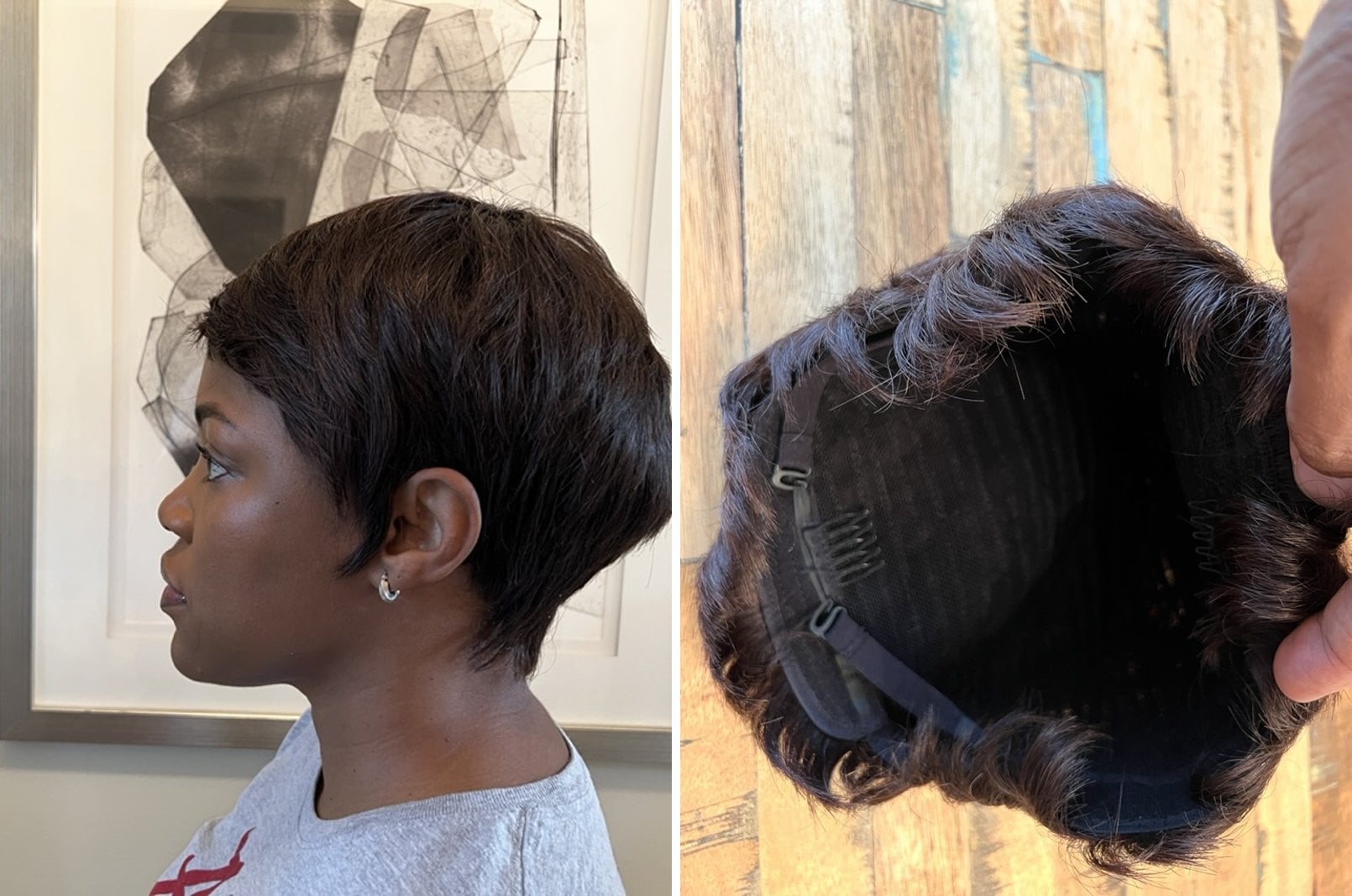
- Flatten your hair with cornrows, a slick-back, or low ponytails, the same way we described above.
- Put on your wig cap, and tuck in all of your hair.
- Hold the wig by the sides, with the tag or label at the back.
- Set the front edge of the wig on your forehead, a little below your natural hairline, then pull the wig back and down over your head.
- Slide the wig back until its front edge lines up with your hairline, and make sure the ear tabs sit evenly in front of your ears.
- Adjust the straps inside the wig until it feels secure, and add a wig grip if it still slides.
Mistakes That Can Damage Your Edges
Most lace front wig problems happen at the hairline, which is also where your hair is most fragile. Take a look at the list below. These are the mistakes we see most often:
- Braiding too tight. Tight cornrows pull on your hair follicles day after day. Braid firmly enough to lie flat, and loosen anything that hurts.
- Getting glue on your own hair. Keep glue and tape on your skin, behind the lace, and never on your edges or baby hairs.
- Pulling the wig off. Dissolve glue and tape with a remover and wait for the lace to lift. Peeling a glued wig off is how hairline hairs get pulled out.
- Wearing a cotton or nylon cap. Choose a satin-lined cap instead, since cotton and nylon can rub and dry out your hair.
- Cutting too close or cutting toward your skin. Lift the lace away from your forehead, use small snips, and leave a little extra until you're sure where it should end.
- Skipping breaks between installs. The AAD recommends switching up your hairstyle regularly so your hair can recover from tight styles.
How Long Does a Lace Front Wig Install Last?
It depends on the wig, the securing method, your skin, the weather, and how much you sweat. A glueless install with a wig grip can usually come off every night.
Tape, wig adhesive, and products made for lighter holds may last anywhere from a day to several days. Follow the product's maximum wear time instead of using one schedule for every adhesive. A sewn install can stay in longer, but remove any install sooner if it hurts, becomes itchy, starts lifting, or causes irritation.
For each method's usual wear time, and the signs that your wig should come off early, read our guide on how long a wig install lasts.
Frequently Asked Questions
Do Lace Front Wigs Have to Be Glued Down?
No. You can secure a lace front wig with adjustable straps, a wig grip, wig tape, a product made for glueless wig installation, or by sewing it to cornrows. Glue may provide a stronger or longer hold than some methods, but the results depend on the product and how the wig fits.
How Do You Put On a Lace Front Wig Without Glue?
Braid or flatten your hair without pulling it tight, put on a wig cap, and add a wig grip. Put on the wig, line up the lace, and adjust the straps until the wig feels secure. If you want more hold, use a product specifically labeled for glueless wig installation instead of spraying regular hairspray on your skin.
Can You Put On a Lace Front Wig Without Cutting the Lace?
Only if the lace is pre-cut. Most lace front wigs come with extra lace in front of the hairline, and it will show on your forehead if you leave it. Pre-cut lace has already been trimmed by the maker, so it needs few cuts or none.
How Long Does It Take to Put On a Lace Front Wig?
Your first install can take an hour or more, especially if you're braiding your own hair. Once you've done it a few times and your hair is already prepped, a glueless install can take just a few minutes.
How Do You Keep a Lace Front Wig From Lifting?
Prepare your skin and let the adhesive set according to the product directions. Oil, sweat, and water can weaken the hold of some products, so follow the label's care instructions. Don't keep adding adhesive to irritated skin or wear the wig longer than the product recommends.
Should You Wash Your Hair Before Putting On a Wig?
Yes. Wash, condition, and detangle your hair first, and let it dry completely. Your hair stays under the wig for as long as you wear it, so starting clean and fully dry is better for your scalp.
Can You Wear a Lace Front Wig With Short Hair?
Yes. Instead of cornrows, you can smooth your short hair back gently with a water-based gel, then put on your wig cap. Keep the hair loose enough that it doesn't pull on your edges.
Related Articles
- What Are Lace Wigs?
- What Is a 4x4 Lace Wig?
- How Long Do Lace Front Wigs Last?
- How Long Does Wig Glue Last?
- Best Wigs
So, there you have it: how to put on a lace front wig, from braiding your hair down to blending the lace. Take your time with the first few installs, keep your braids loose and your glue off your edges, and you'll get faster every time.