

How you part your hair has a significant impact on how your hairstyles come out. If you want to achieve looks that require clean parts and your parting skills are subpar, you're at a real disadvantage.
Whether you've never really cared about your parts before or you've been trying to refine your skills for a while, this article is for you. In it, we'll give you the rundown on how to part your hair the right way. Let's get right into it!
How to Part Your Hair Yourself
Before you part your hair, get your hands on the right supplies. First and foremost, you'll need a rat-tail comb. The great thing about a rat tail comb is that it has a straight edge you can use to create literally any part that you want.
Zig-zags, curves, and the straightest of the straight - a rat tail comb can handle it all.
If you're a stickler for clean parts, you'll want to get yourself some edge control as well. The edge control can be added to the roots of the hair prior to parting. And when you go to part the hair, you'll notice that the parts are super clean without a hair out of place (more on this later).
Free 8-page guide
You know your hair type. Here’s what it needs on wash day.
Our free guide gives you one page for each hair type group, from 2A to 4C. Each page tells you how often to start washing, what helps your waves, curls, or coils clump, and the problems your hair type runs into most. It also has a protein or moisture chart and a log for testing one change at a time.
Free. You’ll get the guide by email, two more emails on how to use it, and then one every Thursday, plus the occasional extra. Unsubscribe anytime.

How to Do a Basic Part
Now, let's get to the instructional portion of the article. We'll start with the "basic part" - a part you'll do with a regular comb and no extras. All you'll do is decide on the part that you want, place the tip of your comb where you want the part to start, and then drag it along your scalp as desired.
If you want a straight part, you'll drag the comb straight back, straight across (horizontally), or even diagonally. For a curved part, you'll curve the comb as desired.
The Most Common Part Types
There are a few part types that people all over use to create hundreds, if not thousands, of hairstyles. These include the middle part, the side part, and the deep side part. Keep reading for an explanation of how to achieve each of these common parts.

Middle Part
The middle part might seem to be the easiest part you'll ever do, but you'd be surprised at how many people struggle to get this one right. Here's how to do it the right way every time.
- Take a wide-tooth comb and comb your hair backward.
- Line your rat tail comb up with the middle of your nose. The straight end of the rat tail comb should be right at the start of your hairline. Doing this will ensure that your part starts at the right point (smack dab in the middle).
- Push the comb straight backward, doing the best you can, not to change directions. Stop pushing the comb back when you get to the highest point of your head unless your style calls for you to continue the part to the back of your head.
- Lift up the rat tail comb, and then use your pointer fingers to pull the hair away from the middle part. Use your rattail comb to further separate each side of your hair, making the part even more visible and clean.

Side Part
We all love the mysterious vibe of a side part. It adds an element of glam to a variety of styles, from straight and curly to braided and ultra-formal.
So, if you want hairstyling freedom, you should know how to do a side part like the back of your hand. Here's how to execute a side part:
- Comb the front of your hair backward to reveal your hairline. Don't use a rat tail comb for this part - it can pull out your hair or otherwise damage it. A wide-tooth comb is the better option.
- Decide how far out to the side you want your side part. Any part that's positioned off-center is considered a side part. Once you've chosen where you want your side part to be, get your rat tail comb and go to the next step.
- Place the tip of your rattail comb where you want your side part to begin. Lie it flat against the front of your hairline.
- Begin parting your hair by dragging the end of the rattail comb from the front of your hairline to where the crown of your head begins.
- Lift the comb ever so slightly and use your pointer finger from the opposite hand to trace the part you made. Then remove the comb and separate both halves of your hair with your hands. You can then comb the hair on each side down to further define the part.
Deep Side Part
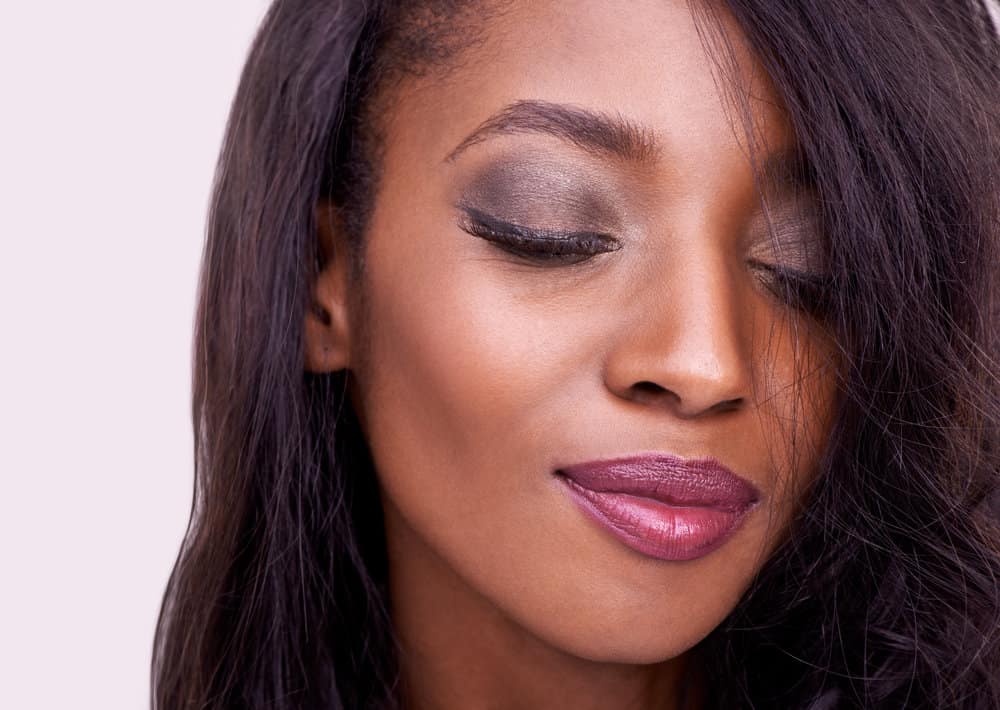
For the deep side part, you'll follow the same process as you would for a side part. The only difference is that the part should line up with the outer corner of your eye. So, use your rat tail comb and your eye to start your part at the right spot.
Parting for Braids and Locs
The parts above focus on how your hair frames your face. When you're parting your hair for individual braids or locs, you'll usually create a pattern of sections across the scalp instead of one line near the front.
A box grid divides the scalp into rows of square sections, with each cross-part lining up with the one above it. The pattern is easy to follow, but those straight lines can leave visible channels of scalp between your braids or locs.
Brick-layer parting, which your braider may call brick-lay, staggers every other row like bricks in a wall. Because the cross-parts don't line up, this pattern can make box braids, twists, and starter locs look fuller and show less scalp. If that's the look you want, ask your braider whether brick-layer parting will work for your style.
brick-layer staggers · no channel runs through
I've parted my hair for more two-strand twists than I can count, and I do it on damp, detangled hair, because dry curls fight the comb. I use the tail of a rat-tail comb, then clip each finished section out of the way. Your parts don't need to be perfect, but try to keep your sections about the same size, so one twist isn't carrying more hair than its neighbor.
Kira Byrd, trained barber and hairstylist, co-founder of Curl Centric
Not Every Part Type Works for Everyone
You may not have known this, but not every part type will complement every face shape. Some parts can make long faces look abnormally long or widen round faces. If you're interested in learning the best part type for your face shape, the below list will help you out.

- Heart Shape - For those with heart-shaped faces, a middle part will be ideal. When your hair is parted in this manner, your face will look slimmer and more elongated. Side and deep side parts can give the illusion of a wider face when paired with a heart-shaped face.
- Round Shape - If you have a round face shape, we recommend going with a middle part or a side part. A middle part lends an angular quality to the average round face, which can make you look more attractive. The same goes for side parts.
- Long Faces - Depending on just how long your face is, you may be able to get away with a middle part. If it's very long, though, go for a side part. Some say that any part type will mesh well with long faces.
- Square faces - Square faces pair well with both side parts and middle parts.
- Diamond shape- To accentuate a diamond-shaped face, try a side part. A side part will highlight your high cheekbones. You can even rock a deep side part if you're daring. Middle parts could also work, but depending on the style you're wearing, they can hide your cheekbones.
Remember that these recommendations are generalized. You should choose a part that makes you feel confident above all else. After all, you're the one that has to wear the style you choose - no one else.

Does Hair Texture Play a Role in the Type of Part You Should Choose?
Some sources suggest that your hair texture determines which part you should choose. That's just not the case. Straight hair, curly hair, wavy hair, and even multi-textured tresses can all look great parted any way.
But there are a few tips you should keep in mind when parting different hair types
- If you're doing a middle part on curly hair, you may have to use extra smoothing products to ensure that the hair on the sides of the part don't hide your part.
- If you normally wear your part on a certain side and your hair is straight, you could experience some flatness at the roots. If that happens, consider wearing your part on the opposite side. You'll get much more volume that way. When choosing between a left part and a right part, the side you don't usually part on often gives you more lift at the roots.
- If your hair is super textured and you want your parts to be incredibly clean, apply some edge control to your roots before parting. Your part will be much cleaner than if you parted your hair with a comb alone.
Related Articles
So, there you have it - everything you need to know about parting hair. We hope you found this article to be helpful, and we wish you the best as you learn how best to style your hair.