
Since you've stumbled across this page, it's safe to say that synthetic lace front wigs have piqued your interest. Whether you want to know what they are or are trying to decide if they're right for you, we've got you covered!
So, what is a synthetic lace front wig? How do you make synthetic hair look more natural? In this article, we'll take a closer look at the ins and outs of synthetic wigs.
We'll break down the good, the bad, and the ugly and answer a few of the most frequently asked questions. Now that we've gotten that out of the way, let's jump right in.
What Is a Synthetic Lace Front Wig?
A synthetic lace front wig is a wig made of synthetic hair with a patch of lace that extends from ear to ear. On most lace fronts, the lace goes back only about 4 to 6 inches from your hairline, so it stops well before your crown.
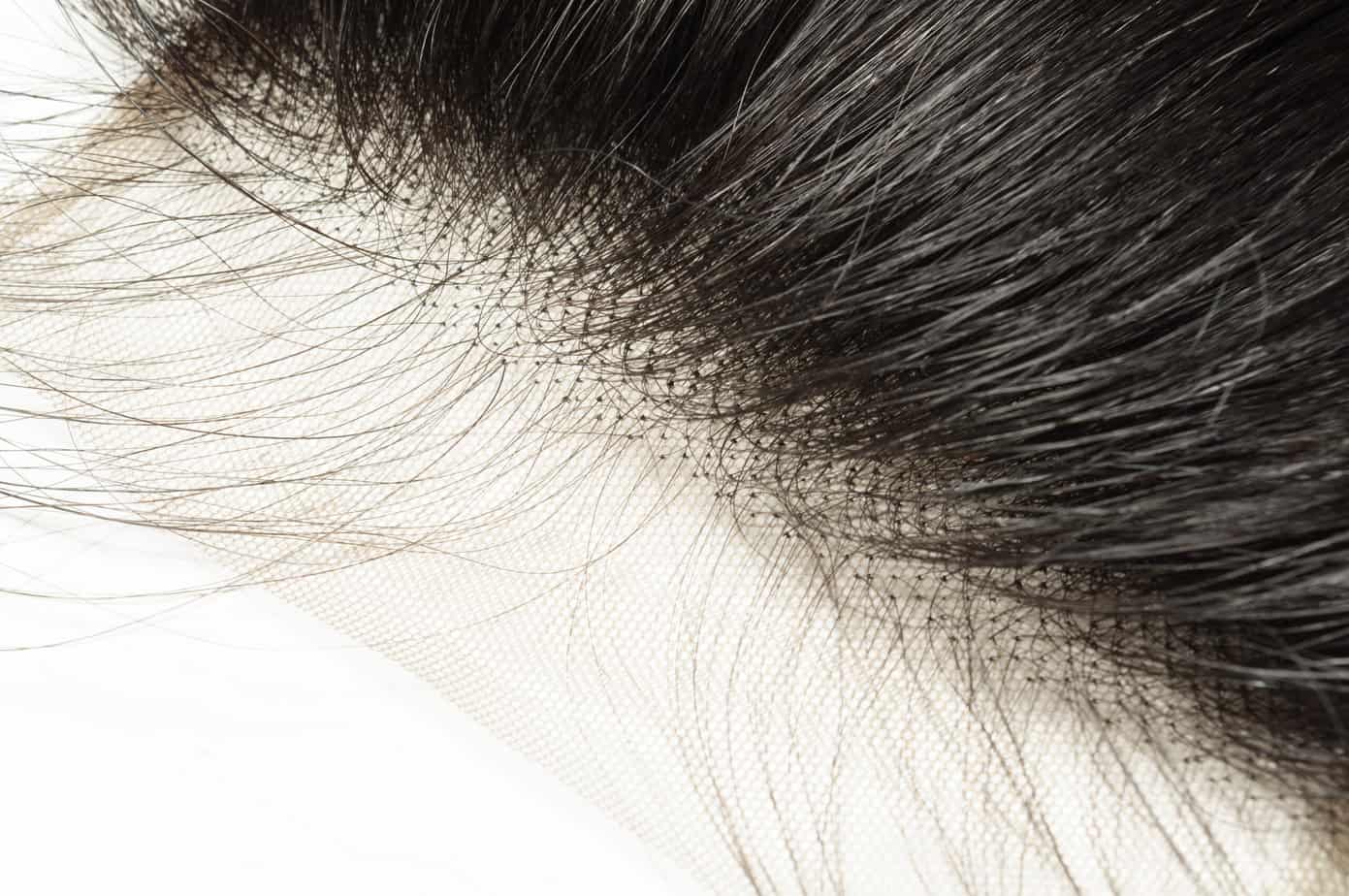
It is typically flesh-toned, helping it mimic the look and texture of human skin. Individual strands of hair are then inserted into the lace, which makes it look like they're sprouting from your scalp.

Free 50-page guide
Your hair is already growing. The problem is keeping it.
On average, hair grows a third to half an inch a month, and curlier hair tends to grow more slowly. If your length looks stuck, that’s your hair breaking off as fast as it grows in. Here are the seven causes of breakage and the weekly routine that stops them.
Free. An email every few days for two weeks, then one every Thursday, plus the odd extra. Unsubscribe anytime.
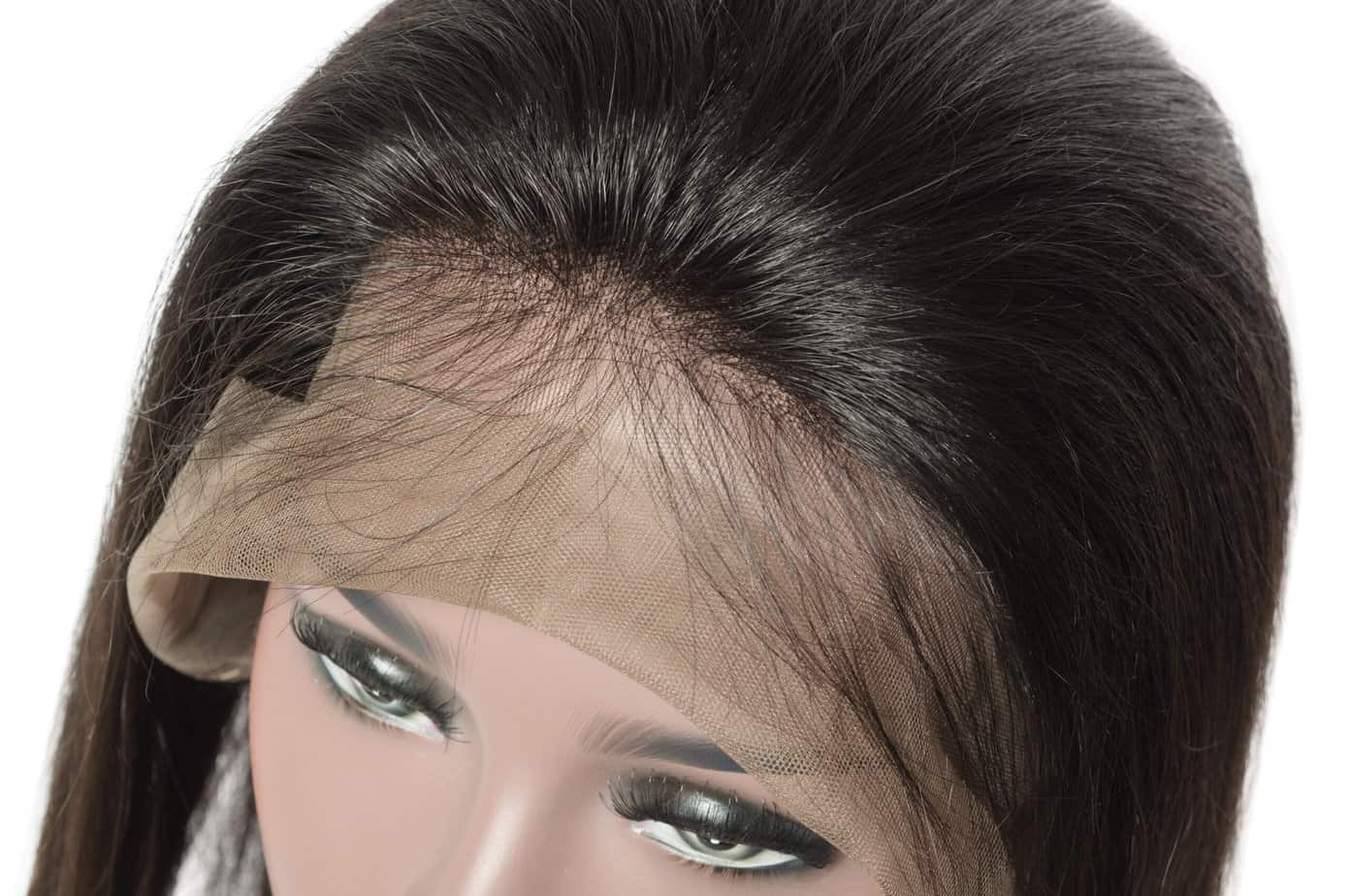
Because the lace looks like your skin, you'll have plenty of room to play around with styling. You can switch between a side and middle part anywhere within the lace, and a low ponytail can work, too.
The rest of the wig usually has a sturdier mesh cap with rows of hair called wefts. That's why XRS Beauty Hair suggests skipping high ponytails and high buns, since pulling the hair up can expose the wefts behind the lace. If you want to wear your hair up, look for a 360 lace or full lace wig.
Here's where the lace sits on a lace front wig, compared with other lace wigs.
Where the lace sits on each wig type
The shaded area is the lace, and it's the only part of the wig you can part or pull back without showing the cap. The dot marks your crown.
4x4 closure
A 4-inch square of lace at the front. Part it in the middle or a little to one side.
13x4 lace front
Lace from ear to ear, 4 inches back. Part it anywhere across the front.
13x6 lace front
Lace from ear to ear, 6 inches back. Room for a deeper side part.
360 lace
Lace all the way around the edge, so you can pull your hair up into a high ponytail.
Full lace
Lace over the whole cap. Part it anywhere, and wear it up or down.
Each head is seen from above, with the face at the top. Lace depth is drawn to scale on an average head, about 14.5 inches from the front hairline to the nape.
What Is Synthetic Hair Made Of?
Synthetic hair is made from man-made fibers instead of human hair. These materials go through a ton of processing to take on a texture similar to hair. The most common fibers in synthetic wigs are:
- Modacrylic - A soft fiber in the acrylic family. Kanekalon, a name you may know from braiding hair, is a modacrylic fiber.
- Polyester - The same family of fiber used in a lot of clothing. Some polyester wig fibers are made to handle heat tools.
- PVC - A type of vinyl. Toyokalon is a PVC fiber made for wigs and hairpieces.
- Collagen - A fiber made from protein that's used in some premium wigs.
Which Is Better: Synthetic or Real Human Hair Wigs?
Whether you think a synthetic or human hair wig is better ultimately boils down to your personal preferences. After all, there are high-quality synthetic hair wigs and low-quality human hair wigs. But on the whole, human hair wigs are usually considered the better of the two.
Human hair wigs look more natural and last significantly longer. The hair is softer and has a realistic shine that's difficult to replicate with synthetic fibers. You can also customize a human hair wig to a greater extent with heat styling and hair dye.
Here's how synthetic and human hair lace front wigs compare.
Synthetic vs. human hair lace front wigs
How the two kinds of wigs compare when you’re deciding which one to buy.
| Synthetic lace front | Human hair lace front | |
|---|---|---|
| Made from | Man-made fibers, like modacrylic, polyester, or PVC | Real human hair, often from more than one person, and often bleached and then dyed |
| After you wash it | The style is heat-sealed in, so the curl or wave comes back once it dries | You’ll need to style it again, just like your own hair |
| Heat tools | Only if it’s labeled heat-resistant or heat-friendly, and only up to the temperature on the label | Yes, with a heat protectant |
| Hair dye | Regular hair dye and bleach won’t work | Yes, though dye and bleach can weaken the hair |
| Weight | Often lighter, so it can feel cooler | Often heavier |
| How long it lasts | About 3 to 9 months if you wear it most days | About 9 months to 3 years |
| Price | Usually costs less | Usually costs more |
Based on wig guides from Macmillan Cancer Support, Cancer Research UK, and Breastcancer.org, and fiber details from Kaneka and Denka. Always follow the care directions that came with your wig.

Are Synthetic Wigs Good?
Although human hair is the higher quality choice, there are some benefits to going the synthetic route. In addition to being less expensive than human hair, synthetic fibers are manmade and come in a wide range of colors, lengths, and textures.
Synthetic hair is also good at maintaining its shape, which can shorten your styling time and reduce the amount of maintenance you'll have to do. And the benefits don't end there!
Synthetic hair wigs are often lighter than human hair wigs, which can help keep you cooler (Macmillan Cancer Support).
Another reason synthetic hair is a great choice is that it doesn't react the same way that human hair does. So while your natural hair may become frizzy on a hot and humid day, synthetic hair is less likely to react.

What Are the Disadvantages of Synthetic Wigs?
Synthetic hair wigs have their benefits, but these wigs aren't going to work for everybody. In this section, we'll break down some of the main advantages and disadvantages of wearing synthetic hair wigs. Use the information to help you determine if they can meet your needs.
- Some aren't heat resistant - Some synthetic wigs can handle hot tools, but others can't. Check your wig's label before using a flat iron or curling iron, and don't go above the listed temperature. For example, Kaneka recommends styling its heat-friendly futura fiber at about 356°F (180°C).
- They're less durable - Unfortunately, synthetic fibers aren't as resilient as human hair. They're prone to tangling and can become fuzzy and matted quickly. Because they aren't able to hold up to the same wear and tear, a synthetic wig you wear most days usually lasts about 3 to 9 months (Breastcancer.org). A human hair wig can last about 9 months to 3 years (Cancer Research UK).
- Some are too shiny - Some shine is good, but too much can leave your hair looking fake and plasticky. Most synthetic hair wigs have an unnatural shine that tips people off to the fact that the wig isn't real hair.
- You can't use hair dye on them - Unlike human hair wigs, synthetic hair wigs can't be colored with regular hair dye or bleach. Those products are made to soak into a human hair strand. Dyes made for polyester, like iDye Poly, can color some synthetic wigs, and so can markers or paint. But the results can be unpredictable, unrealistic, and inconsistent.
- They can cause allergies - Some people may react to the dyes, fibers, glue, or tape used with a wig, especially if they have sensitive skin or eczema. A 2024 review linked dye released from synthetic wigs to allergic scalp reactions (Hwang et al., 2024). A 2021 report also described irritation from synthetic hair extensions in 10 women prone to eczema (Dlova et al., 2021). If you notice redness, itching, burning, or a rash, remove the wig and stop using the product that may be causing the reaction. If it doesn't clear up, see a board-certified dermatologist.
How to Make a Synthetic Wig Look Real
Wearing a synthetic wig can be a fun and easy way to switch up your hairdo. Although there's a lot to love, synthetic hair wigs can look fake and make it obvious that you're wearing a hairpiece. Fortunately, there are a few easy ways to make your synthetic wig look like it's grown from your scalp.
Reduce the Shine
As mentioned earlier, synthetic hair wigs can be excessively shiny, making them look artificial. The good news is that this is an easy problem to fix.
Before wearing your wig, sprinkle a little dry shampoo into the hair. The shampoo will coat the fibers and give them a duller, more realistic finish. Don't have dry shampoo? You can use baby powder instead!

Cut and Style Your Lace Front Wig
Most synthetic hair wigs come pre-styled, but you can cut and style them to better fit your facial shape and personal style. To do that, put your wig on and examine it in a mirror.
Turn your head from side to side to figure out how to make it more flattering. Then, use a sharp pair of hair shears to carefully trim and shape the wig to your desired shape.
If your wig still has extra lace past the hairline, trim that, too. Pull the lace forward, away from your forehead, and cut it with small, zigzag snips. Leave about an eighth of an inch of lace in front of the hairline, so you don't cut into the hair.
Our guide on how to put on a lace front wig walks you through every step, including how to test a new wig glue on your skin first.
Add Concealer to the Part
Some synthetic hair wigs come with a visible part that exposes the wig cap. Often, the wig cap doesn't match your natural skin tone and can make it obvious that you're wearing a wig. So if your part is noticeable, brush a bit of concealer onto it. That will make it look like a part of your scalp rather than a wig.

Add Accessories
One of the easiest ways to make your synthetic wig look more natural is to add a few accessories. Scarves, headbands, hair clips, and even hats can help blend your wig into your natural hairline and create a more realistic look.
Just make sure that your accessory fits well and doesn't have any sharp or jagged pieces. Otherwise, it may damage your wig.
Also, give your wig a break from hats and scarves when you can. Macmillan Cancer Support says that wearing something over your wig a lot of the time rubs against the hair, and that can shorten the wig's life.
Mess Your Hair Up a Little Bit
The most important tip for making your synthetic wig look natural is to mess things up a bit. Human hair isn't perfect. It moves and frizzes and sometimes has a mind of its own!
By comparison, synthetic hair wigs are sometimes stiff and look almost too perfect. So before you put on your wig, shake it out. Then, when styling it, use your fingers to fluff and tousle it a bit to create a more realistic texture.
Frequently Asked Questions
What's the Difference Between a Regular Wig and a Lace Front Wig?
A regular wig has rows of sewn hair, called wefts, that run all the way to the front edge of the cap. A lace front wig has a strip of sheer lace along the front instead. Each hair is tied into the lace one at a time, so the hairline looks like hair growing from your scalp. You can also part a lace front anywhere within the lace, while a regular wig usually keeps the part it came with.
How Long Can You Wear a Synthetic Lace Front Wig?
A synthetic lace front wig that's glued down is usually worn for several days at a time, while a glueless wig can come off every night. How long each install lasts depends on the adhesive you use, your hair's growth rate, and your scalp's oiliness. Always follow the directions on your adhesive's label. We recommend removing your wig and cleaning your natural hair and scalp at least once every two weeks.
To maximize your wig's longevity, maintain a consistent cleaning and styling routine, store the wig properly when not in use, and protect it from heat and friction. Combining these best practices will help you enjoy the polished look of your synthetic lace front wig for an extended period, making it a cost-effective and versatile option in your hair wardrobe.
Can You Sleep in a Synthetic Lace Front Wig?
We don't recommend sleeping in a synthetic lace front wig because it can cause friction between the wig and your hairline, leading to breakage, thinning edges, or other hair damage. It can also cause tangling and matting of the wig hair. It is best to remove the wig before sleeping and store it properly.
Can You Pluck a Synthetic Lace Front Wig?
It's possible to pluck a synthetic lace front wig, but be very careful to avoid damaging the wig. Use tweezers to pluck the hair in a natural pattern. Plucking can create a more natural hairline and reduce the density of the wig hair for a more natural look. However, excessive plucking can cause bald spots and damage.
Can You Reuse a Synthetic Lace Front Wig?
Reusing a wig can save money and reduce waste, but it's important to ensure the wig is in good condition and properly cleaned before each use. After removing the wig, clean it and store it on a wig stand to maintain its shape and prevent tangling. Regularly brushing and detangling the wig hair can also prolong its lifespan.

How Long Does a Synthetic Lace Front Wig Last?
With proper care, a synthetic lace front wig usually lasts about 3 to 9 months if you wear it most days. How often you wear it, along with heat, sunlight, friction, and styling products, can affect its lifespan. Wash the wig only when needed, follow its care instructions, and store it properly between wears.
How Much Does a Synthetic Lace Front Wig Cost?
The cost of a synthetic lace front wig varies depending on the brand, style, and quality. The price range for synthetic lace front wigs can start from $20 and go up to $300 or more. Higher-priced wigs often have higher-quality hair fibers and more intricate designs, while lower-priced wigs may have fewer features and less durability.
Can You Wash a Synthetic Lace Front Wig?
Synthetic lace front wigs can be washed using a shampoo and conditioner made for synthetic wigs. Following the manufacturer's instructions for washing the wig is essential to prevent damage or tangling. Overwashing or using harsh products can damage the wig fibers and shorten the wig's lifespan. Rinse the wig in cool water, since hot water can damage synthetic fiber, and let it air-dry on a wig stand.
Can You Swim in a Synthetic Lace Front Wig?
We don't recommend swimming in a synthetic lace front wig, and wig makers like HairUWear advise against it. Water can loosen the adhesive and cause your wig to shift or slip off. It's best to remove the wig before swimming and wear a swim cap instead.
Can You Use a Flat Iron on a Heat-Resistant Synthetic Wig?
Yes, as long as the wig is labeled heat-resistant or heat-friendly and you stay at or below the temperature listed on the label. Keep in mind that once you heat-style a heat-friendly synthetic wig, it may keep its new shape even after you wash it, according to HairUWear. If your wig isn't labeled heat-friendly, don't use a flat iron or curling iron because the heat can melt the fibers.
Related Articles
- Can You Put Mousse on a Synthetic Wig?
- Can You Dye a Synthetic Wig with Regular Hair Dye?
- How Long Do Lace Fronts Last?
Whether your hair needs a break from styling or you want to explore new hairstyles, a synthetic lace wig might be just what you need. Wigs are protective, inexpensive, and come in a wide variety of lengths, colors, and styles.
With the proper care and maintenance, a synthetic lace front wig can last for several months. So why not take the plunge and try out that new synthetic wig you've had your eye on? If you do, we hope that the information we've gone over today is just what you were looking to find!