Curl Centric: Curly Hair Products, Hairstyles, and Hair Growth Techniques

  • Hair Care
  • Hair Growth
  • Hairstyles
  • Locs
  • Products
  • Resources
    • Hair Calculators
    • Natural Hair Dictionary
    • Curly Hair Questions
  • Take the quiz
menu icon
go to homepage
  • Hair Care
  • Hair Growth
  • Hairstyles
  • Locs
  • Products
  • Resources
    • Hair Calculators
    • Natural Hair Dictionary
    • Curly Hair Questions
  • Take the quiz
search icon
Homepage link
  • Hair Care
  • Hair Growth
  • Hairstyles
  • Locs
  • Products
  • Resources
    • Hair Calculators
    • Natural Hair Dictionary
    • Curly Hair Questions
  • Take the quiz
×
Home » Hair Care Advice

How to Dry Hair Without a Blow Dryer: Step-by-Step

Kenneth ByrdBy Kenneth ByrdMBA · 15+ years in hair care · Co-founder of Curl CentricUpdated Sep 13, 20266 min read · Reviewed by Kira Byrd

Evidence-basedPublishing since 2008May contain affiliate links
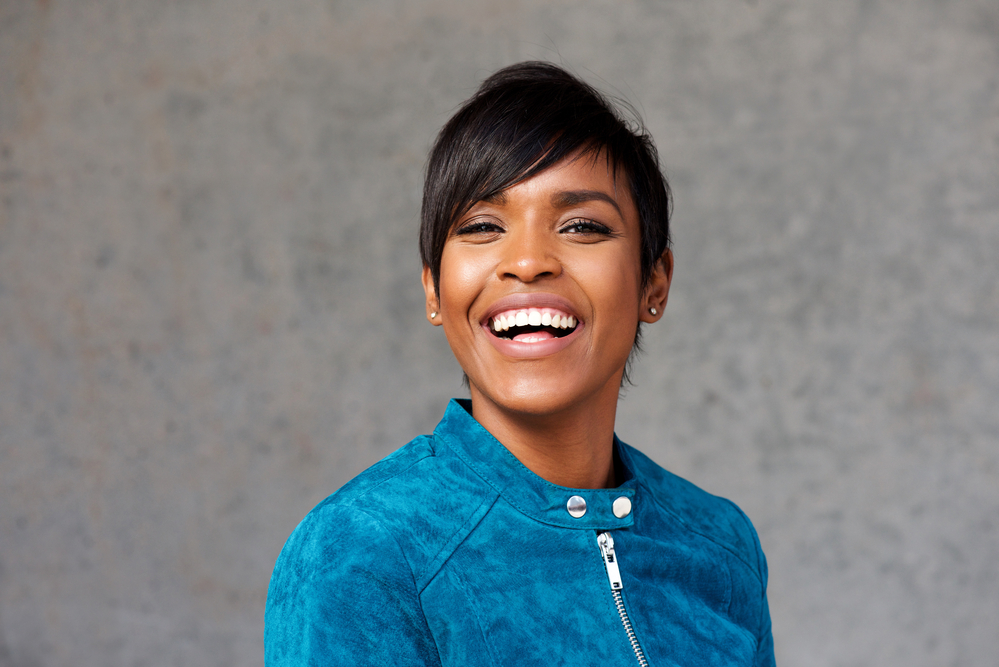
A smiling woman in a blue suede jacket with a short dark pixie cut and side-swept bangs, against a gray wallPin

There's a good reason why blow dryers are one of the most popular styling tools around. They help you dry and smooth your tresses in one step and can even straighten or curl your hair!

But sometimes, you want to skip the heat. Whether you're looking to cut down on damage or just want to try something new, we've got you covered!

This article will look at alternative ways to dry your hair, teaching you how to dry hair without a blow dryer using our detailed DIY step-by-step tutorial.

How to Dry Hair Without a Blow Dryer: Step by Step

Although blow-drying your hair is convenient, it can lead to all sorts of damage. And even if you don't mind using heat, who wouldn't want to have a few more techniques in their repertoire?

Now that we've gotten your attention, here are some of the best alternatives to blow-drying your hair. 

Why Your Hair Isn’t Growing - free guide from Curl Centric

Free 50-page guide

Your hair is already growing. The problem is keeping it.

About a third of an inch a month on textured hair, not the half inch you’ve read. If your length looks stuck, that’s your hair breaking off as fast as it grows in. Here are the seven causes of breakage and the weekly routine that stops them.

Free. One email a week after that. Unsubscribe anytime.

Air-Dry Your Hair

The easiest way to dry your hair without a blow dryer is to let it air dry. The amount of time it takes for your hair to dry varies depending on your hair's length, thickness, how much product is on it, whether it's styled, how it's styled, etc.

But on average, it'll take between two to five hours on average. Air drying helps you avoid all the damage associated with blowdryers while saving you time and energy. 
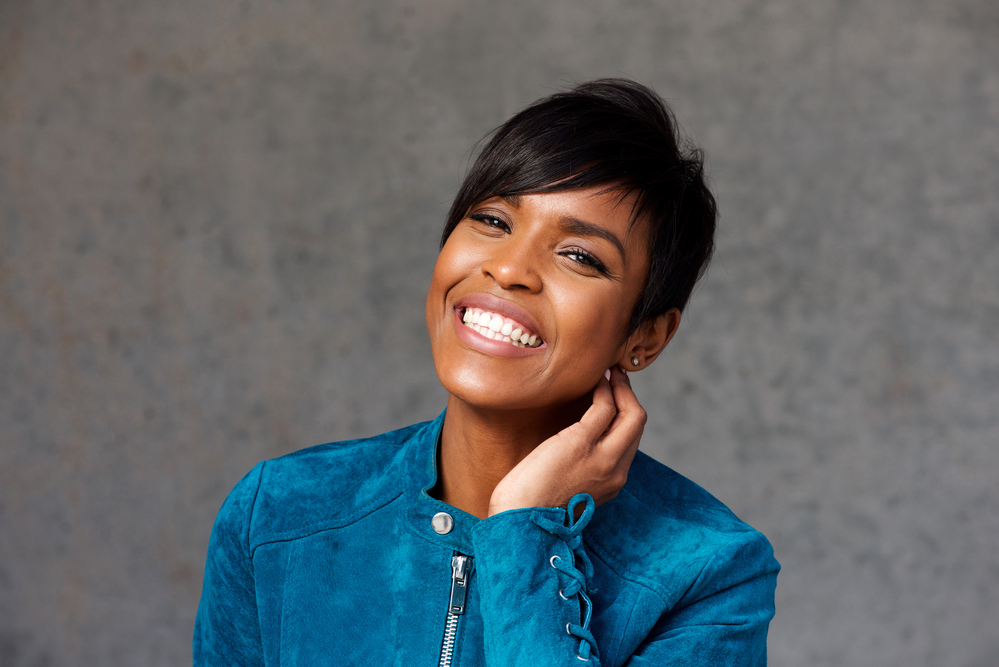
A woman tilting her head and touching the back of her neck, her short dark pixie brushed to one sidePin

Dry Your Hair With a Microfiber Towel

Did you know that switching out your regular towel can cut your drying time in half? Microfiber towels are made from tiny fibers that have a much greater surface area than the ones found in regular towels.

They can dry your hair in a fraction of the time and help you avoid all those unpleasant towel-drying side effects like frizz, tangles, and breakage. 

So, if you're looking for a way to speed up your drying routine, try dabbing at your roots with a microfiber towel. That will suck up the excess water before it can flow downwards and soak the rest of your hair.

Once your roots are mostly dry, part your hair and gently blot each section until it's no longer dripping wet. After that, the only thing left to do is wait. Your hair should finish drying in record time. 
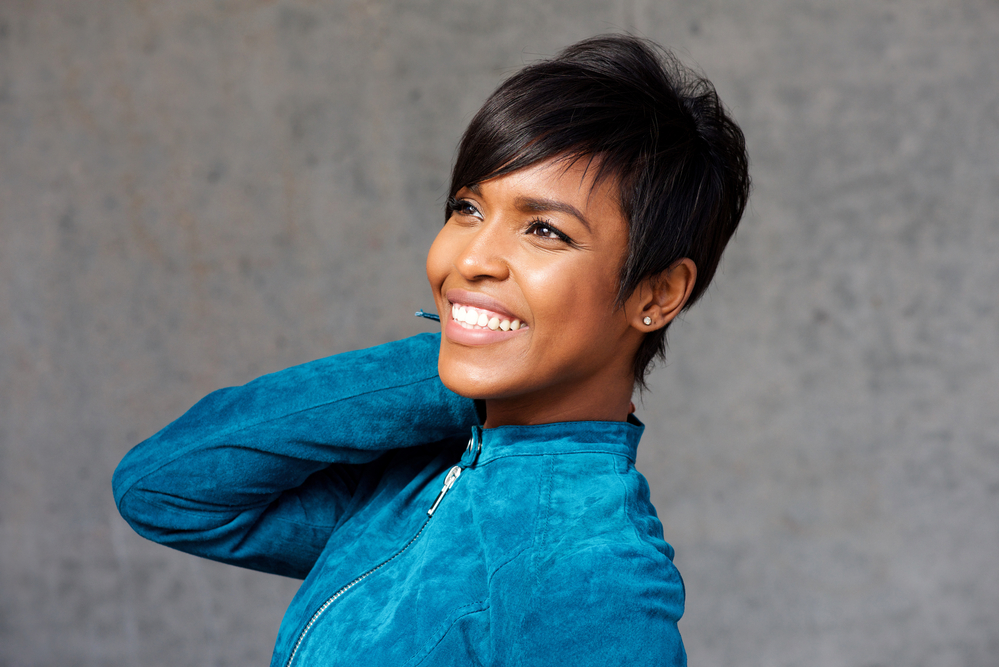
A woman turned sideways, one hand behind her neck, her short dark pixie and long bangs swept across her foreheadPin

Comb Through Your Hair With a Wide-Tooth Comb

Running a comb through your hair not only gets rid of tangles but it's also a great way to dry your hair! Wondering why that's the case?

When you comb through your hair, the comb's teeth will separate your hair into thin, horizontal sections. That will encourage airflow and ensure your scalp is exposed to the air.

And as a result, your hair will dry much more quickly!

Start by combing through your hair as soon as you step out of the shower. Then, run your wide-tooth comb through your hair every ten minutes or so to ensure the air circulates around all of your strands. 
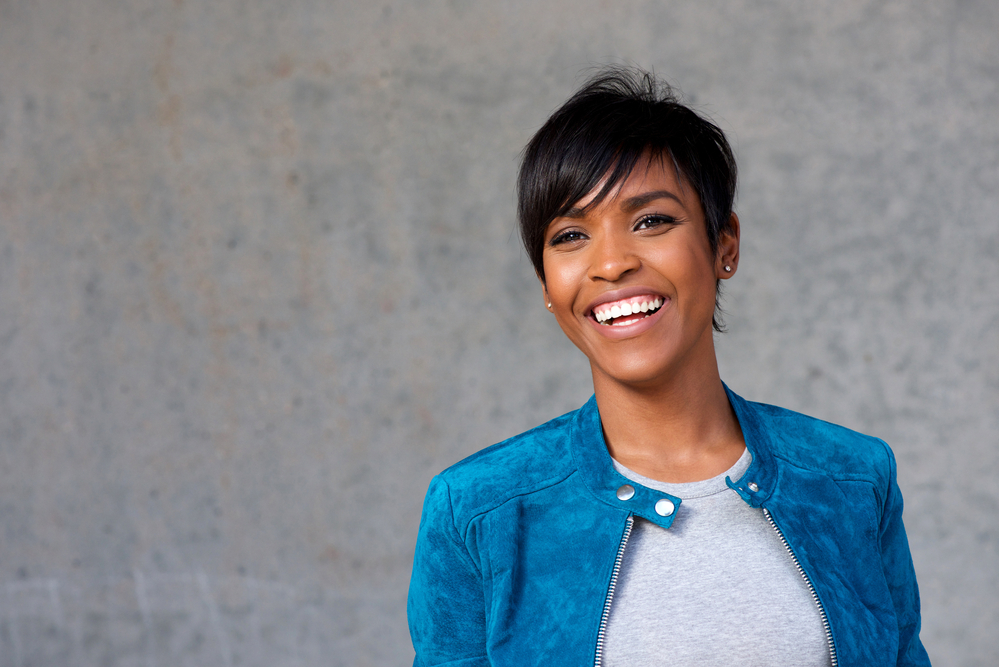
A woman laughing in the blue suede jacket over a gray t-shirt, her short dark pixie combed to one sidePin

What Is the Healthiest Way to Dry Your Hair?

Although air drying is typically considered the least damaging way to completely dry your hair, this isn't necessarily the case. Human hair can absorb as much as 30% of its weight in water.

When your hair absorbs water, the delicate spongey core swells. Then, as the water evaporates, the core shrinks back to its original size.

The process of stretching and shrinking causes trauma to your hair. 

And the longer your hair stays wet, the worse that damage is. Surprisingly, the healthiest way to dry your hair is to use a combination of blow drying and air drying.

After blotting your hair with a microfiber towel, let it air dry until it's about 70% dry.

Then, use a blow dryer on a cool heat setting to finish drying your locks. That will reduce the amount of time your hair spends wet and speed up the drying process. 
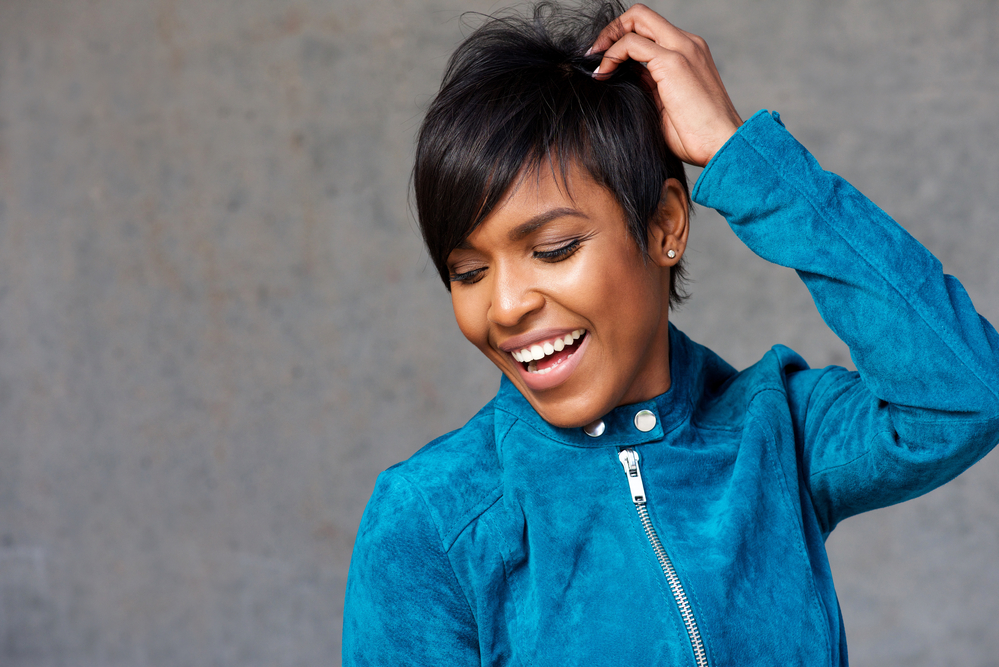
A woman looking down and laughing as she runs a hand up into the back of her short dark pixie cutPin

Does Drying Your Hair With Cold Air Damage It?

It's a common misconception that blow-drying your hair with cold air means your locks will remain damage-free. Unfortunately, this isn't always the case. Blow drying of any kind exposes your strands to damage, even if you don't use heat.

The good news is that cold air is significantly safer and less harmful than heat. So if you switch to blowdrying your hair with cold air, you can avoid the majority of the damage.

Not only is drying your hair with cool air less damaging, but it can also create better-looking results. Cold air helps seal your hair cuticles, which will leave your strands smoother, shinier, and easier to manage. 

A woman in a gray t-shirt with the blue suede jacket slung over one shoulder, her short dark pixie swept backPin

Which Hair Dryer Is Least Damaging?

The main reason people ditch their blow dryers is to cut down on heat damage. And it makes total sense. Heat damage is irreversible and leaves your hair dry, brittle, and full of split ends.

But it's important to note that not all blow dryers are created equally. So, in this section, we'll take a look at some of the least damaging types of blow dryers.

Ceramic Blow Dryers 

There's a reason why ceramic hot tools are considered the gold standard. Ceramic heats up quickly and evenly, making you less likely to deal with damaging hot spots.
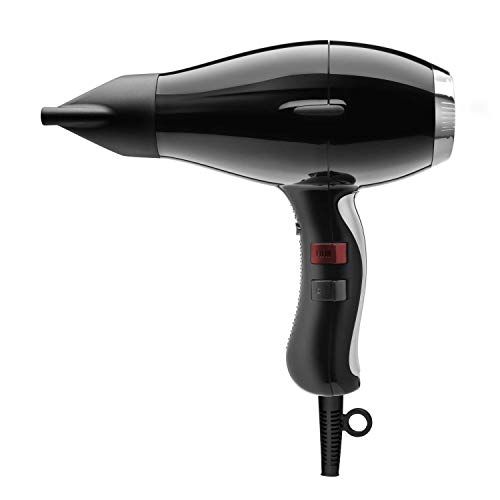
Elchim 3900 Healthy Ionic Ceramic Hair DryerPin
Elchim 3900 Healthy Ionic Ceramic Hair Dryer
Check Price
Curl Centric may receive compensation if you make a purchase using this link, at no additional cost to you.
10/13/2026 01:14 am GMT

They're also much more gentle than standard metal blow dryers because they dry your hair from the inside out with infrared heat. Switching to a ceramic dryer will reduce damage and ensure that your hair dries evenly every time.

Ionic Blow Dryers

Ionic hair dryers are one of the least damaging types of blow dryers due to the unique way in which they work. Rather than hot air, ionic dryers rely on ions to dry your strands.
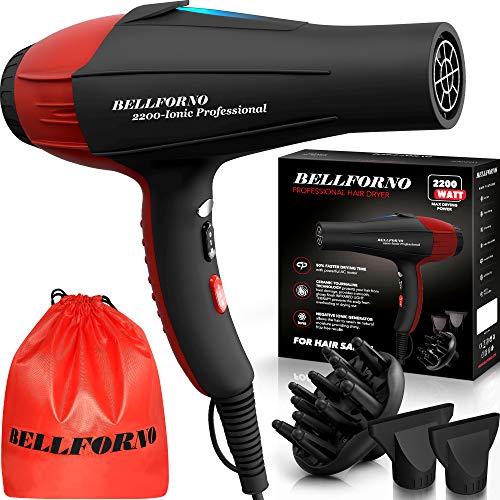
Professional Ionic Salon Hair Dryer with Diffuser and Concentrator Nozzle AttachmentsPin
Professional Ionic Salon Hair Dryer with Diffuser and Concentrator Nozzle Attachments
Check Price
Curl Centric may receive compensation if you make a purchase using this link, at no additional cost to you.
10/13/2026 01:48 am GMT

The negative ions generated by an ionic blow dryer break apart the positively charged water molecules in your hair.

They scatter the water molecules before they have the chance to sink into your strands. That helps speed up your drying time and cuts down on things like frizz and tangles.

Tourmaline Blow Dryers 

Tourmaline blow dryers are another excellent option. They generate negative ions, which help smooth your hair and seal in moisture. As a result, tourmaline dryers leave your strands smooth, shiny, and frizz-free.
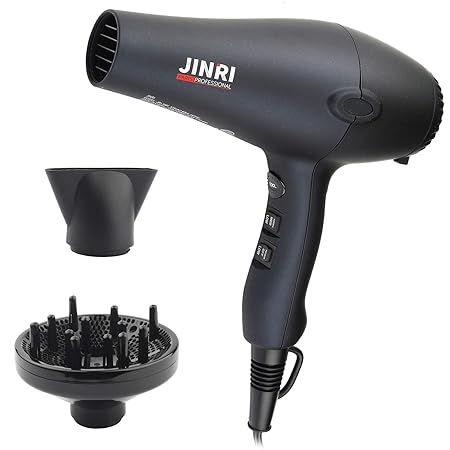
JINRI Paris Professional Salon Pro Tourmaline Hair Dryer with Diffuser and ConcentratorPin
JINRI Paris Professional Salon Pro Tourmaline Hair Dryer with Diffuser and Concentrator


Check Price
Curl Centric may receive compensation if you make a purchase using this link, at no additional cost to you.
10/14/2026 01:56 am GMT

Another benefit of switching to a tourmaline blow dryer is that they can dry your hair up to 40% more quickly than standard blow dryers. And the less time your hair spends exposed to heat, the less heat damage your hair will incur. 

Reverse Hair Dryers

One of the newest types of hair dryers to hit the market is reverse hair dryers. While other blowdryers blast your hair with high-pressure air, reverse hair dryers use vacuum suction.

New RevAir Reverse-Air Dryer Essentials BundlePin
New RevAir Reverse-Air Dryer Essentials Bundle
Check Price
Curl Centric may receive compensation if you make a purchase using this link, at no additional cost to you.
10/14/2026 12:56 am GMT

The sucking motion creates tension, which helps the dryer smooth, straighten, and dry your hair in one step.

And since the machine does all the work, you won't have to use any damaging brushes. Reverse dryers create less tension than traditional dryers and can dry your locks in a fraction of the time. 

Related Articles

  • How to Dry Hair With a Towel
  • Why Does My Hair Take So Long to Dry
  • How Long to Sit Under Hooded Dryer

Ditching your blow dryer might be just what your hair needs. And although blow dryers are excellent at drying and styling your locks, they aren't your only option.

In fact, there are several alternative ways to dry your hair or speed up the process.

And while all of these methods are great on their own, you can try combining them for even faster-drying locks. That said, we hope this article has provided you with all the information you were after, and we wish you the best on your hair care journey!

PinterestXFacebookReddit

More Hair Care Advice

  • Smiling woman with large knotless braids and a center part, resting one hand on an ornate bronze door
    Knotless Braids: Styles, Cost, and How Long They Last
  • Black woman with a full, defined curly afro smiling outdoors in a black trench coat, with blurred orange autumn leaves behind her
    Wash Day Routine: Your Steps in the Right Order (Free Builder)
  • Black woman in a black tank top with her short natural hair swept up off her neck, hand raised to her ear
    Low Tension Protective Styles: Compare Cost, Time, and Tension
  • Smiling woman with about a dozen cornrows braided straight back, in a red sweater and wooden hoop earrings
    Cornrows: Styles, Cost, and How Long They Last in Your Hair
Kenneth Byrd

About the author

Kenneth Byrd

Co-founder and Managing Partner

Publishing on textured hair since 2008MBA, University of Alabama at BirminghamExecutive education, WhartonTop 40 Under 40, Birmingham Business Journal

Kenneth does the research behind the guides here: reading the studies and checking whether a claim holds up before it gets published, under our editorial guidelines. Outside Curl Centric he leads an operations organization of more than 1,000 people, and he serves on the board of Oasis Counseling for Women and Children. Curl Centric's hair typing system is the first listed reference in a peer-reviewed paper in the International Journal of Women's Dermatology, and it is cited by Wikipedia.

More about KennethAbout Curl Centric

Kira Byrd

Hey, I’m Kira

Curl Centric is run by me and my husband Kenneth. We’ve been publishing evidence-based hair care since 2008 to help you care for your curls with confidence.

More about us →
Why Your Hair Is Not Growing: free guide

Free guide

Your hair isn’t growing slowly. It’s breaking.

About a third of an inch a month on textured hair, not the half inch you often read. If your length looks stuck, your hair is breaking off about as fast as it grows in. Here are the seven causes and the weekly routine that stops them.

Free. One email a week. Unsubscribe anytime.

Start here

What is natural hair?Find your hair typeWhat is hair porosity?Build a hair regimenHair calculators

Footer

Why Your Hair Isn't Growing - free guide from Curl Centric

Free 50-page guide

Your hair is already growing. The problem is keeping it.

About a third of an inch a month on textured hair, not the half inch you've read. If your length looks stuck, that's your hair breaking off about as fast as it grows in. We'll send you the seven causes of breakage and the weekly routine that stops them.

Free. One email a week after that. Unsubscribe anytime.

Written and reviewed by Kenneth and Kira Byrd Independently owned, publishing since 2008 950+ guides, fact-checked before publishing Editorial and advertising teams kept separate

Curl Centric®

Evidence-based curly hair care from Kenneth and Kira Byrd, a husband-and-wife team teaching textured-hair techniques since 2008.

Start Here

Natural Hair 101 Hair Typing Guide How to Grow Natural Hair Building a Hair Regimen Deep Conditioning Natural Hair Dictionary

Free Tools

Calculators & Printables Hair Growth Calculator Shrinkage Calculator Choosing Your Products Curl Science Podcast Browse All Articles

Who We Are

Kira Byrd, Co-founder Kenneth Byrd, Co-founder About Curl Centric Editorial Guidelines Contact Us FAQs Press Kit
Natural Hair Community, LLC 1401 Doug Baker Blvd, Ste 107 604, Birmingham, Alabama 35242 1 (844) 424-2875 admin@curlcentric.com Privacy Policy Terms & Conditions Sitemap

CurlCentric.com is an independent, advertising-supported publisher. Curl Centric® services, articles, content, and products are provided for informational purposes only. Curl Centric does not provide professional medical advice, diagnosis, or treatment. Curl Centric follows a strict editorial policy that produces accurate, factual, and honest content to help you make the right hair care decisions. Curl Centric has an affiliate relationship for some of the products that we recommend. We may receive compensation if purchases are made using our links, at no extra cost to you. CurlCentric.com is a participant in the Amazon Associates Program. As an Amazon Associate, we earn from qualifying purchases. To ensure that we maintain our editorial integrity, our editorial team does not receive direct compensation from our sponsors and advertisers. The product recommendations and advertisers that appear on Curl Centric are from companies that compensate us through an exclusive, full-service ad management partner. This compensation does not influence the content we publish or the product reviews shown on our site.

Copyright © Curl Centric®. All rights reserved. Curl Centric® is a trademark of Natural Hair Community, LLC.

Back to top ↑