Changing your hair color is supposed to be an exciting time, but brassiness can quickly ruin the experience, as well as your hair.
Brassy results are more common than you think, so knowing what to do when it happens is essential. To help you out, we'd like to share with you everything you need to know about brassy hair and how to get rid of it.
What is Brassy Hair?
Brassiness is the warm pigment underneath your color showing through. Every head of hair has warm pigments beneath the color you see. Lightening exposes those pigments, leaving behind yellow, orange, or red tones depending on how dark your hair was when you started.
Brassiness refers to warm tones that appear in the hair after bleaching or dyeing it. It happens most often when going from dark hair to platinum blonde hair.
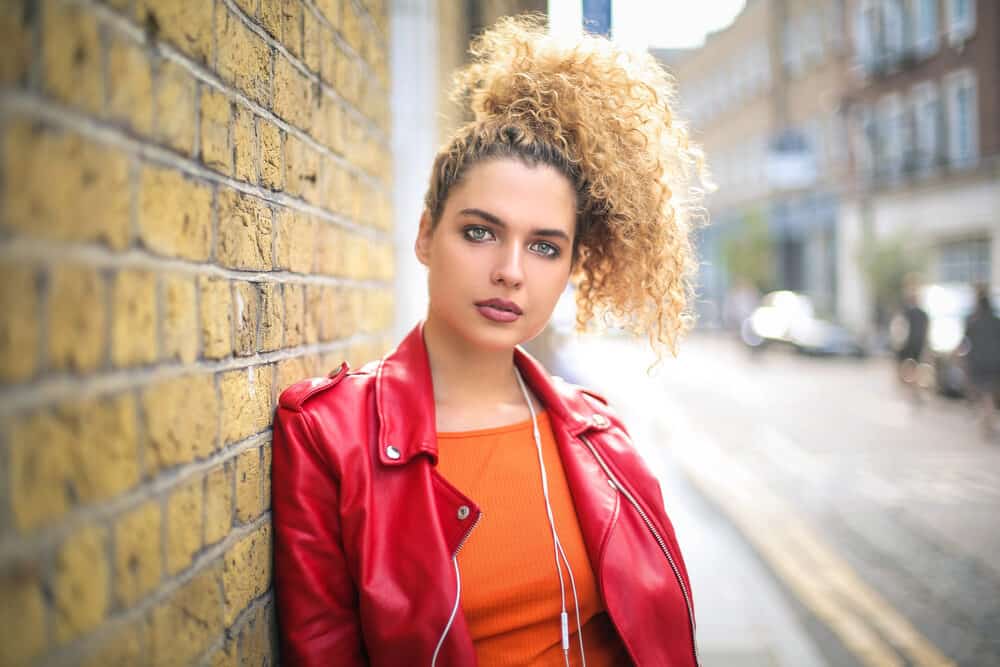
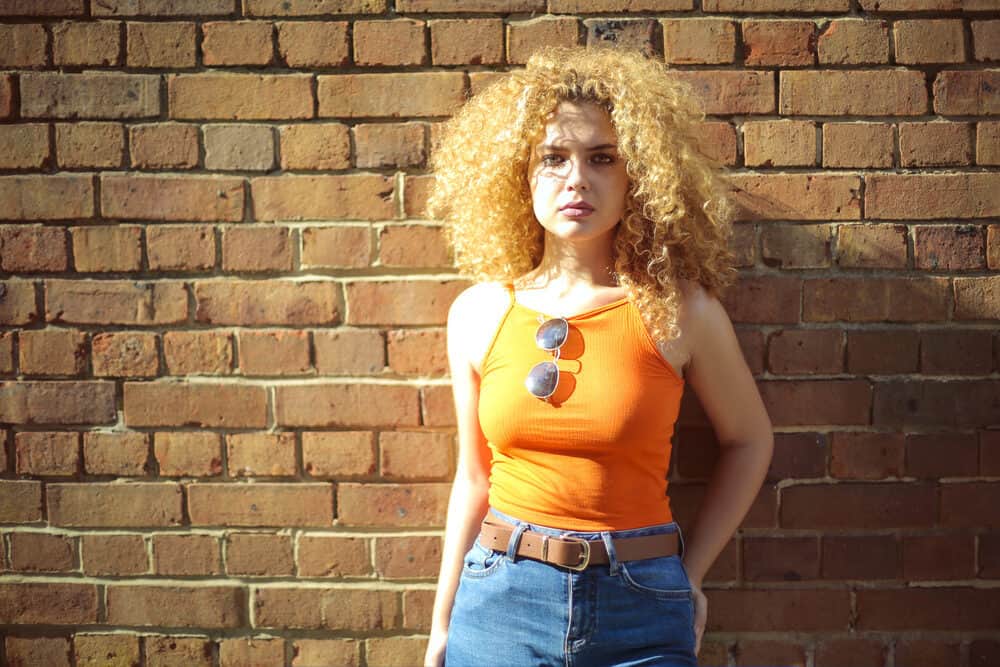
If you colored your dark hair a lighter color and you've got orange, yellow, or gold tones at the roots or lengths of your hair, then you're dealing with brassiness.

Free 50-page guide
Your hair is already growing. The problem is keeping it.
On average, hair grows a third to half an inch a month, and curlier hair tends to grow more slowly. If your length looks stuck, that’s your hair breaking off as fast as it grows in. Here are the seven causes of breakage and the weekly routine that stops them.
Free. One email a week after that. Unsubscribe anytime.
Why Does Brassiness Happen?
Now that you know what brassiness is, let's dive a bit deeper. Several things could be to blame for brassiness, and we'll cover each of them in this section.
Natural Pigment
The most common cause of brassiness is leftover pigment in your natural hair. Permanent color uses a hair developer containing hydrogen peroxide and often an alkaline ingredient like ammonia to open the cuticle and lift some of your natural pigment.
Bleach goes a step further. It combines persulfates with developer to remove more pigment from your hair. If the process stops before enough pigment has been removed, the remaining warmth can make your color look brassy.
Dark hair has more pigment molecules, making it harder to lift evenly and entirely. When the pigment is only partially removed, you could end up with strands of hair that have a brassy look.
Hair Products Can Cause Brassy Tones

Sometimes, brassiness can be caused by using hair products that change the color of your hair.
For instance, when you use a shampoo or conditioner with a yellow or orange tinge, some of the colors could bind to your hair and make it turn brassy.
Fading Toner
If you've bleached and toned your hair, when your toner fades, you'll start to see the tones that the toner initially neutralized.
How Heat and Sun Fade Your Hair Color
Sunlight and heat can both change or fade your hair color, allowing the warm tones underneath to show through. Many people underestimate sunlight. Researchers have found that UVA exposure breaks down the natural pigment in human hair, and another study found that sunlight fades permanent and semi-permanent hair color.
High heat from flat irons and curling wands can also change your hair color and add more damage to strands that have already been chemically treated.
You don't have to give up heat styling to slow the fading. Use the lowest temperature that gives you the result you want, apply a heat protectant, and wear a hat when you'll be outside for a long time. Before swimming, saturate your hair with clean water so it absorbs less pool water.
What Hard Water Leaves on Your Hair
Hard water contains high levels of dissolved calcium and magnesium. Depending on your water supply, metals like copper and iron may also be present. Over time, these minerals and metals can build up on your strands, dull your color, and make toner take unevenly. Copper is especially noticeable because it can give light, porous hair a green tint rather than a brassy one.
Research on hard water and breakage is mixed. One study found that hair exposed to very hard water lost tensile strength, meaning it broke more easily. However, another study found no significant difference in the strength or elasticity of hair washed with hard water.
A chelating shampoo can help remove mineral and metal buildup. Use one periodically according to the product instructions, and follow it with a deep conditioner if your curls feel dry afterward.
How to Get Rid of Brassy Hair
You may be surprised to find out that there are several causes of brassy hair. Yet, thankfully, there are also several ways to neutralize unwanted warm tones.
In this section, we'll share some tips for how to get rid of brassy hair (and avoid brassy hair altogether).
Use Toner

Hair toners are the ultimate go-to for getting rid of brassy hair. They are formulated to deposit color onto the hair to neutralize unwanted tones, from orange to yellow to gold.
Violet toners neutralize yellow tones, blue tones neutralize orange, and blue-violet toners neutralize gold.
The most important thing to consider when using toners to counteract brassy tones is to choose the proper toner based on the color wheel (read this article).
If your hair is honey blonde and you use a toner meant for light blonde hair, you may not achieve your desired results.
So, as you're choosing a toner, read the instructions on the box to find out how light your hair should be prior to using it.
Here are some general instructions for how to use a toner to neutralize brassiness:
- Mix the toner with the developer according to the instructions on the packaging. Oftentimes, you'll need to mix 1 part toner with 2 parts developer. Also, you have a couple of choices when it comes to developers (10-volume or 20-volume). If you want the results of the toner to last, use a 20-volume developer. If you prefer temporary results, a 10-volume developer is best. There are stronger developers (like 30-volume developer), but we don't recommend using 30 volume or higher for this purpose.
- Once the two parts are thoroughly mixed, use a tinting brush to apply the mixture to your hair. Focus on the brassiest parts of the hair.
- Allow the toner to process for up to 45 minutes. Follow the instructions on the box for the best results.
- After the toner is done processing, baby your hair with a moisturizing shampoo and some conditioner. If your hair is especially dry, deep condition it to replenish the moisture lost during the toning process.
Purple Shampoo: Color Depositing Shampoo

Often, the first thing that people reach for to counteract brassiness is color depositing shampoo, namely purple shampoo (or a purple hair mask).
This is a good idea if you have unwanted yellow tones. But if your hair looks orange or gold, blue or blue-violet shampoo would work best.
In most cases, all you need to do is apply the shampoo to your wet hair, massage it in, and then wait a few minutes for the shampoo to do its work. However, some shampoos may require you to take slightly different steps, so we urge you to follow the instructions on the bottle.
The tone you see determines which product will work. Find yours below before you buy anything.
Start with what you see in the mirror
What your tone is, and what actually cancels it
Toning and lifting do two different jobs, and disappointing results usually happen when you reach for one while your hair needs the other. Toner deposits color to neutralize a tone you don’t want. It can’t make your hair several levels lighter or remove artificial dye. Find the row that matches what you see in daylight, then check the last column before choosing a product.
| What you see | What it actually is | What to reach for | What won't work |
|---|---|---|---|
| Pale yellow | Your hair has lifted far enough for most very light blonde results. The pale yellow is what remains after most of the darker pigment is gone. | Purple shampoo for maintenance, or a violet toner for a stronger result that lasts longer than a few washes. | More bleach if you’ve already reached your target level. It adds damage without correcting the yellow tone. |
| Gold | Your hair is sitting between yellow and orange, which is why purple by itself may not do enough. | A blue-violet shampoo or toner, because it can address both sides of the warmth. | Purple shampoo by itself. It may soften the yellow, but it can leave the orange warmth behind. |
| Orange | Your hair has only lifted partway, so some of its natural warm pigment is still showing. | A blue shampoo or toner if you want to keep the same level and make it look cooler. If you want a lighter blonde, your hair may need more lifting first. | Purple shampoo. Purple neutralizes yellow, while blue is the color that neutralizes orange. |
| Red-orange | Your dark hair may be midway through the lightening process, or artificial red dye may still be sitting in your strands. Your hair history decides which one it is. | If it’s natural pigment and you want to go lighter, your hair may need another carefully planned lightening session after it recovers. If it’s artificial red dye, fade it or use a color remover before deciding whether bleach is necessary. | Toner or colored shampoo by itself. Neither one removes red dye or makes your hair lighter. |
| Green | Green on light, porous hair is often caused by copper buildup from pool or household water. If it appeared after coloring, leftover dye may be responsible instead. | A chelating shampoo containing EDTA if copper is the cause. If the green came from dye, use a clarifying or color-removal plan made for artificial pigment. | Purple or blue shampoo. Neither one removes copper, and adding more blue can make a green cast look stronger. |
| Still dark | Your hair hasn’t lifted far enough for a pale blonde result, so there isn’t a light base for the toner to work on. | More lifting only if your curls are healthy enough, preferably over separate sessions. See a colorist if you’re trying to move more than a couple of levels. | Toner. A light blonde dye also won’t take dark or heavily pigmented hair straight to pale blonde. |
One line covers the whole chart: toning changes the tone at the level your hair has already reached. It doesn’t replace lifting, and it can’t remove artificial dye. If your curls feel gummy, brittle, or start snapping, stop processing them and give your hair time to recover before you do anything else.
Natural Remedies
There's a natural remedy for everything, including brassy hair. But neither remedy below will neutralize yellow or orange as predictably as a properly chosen toner or color-depositing shampoo. If you still want to try them, use them cautiously and keep your expectations realistic.
Apple Cider Vinegar (ACV) Spray
Some use apple cider vinegar (ACV) to get rid of obnoxious yellow, orange, and gold tones and see great results. If you want to give this remedy a try, take the following steps:
- Mix one part ACV with two parts water and put the mixture in a spray bottle.
- Part your hair into four to six sections and secure them with alligator clips.
- Working one section at a time, spray your hair down with the vinegar mixture.
- Allow the vinegar spray to process for 5 to 10 minutes.
- Rinse your hair thoroughly to remove the mixture and get rid of the smell. If you want to shampoo your hair, you can do that as well, but it's not necessary.

Lemon Juice
The acid in lemons is known to lighten up the hair. To make the brassy portions of your hair less noticeable with lemon juice, you'll need lemon juice, water, a spray bottle, and honey. Here are the steps to follow:
- Add a cup of water, 2 teaspoon of honey, and ¼ cup of lemon juice to a spray bottle.
- Shake the bottle to mix the ingredients thoroughly.
- Spray the mixture onto your hair, paying particular attention to the brassiest parts.
- Leave the mixture in your hair for no more than 20 minutes, and stay out of direct sunlight while it sits.
- Wash and condition your hair.
Rinse either remedy out thoroughly, and stop immediately if your scalp stings or your hair feels rough. If the tone doesn't change, don't keep repeating the treatment. A toner or color-depositing shampoo will give you a more predictable result with less guesswork.

Fix Brassy Hair at the Salon
Some color problems are worth handing to a professional. A colorist can choose or mix a toner based on your exact level and undertone, apply it only where you need it, and examine your color under proper lighting instead of relying on a bathroom mirror.
Book a salon appointment if your hair has turned orange or red instead of yellow, if it lightened unevenly, or if you already tried toning at home and the color moved in the wrong direction. Going in early can help you avoid more damage and may cost less than correcting several rounds of at-home color.
How to Prevent Brassy Hair
Preventing brassy hair is easier than correcting it, and most of the work comes down to slowing the fade.
Wash your hair less often and use cooler water when you do. Every wash removes a little toner, and hot water can speed up fading. A color-safe shampoo helps your shade last longer because it cleans more gently than a strong clarifying shampoo.
Add a purple or blue shampoo to your routine before the warmth becomes noticeable. Start with once a week or follow the directions on the bottle. Cut back if your hair begins looking dull or takes on a purple or blue cast.
Protect your hair from sunlight and chlorine, and keep a chelating shampoo on hand if you have hard water. Along with regular deep conditioning, these steps can help your blonde hold its tone longer between salon visits.
Dealing with brassy hair can be frustrating, especially when you don't know what's causing it. Once you identify the tone you see, you can choose the right product and get closer to the hair color you want.