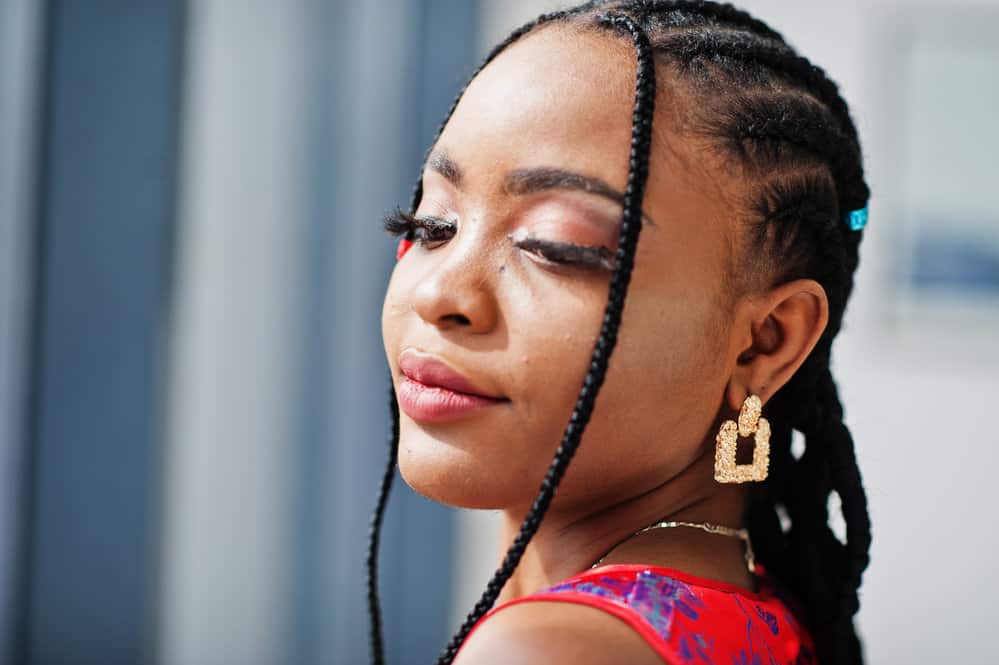
Cornrows have been around for so long, it's hard to believe that many have yet to try them. If you're someone who has been eyeing cornrows but hasn't given them a try, we'll bet one of your main reasons for hesitating is that you think they may hurt.
Do cornrows hurt? In this article, we'll tell you what to expect in this regard. Keep reading to discover whether cornrows hurt, how to prevent pain with cornrows, and much more.
Do Cornrows Hurt?
Yes, cornrows can hurt sometimes. But it's not guaranteed to happen! The main factor that determines whether your cornrows will hurt is who is doing your hair. Some people are rougher than others when it comes to braiding hair, while others are purposely gentle. As you might expect, you'll be in less pain if your stylist is a gentler braider.

Here are some other things that can affect whether your cornrows hurt:
- Whether your cornrows are done with extensions/braiding hair - For traditional extension cornrows, the braiding hair is added at the beginning of each braid, putting a lot of pressure on your scalp.
- How neat you like your braids - If you go into your hair appointment asking for sleek braids with no frizz around the hairline, chances are your braider will pull your hair a little tighter around the edges to give you what you want.
- How long your natural hair is - When a client has hair that's too short to grip easily, the stylist may compensate by pulling the hair tightly. This can very quickly lead to pain during and after the installation.

How Tight Should Cornrows Be?
Cornrows should be braided with a healthy amount of tension, but they should not be tight by any measure. By this, we mean that the hair shouldn't be pulling at the scalp at all, or else the wearer will be in pain.

Free 50-page guide
Your hair is already growing. The problem is keeping it.
On average, hair grows a third to half an inch a month, and curlier hair tends to grow more slowly. If your length looks stuck, that’s your hair breaking off as fast as it grows in. Here are the seven causes of breakage and the weekly routine that stops them.
Free. One email a week after that. Unsubscribe anytime.
Unfortunately, many braiders and stylists have not gotten the memo. In the interest of getting the braids to be as neat and slick, and frizz-free as possible, they braid the hair as tight as they possibly can. In their mind, in addition to the hair looking super neat, the style will last longer, and their client will be happier.

Signs Your Cornrows Are Too Tight
If you decide to get cornrows, it's important to know how to determine whether your hair is too tight. That way, you'll be able to communicate with your stylist in real time or let them know in a timely manner that there's a problem.
Here are some signs that your cornrows are too tight:
- You'll feel the stylist pulling on sections of your hair as they braid. The pain may be so severe that it makes you jump out of your seat.
- After your stylist has completed a braid, the strands around the perimeter of the braid look like they're bound to snap at any moment.
- The skin around your braid is red and hurts when you touch it. You may even feel the heat coming off of the area.
- Hours to days after you've gotten the braids, you could develop red bumps along your hairline or along your parts. The bumps may itch or ooze when you pop them.
If tight braids are left in your hair on a long-term basis, your hair may come out in the affected areas. This type of hair loss is called traction alopecia and can be permanent if your hair follicles continue to take abuse.

How Long Does Cornrow Tightness Last?
Some of us are tender-headed, meaning that we're hypersensitive to scalp pain. Even when braids aren't done too tight, tender-headed people will still feel like they are. If you know you are tender-headed, you may want to wait a bit before determining whether your cornrows are actually too tight.
If your cornrows still feel tight to you after a couple of days, it could be that the braids were actually braided with too much tension. You'll want to take the below steps if that's the case.

What To Do if Your Cornrows are Too Tight
Just because your cornrows are too tight doesn't mean you have to automatically take them down. That should be your last resort after trying the tips below:
- Spray your scalp with cool water. Doing so will give your scalp some much-needed relief from the pain. It will also lubricate the roots of your hair and can loosen things up a little bit.
- Use the straight end of a rat tail comb to loosen up the roots of your hair. Depending on just how tight your braids are, this remedy may not be possible due to the pain.
- Do a warm compress. Step into the shower and allow warm water to run over your braids. Depending on the style you have, this could ruin your hair. If you're concerned about this, you can run hot water over a towel, wring it out, and then wrap your hair in the hot towel for a few minutes. Doing so will give you some relief.
- Spray your scalp with braid spray. Many braid sprays on the market are formulated with oils and scalp soothers that can drastically reduce the pain you feel. Be liberal with the braid spray for the best results. You can use the braid spray daily until your scalp feels better.
- Let your hair hang. If you have cornrows braided up into a ponytail or gathered into a low bun. Take the braids out of the ponytail or bun and let them hang down. After doing this, you'll feel instant relief.

Know When to Say When
If your braids are just a little tight, you can use the above techniques to make the pain more bearable until the braids loosen up on their own. If, after a few days, your braids don't loosen up and you're still in pain, we recommend taking the braids out.
Long-term tension on the hair follicles can lead to traction and alopecia, and no one wants to lose their hair. Though you've spent time, effort, or both on the style, the risk of hair loss is just not worth it.
When you go to remove your cornrows, you'll want to be as gentle as possible.
Your strands are already under enormous tension, and you don't want to put more on them as you're taking the style down. After taking your hairstyle down, we suggest leaving your hair alone to breathe for a while. Restyling your hair immediately after a situation like this can be counterproductive and even detrimental to your hair.

Should You Get Cornrows?
Your decision to get cornrows should be based on your preferences and ability to get in touch with a quality stylist. If you like the style of braids and you have reasonably healthy hair, you can certainly give them a try. Our guide to cornrows also covers what tight rows do to your edges, and how long you can safely keep them in.
But before you do, you should take the time to select a stylist that listens to their clients and can guarantee that they won't braid your hair too tight.
Just remember that even if you find a reputable braider who says they can braid your hair gently, you'll have to be prepared to be assertive if need be. At any point, the stylist may lose their focus and begin yanking on your strands.
At that point, you should speak up and let them know that you're in pain. If they continue to braid your hair too tightly or don't seem to listen to you, your best bet may be to walk out and find another stylist.
DIY Cornrows
Cornrows are easy enough to learn independently if you are diligent enough to practice the braiding technique. There are a ton of great YouTube videos that show you step-by-step how to cornrow your own hair.
We encourage you to check out this video tutorial to see if it's something you want to try on your own. If you can manage to learn how to cornrow your own hair, you control how tightly you make the braids. That's a major plus.
Related Articles
So there! You have everything you need to know about whether cornrows hurt. They only hurt if they are done incorrectly. We hope that you found all the information you were looking for on this topic, and we wish you the best as you try this cool, new braided hairstyle.